The fast answer before you cut any fabric
- A hoodie is usually a sweatshirt-style garment made from fleece, French terry, or another stable knit with a hood added for warmth and shape.
- A knitted jumper is usually softer and more drapey, especially when it is made from sweater knit or a fully fashioned knit fabric.
- For most home sewists, the hoodie is the more forgiving project because the fabric holds together better while you sew.
- The jumper can look smarter and feel more refined, but it asks for better needle choice, gentler handling, and cleaner finishing.
- If you want reliable everyday wear, choose the hoodie; if you want softer drape and a neater silhouette, choose the jumper.
What actually separates a hoodie from a knitted jumper
In the UK, jumper is the everyday word for what many other places call a sweater, so I use both terms here only where it helps clarity. The important distinction is not the neckline or the casual feel; it is how the garment is built. A hoodie is usually cut and sewn from sweatshirt knit, French terry, or fleece-backed knit fabric, then finished with ribbing, a hood, and often a pocket. A knitted jumper, by contrast, may be made from sweater knit fabric or be fully fashioned, which means the garment shape is built into the knitting rather than cut from flat yardage.
That difference matters because the cloth behaves differently under the needle. Hoodie fabrics are often more stable, more predictable, and more forgiving if your seams are not perfect. Knitted jumper fabric can be lighter, more elastic, and more elegant, but it also punishes careless handling. If I am choosing between them for a sewing project, I start by asking a simple question: do I want structure and ease, or drape and refinement?
That leads directly to the fabric itself, because the construction only works when the textile supports it.
Fabric and construction differences that change the sewing process
When I compare these two garments at the cutting table, I focus on stretch, recovery, bulk, and edge stability. Those four things decide whether the piece behaves beautifully or starts fighting back halfway through sewing.
| Feature | Hoodie | Knitted jumper | Why it matters |
|---|---|---|---|
| Typical fabric | Sweatshirt fleece, French terry, brushed back knit | Sweater knit, rib knit, interlock, fully fashioned knit | The fabric type controls warmth, stretch, and how neatly seams press. |
| Structure | More stable and shaped | Often softer and more fluid | Stable fabric is easier to cut and sew; fluid fabric needs more control. |
| Stretch behaviour | Usually moderate stretch with decent recovery | Can range from firm to very stretchy | Poor recovery makes hems bag and necklines grow. |
| Common finishes | Rib cuffs, hood, drawcord, kangaroo pocket | Rib trims, clean neckline, shaped hem, sometimes cables or texture | The finishing changes both the look and the difficulty level. |
| Best sewing approach | Stretch stitch, narrow zigzag, or overlocker | Gentler stitching, careful seam support, test seams first | The stitch must stretch with the fabric instead of breaking it. |
| Care behaviour | Usually more robust in washing and wear | More likely to distort, pill, or stretch out of shape | Care and storage become part of the garment’s lifespan. |
I also pay attention to the named fabric types. French terry has loops on one side and a smoother face on the other, which makes it lighter than brushed fleece but still comfortable. Sweatshirt fleece has a soft brushed back and more body, so it feels warmer and more casual. Rib knit has vertical ridges and excellent recovery, which is why it works so well for cuffs and waistbands. A sweater knit can be dense and tidy or loose and delicate, so I always test before I commit to the full project.
Once you understand the textile, the sewing method becomes much easier to choose.
How I sew a hoodie so it keeps its shape
For a hoodie, I aim for neatness without forcing the fabric to behave like a woven cloth. My starting point is a ballpoint or stretch needle, usually 75/11 or 80/12, because the rounded tip slides between knit loops instead of punching holes through them. I use polyester thread for a little extra give, and I test the stitch on scraps before I touch the garment pieces. A narrow zigzag or a stretch stitch works well on a regular machine; on an overlocker, I rely on differential feed, which means the machine feeds the layers at different rates so the seam does not ripple or stretch out.
The hoodie’s weight is often concentrated at the hood, shoulders, and pocket opening, so I stabilise those areas. A strip of stay tape or twill tape along the shoulder seam stops the neckline from growing, and a light layer of interfacing at pocket openings can stop soft fabric from wobbling. That small step is one of those details beginners skip and then regret later, because a hoodie can look fine on the hanger and slightly tired on the body if the neckline has been left unsupported.
For hems, I usually choose a twin needle if I want a cleaner top finish, or a narrow zigzag if I want to keep the process simple. A twin needle gives the outside of the garment a neat double row of stitching while preserving stretch underneath. It is not perfect for every fabric, though, so I always check whether the knit wants to tunnel or wave before I commit to the full hem.
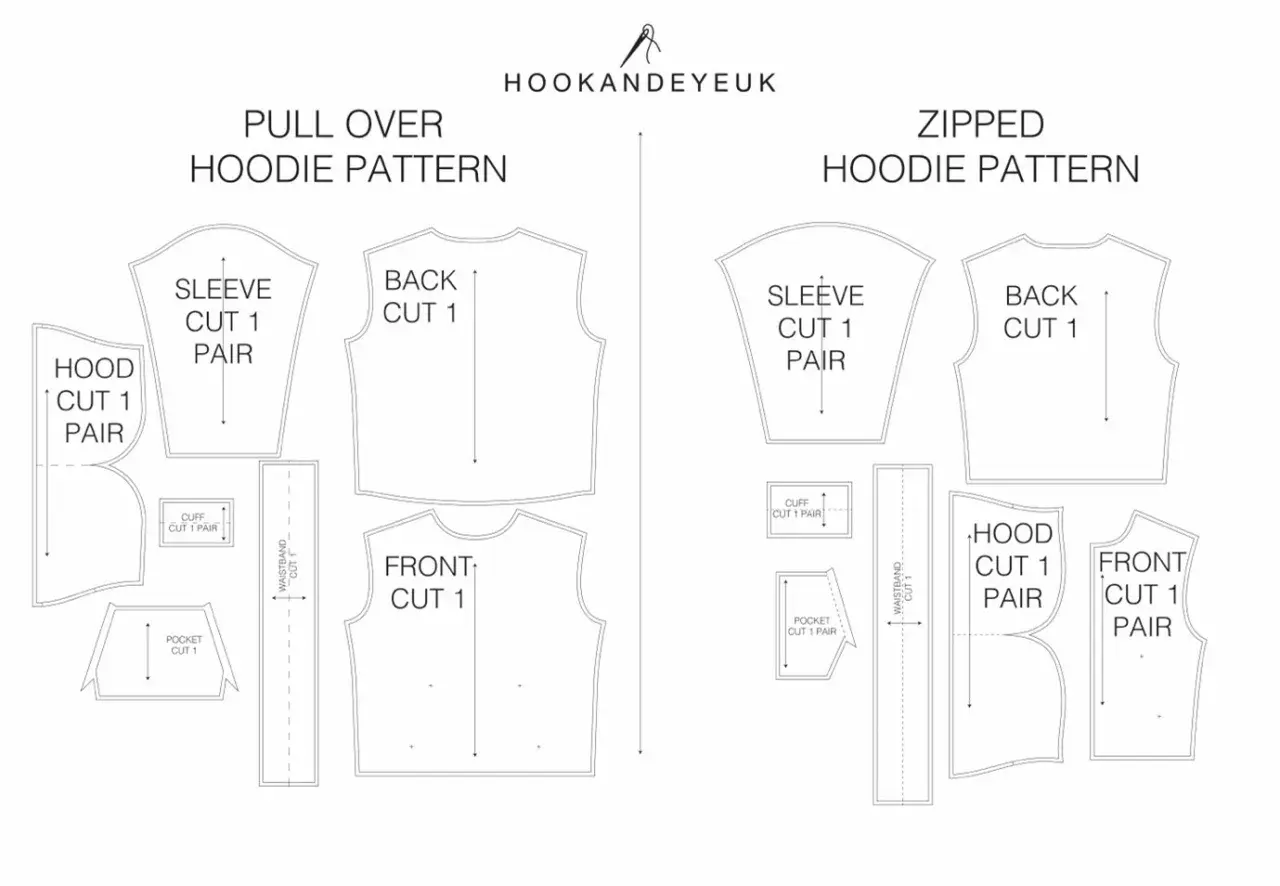
If the hoodie uses rib cuffs and waistband pieces, I cut them with enough recovery so they hold the garment in place without squeezing it. Too loose, and the hem looks baggy. Too tight, and the lower edge rides up. That balance is small on paper, but it is what makes a hoodie feel properly made.
Once the hoodie is under control, the same sewing logic helps with jumpers too, but the handling gets more delicate.
How I handle a knitted jumper without distorting it
With a knitted jumper, I slow down. If I am sewing from sweater knit fabric, I treat it as a fabric that can deform under pressure, not as something I can push through the machine on autopilot. I lower the presser-foot pressure if my machine allows it, support the weight of the fabric so it does not hang and stretch while I sew, and keep my hands guiding rather than pulling. Pulling is the fastest way to create a wavy seam or a neckline that never quite returns to shape.
For stitch choice, I lean on a narrow zigzag, stretch stitch, or a reinforced straight stitch only when the fabric is stable enough to tolerate it. A stable double knit can usually handle more than a loose, open sweater knit. A loose knit, however, needs a gentler touch because the loops can spread and the seam can ladder if the needle damage is too aggressive. That is why I test seam behaviour on offcuts before I cut the whole garment.
If the piece is a true knitted jumper rather than a cut-and-sew knit garment, the rule changes again: the construction happens in the knitting stage, not on the sewing machine. In that case, sewing advice helps only at the finishing and alteration stage. For a home sewer, that distinction matters. I would not use the same assumptions for a machine-sewn sweatshirt and a hand-knitted pullover, because the fabric structure is completely different.Care matters here as much as construction. Many knitted jumpers do better when laid flat to dry, especially if the yarn is wool-rich or the knit is open and soft. Hanging can drag the shoulders down and lengthen the body, which is exactly the kind of slow distortion people notice only after a few washes. If a jumper is worth making, it is worth storing carefully too.
That brings me to the mistakes that most often spoil both garments, even when the pattern itself is solid.
The mistakes that make both garments look amateur
- Using the wrong needle - a universal needle can snag or damage knits, while a ballpoint or stretch needle moves through the loops more cleanly.
- Ignoring stretch direction - if the fabric stretches the wrong way for the pattern, cuffs, necklines, and hems stop behaving properly.
- Pulling the fabric through the machine - this stretches seams while they are being sewn and creates ripples that are hard to remove later.
- Skipping a test seam - even a good pattern can fail if the stitch length, needle size, or thread is wrong for the fabric.
- Leaving the neckline unsupported - hoodies in particular need stabilisation, or the hood weight starts to drag the neck out of shape.
- Choosing a fabric with poor recovery - if the knit does not spring back, hems bag and cuffs lose their clean edge quickly.
- Hanging a soft jumper on the wrong hanger - shoulder bumps and length growth are predictable, not random, and usually preventable.
I see these errors often because they are small at the machine and obvious on the body. A garment can be sewn accurately and still look underwhelming if the fabric choice is fighting the design. That is why the choice between the two garments is not just aesthetic; it is also technical.
Which one I would choose for different sewing goals
If I were helping someone choose between the two for a home sewing project, I would start with the outcome, not the label. A hoodie is the better choice when you want a sporty layer, a more forgiving build, or a garment that can take everyday wear without much fuss. It is also a smart option if you are still learning how to sew knits, because sweatshirt fabrics usually stay where you put them.
A knitted jumper makes more sense when you want softer drape, a cleaner silhouette, or something that can sit under a coat without looking bulky. It can feel more refined, especially in a fine or medium-weight knit, but it usually rewards patience more than speed. If you are chasing a neat, slightly smarter finish, I would reach for the jumper. If you want comfort and resilience, I would reach for the hoodie.
| Project goal | Better choice | Reason |
|---|---|---|
| Beginner-friendly knit project | Hoodie | More stable fabric and easier seam control |
| Soft, polished everyday layer | Knitted jumper | Cleaner drape and a less bulky outline |
| Warm casual wear | Hoodie | Hood, rib trims, and sweatshirt fabric all add comfort |
| Layering under a coat | Knitted jumper | Usually sits flatter and takes less space |
| Low-risk first garment in knits | Hoodie | More forgiving if your stitching or cutting is not perfect |
For a British wardrobe, that choice often comes down to climate and use. On damp, changeable days, I like a midweight hoodie because it can be worn hard, washed often, and layered easily. For something that needs to look a little tidier, a good jumper with stable recovery wins every time.
Before I close, there is one more step I always take, because it saves more projects than any single stitch setting ever will.
The small checks that decide the final finish
- Prewash the fabric if the fibre content or finish suggests shrinkage.
- Check stretch recovery by pulling a measured edge and seeing how well it returns.
- Test the needle, stitch, and tension on scraps from the actual fabric, not a similar one.
- Decide where the garment needs stabilisation before you sew, especially at shoulders and necklines.
- Match rib trims carefully so cuffs and hems support the garment instead of fighting it.
- Plan how the garment will be dried and stored, because hanging can distort softer knits quickly.
If I had to reduce the whole comparison to one rule, it would be this: choose the garment that suits the fabric, then sew it in a way that respects how that fabric moves. A hoodie gives you more room to be practical; a knitted jumper gives you more room to be elegant. The best result comes from knowing which one matters more for the project in front of you.