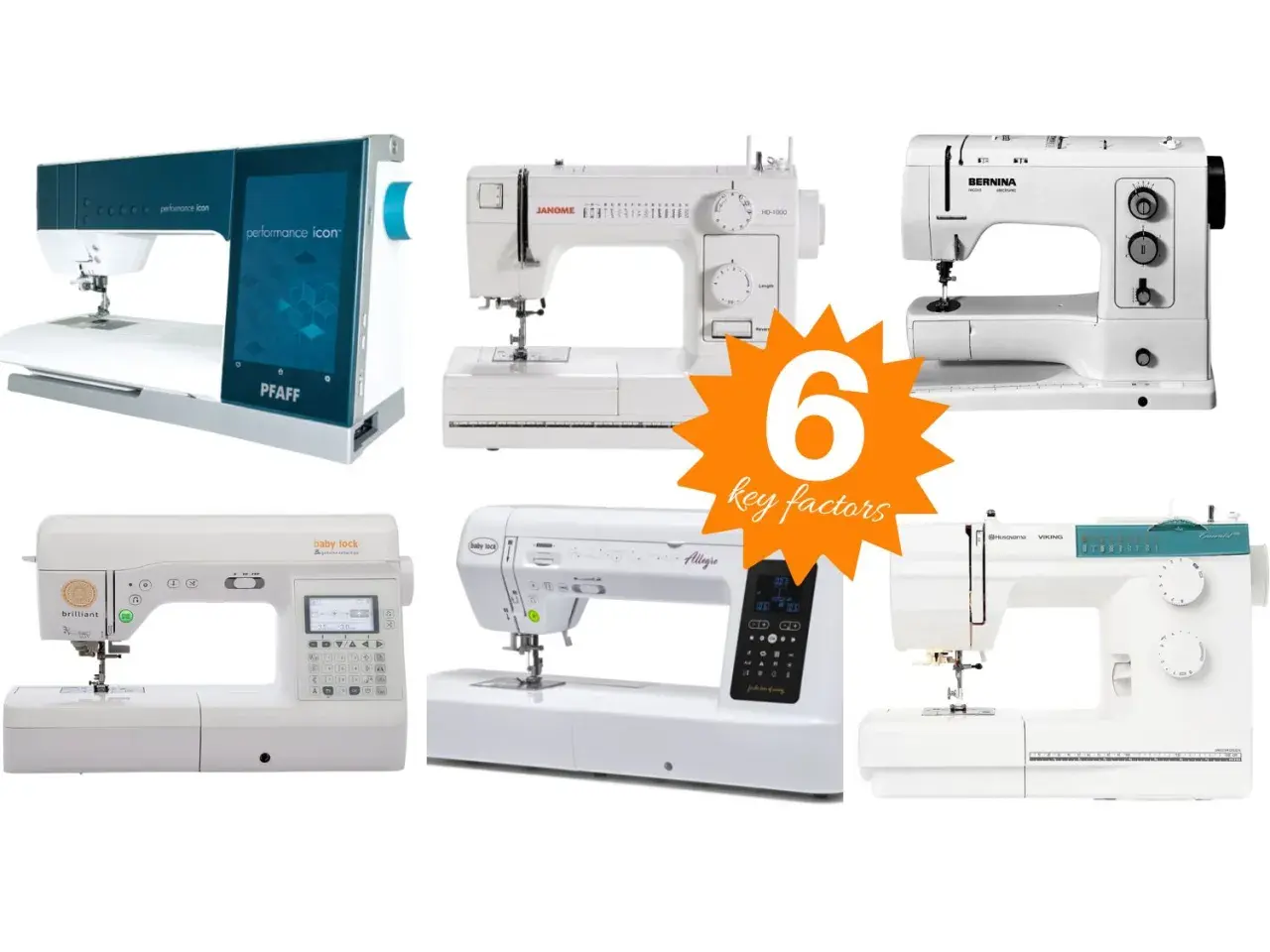
The quickest way to choose well is to match the machine to your sewing, your budget and your space
- Start with the jobs you will actually sew: repairs, dressmaking, quilting, jersey or embroidery.
- For most beginners, a simple mechanical model is enough; computerised machines make sense when you sew more often.
- Do not pay extra for stitch counts you will never use.
- In the UK, a realistic first-buy budget is often around GBP 100-250 for a basic machine, with stronger mid-range models costing more.
- Plan a little extra for needles, thread, bobbins and a few useful feet.
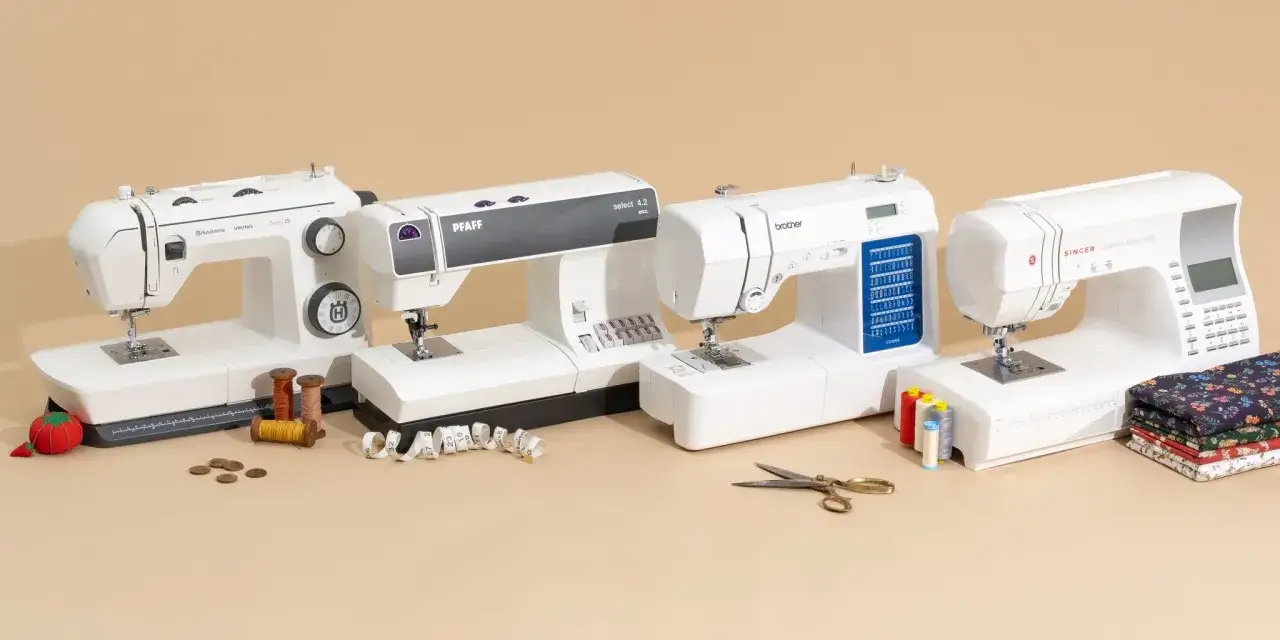
Choose the machine type that fits your projects
Before I compare features, I start with the sewing itself. A machine that is perfect for altering school trousers can feel limiting if you later want to sew dresses, cushions or jersey tops. The right type keeps the learning curve sensible and avoids paying for functions you will never touch.
| Machine type | Best for | What it does well | Main trade-off |
|---|---|---|---|
| Mechanical sewing machine | Beginners, mending, simple garments and home projects | Simple controls, lower cost, fewer settings to learn | Less automation and fewer convenience features |
| Computerised sewing machine | Regular sewing, dressmaking, quilting and people who want more control | Speed control, automatic buttonholes, broader stitch selection, easier repetition | Higher price and more functions to understand |
| Overlocker | Jersey, seam finishing and neat edges | Trims, sews and finishes in one pass, very clean on stretch fabrics | Not a full replacement for a standard sewing machine |
| Sewing and embroidery combo | Decorative work, monograms and gift sewing | Lets you add built-in or digital embroidery alongside normal sewing | Expensive and unnecessary if you only need general sewing |
If you mainly want to alter clothes or make simple home projects, a basic mechanical machine is enough. If you know you will sew regularly and want less fuss over stitch settings, computerised models are the better long-term buy. An overlocker is the specialist add-on I would buy only after a normal sewing machine, unless jersey is your main fabric from day one. Once the type is right, the details are what decide whether the machine feels helpful or annoying.
Look at the features that will matter after week one
I am always wary of machines that look impressive on the spec sheet but feel awkward in daily use. In 2026, I would treat LED lighting, a top-loading bobbin and an automatic buttonhole as normal in a decent mid-range machine, not luxury extras. What I want is a machine that reduces friction every time I sit down to sew.
- Top-loading bobbin. A bobbin is the small spool that feeds the lower thread. Top-loading systems are usually easier to check and quicker to reload.
- Needle threader. This saves time and eye strain, especially if you sew often or work with finer thread.
- Free arm. The free arm is the narrow exposed section of the machine bed that helps with sleeves, cuffs and trouser hems.
- Speed control or a start-stop button. These are useful when you want to sew slowly around curves or avoid relying on the foot pedal for long runs.
- Adjustable stitch length and width. This matters more than a giant stitch library because it gives you control over fabric weight and seam style.
- One-step buttonhole. This lets the machine form a buttonhole in one programmed pass instead of several manual steps.
- LED light. Small detail, big difference. Good lighting is one of those features you only stop appreciating when it is missing.
- Strong internal frame. A sturdier frame usually means smoother stitching on thicker seams and less wobble at speed.
- Useful presser feet. A presser foot is the small attachment that holds fabric in place. I would want at least a zipper foot and buttonhole foot, and a walking foot is valuable for quilt layers or slippery fabric.
- Drop feed dogs. Feed dogs are the toothed bars under the needle that move the fabric forward. Being able to lower them helps with free-motion work and some repair tasks.
I would rather have 12 useful stitches and controls that are easy to reach than 200 decorative stitches buried in menus. Stitch count sounds attractive, but reliable feeding, clean tension and sensible controls are what you feel in real sewing. That is why the budget matters next: it decides how much quality and comfort you can realistically buy.
Budget for the machine and the first essentials
The UK price bands are fuzzy, but they are still useful as a rough map. I do not think in terms of "cheap" and "expensive" so much as "what will genuinely suit the sewing I plan to do". The moment a machine feels too basic for the fabric you use, the price becomes a false saving.
| Budget band | What you usually get | My read on it |
|---|---|---|
| Under GBP 100 | Basic mechanical controls, a limited stitch set and simple setup | Fine for repairs, learning and very occasional use |
| GBP 100-250 | Better beginner machines, more stitches and often a needle threader or top-loading bobbin | The sweet spot for many first-time buyers |
| GBP 250-800 | Computerised controls, better speed control and a broader stitch library | Good for regular sewing, dressmaking and quilting |
| GBP 800+ | Premium home machines, larger work areas and more advanced functions | Worth it for frequent sewing or specialist work |
My rule is simple: spend enough to remove frustration, but stop before the machine becomes more complex than your sewing life. I also budget another GBP 30-100 for needles, good thread, spare bobbins, a seam ripper, scissors and, if needed, a cover or hard case. If the seller bundles a few presser feet, that can be real value; if the bundle is just decorative fluff, I ignore it. If your budget is tight, a serviced used machine from a dealer can be smarter than a brand-new bargain-bin model because the support is often better.
Buy from a place that can support the machine after the sale
The seller matters almost as much as the machine. A machine that looks good online can become a headache if nobody can service it, explain it or supply the right parts later. I want the purchase to be easy now and still sensible two years from now.
- Specialist sewing shop. Best if you want to test the machine, ask threading questions and get after-sales help.
- Major UK retailer. Useful when you want easy returns, straightforward delivery and a familiar buying process.
- Dealer-refurbished used machine. Often the best value if it has been serviced, tested and sold with a proper guarantee.
- Marketplace bargain. Only worth it when the listing is detailed, the seller is responsive and the return route is clear.
- Can I sew on my actual fabric before I pay?
- Who services the machine, and how often should it be checked?
- Are the power lead, foot pedal, bobbins and standard feet included?
- What warranty applies, and does it work in the UK?
- If it is imported, is it compatible with UK power and supported locally?
I am cautious with imported machines unless the seller clearly states UK voltage compatibility, local support and spare parts. That one detail can decide whether a purchase stays convenient or becomes a long-term annoyance. Once the seller is trustworthy, the next mistake is choosing the wrong machine for the way you sew.
Avoid the mistakes that cost more than the machine itself
Most bad sewing machine purchases are not dramatic failures. They are small mismatches that become irritating every time the machine comes out of the cupboard. I see the same pattern again and again: buyers pay for the wrong things, then wonder why the machine never feels easy.
- Choosing by stitch count alone. A machine with 200 stitches sounds impressive, but 12 useful stitches and clean tension usually matter more.
- Buying too little machine for the fabric. Denim, curtain weight fabric and quilt layers ask more of the motor and frame than light cotton does.
- Buying too much machine for simple repairs. If you mainly hem trousers and mend seams, a huge feature list is wasted money.
- Ignoring threading and bobbin access. If the machine feels awkward in the shop, it will not feel easier at home.
- Forgetting weight and storage. If you move the machine to classes or pack it away after every use, portability matters.
- Treating an overlocker like a full replacement. It finishes seams beautifully, but it does not replace straight stitching, buttonholes and general construction.
- Skipping support and servicing. A machine that cannot be maintained is a short-term purchase, not a useful tool.
These are easy mistakes to avoid once you know what to look for. The last step is to make the machine prove itself before money changes hands, because that is where the best purchase decisions usually happen.
The final checks that save you from a bad purchase
Before I pay, I want the machine to show me three things: that it stitches cleanly, that it feels intuitive and that it can be supported later. That takes only a few minutes, but it tells you far more than a polished product page ever will.
- Run a straight stitch, a zigzag stitch and a buttonhole on the fabric you actually plan to use.
- Check how easy it is to thread the upper path and change the bobbin.
- Listen for harsh rattles, uneven feeding or a handwheel that feels sticky.
- Test one thick seam so you can see how the machine behaves under pressure.
- Confirm what is included in the box and what will cost extra.
- Ask who handles servicing and repairs in the UK.
If a machine passes those checks, it is probably a better buy than the flashier model with the longer spec sheet. In 2026, I would still choose the machine I trust, maintain and enjoy using over the one with the loudest marketing. That balance is what makes the purchase pay off long after the first project is finished.