Fabric weight is the fastest way to predict how a T-shirt will drape, breathe, and hold its shape. The real question behind t shirt weights is not just how heavy a tee feels, but what that number says about opacity, durability, seasonality, and the way the fabric behaves after washing. In the UK, GSM is the label I trust first, because it gives a clearer comparison than vague marketing terms like premium or heavyweight.
The quickest way to read tee fabric weight
- GSM means grams per square metre, and a higher number usually means a denser, heavier knit.
- 120-160 GSM feels light and airy, which suits warm weather and relaxed drape.
- 160-190 GSM is the most versatile range for everyday tees in the UK.
- 190-220+ GSM gives more structure, opacity, and a boxier silhouette.
- Fibre, knit, and finish matter just as much as the number on the label.
- For sewing and printing, a stable midweight jersey is usually the safest starting point.
What fabric weight actually tells you
Fabric weight is a measurement of how much a square metre of cloth weighs. In practice, that tells me three things straight away: how thick the fabric feels in hand, how much light it lets through, and how much structure it will give a garment. A tee at 140 GSM and one at 200 GSM are not just different in number; they will behave differently on the body, at the hem, and after a day of wear.
In the UK, GSM is the most useful unit because most suppliers, mills, and blanks talk in metric. You may still see ounces per square yard on imported stock, especially from the US. As a rough conversion, 1 oz/yd² is about 33.9 GSM, so a 5 oz tee sits around 169 GSM and a 6 oz tee lands around 203 GSM.
That does not mean heavier is automatically better. Weight is only one part of the story, and the next step is learning which ranges actually work for different kinds of tees.
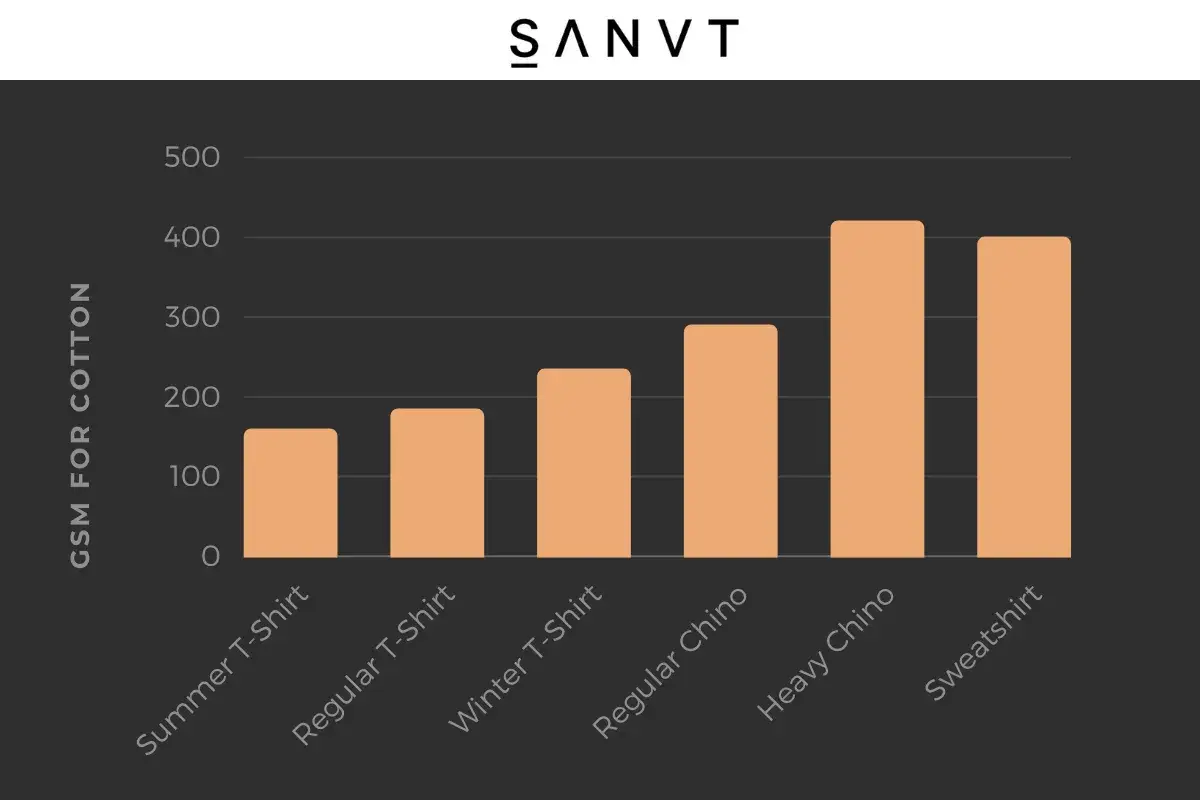
The GSM ranges I use as a practical shortcut
These bands are not rigid rules, but they are a useful way to read a label quickly. I treat them as a starting point, then check the fibre content, knit quality, and the intended fit of the garment.
| Approx. GSM | How it usually feels | Best for | What to watch for |
|---|---|---|---|
| 120-140 GSM | Very light, airy, soft drape | Hot weather, slim base layers, fashion-led tees | Can be sheer, especially in white or pale shades |
| 140-160 GSM | Light but not flimsy | Summer tees, easy everyday wear, softer fits | May cling more than heavier jersey if the cut is close |
| 160-180 GSM | Balanced, stable, versatile | Most wardrobe basics, retail tees, all-round use | Still depends on knit density and fibre quality |
| 180-220 GSM | Substantial, more opaque, more structured | Premium basics, boxy fits, heavier layering pieces | Warmer to wear and less fluid in movement |
| 220+ GSM | Heavy, dense, sculptural | Streetwear tees, statement silhouettes, durable workwear-inspired pieces | Can feel stiff or bulky if the pattern is not designed for it |
I usually tell people to stop chasing the highest number and start matching the weight to the job. A good 170 GSM tee often beats a poorly made 220 GSM one, because the next section matters just as much as the number itself.
Why two tees with the same GSM can feel different
This is where many buyers get caught out. Two tees can both say 180 GSM and still feel miles apart because fabric weight does not measure softness, stretch recovery, or knit compactness.Fibre content changes the hand feel
100% cotton, cotton-poly blends, modal, and viscose all behave differently. Cotton usually feels more familiar and breathable, while blends can alter drape and drying time. A touch of elastane can improve recovery, which means the fabric springs back after stretching, but it also changes the feel at the neck, cuffs, and seams.
The knit structure matters more than people think
Most T-shirts use single jersey, which is a knit that gives one smooth face and one more textured reverse side. A tightly knit jersey feels more stable and less see-through than a looser one at the same GSM. Ring-spun and combed cotton can also feel smoother because the yarns are finer and more consistent, which changes the surface even when the weight stays the same.
Read Also: Stable Knits - Your Guide to Easy Sewing & Perfect Shape
Finishes and colour affect the result
Garment washing, enzyme washing, peached finishes, and dye treatments all shift the final hand feel. A washed tee may feel softer and slightly less rigid than a raw one. Colour matters too: white and very pale shades show the structure of the knit more clearly, so a light tee may appear thinner even when the GSM is identical to a darker version.
That is why I never let a single number make the decision for me. Once you understand how the fabric is built, choosing the right tee becomes much easier.
How to choose the right weight for the job
If I were choosing fabric for a new tee, I would start with the use case and work backwards. Climate, fit, and intended finishing all change the best answer.
- For hot weather, I would start around 120-150 GSM. That gives airflow and a lighter touch, but I would check for transparency before committing to a white or pale colour.
- For a year-round wardrobe basic, 160-180 GSM is the safest band. It is usually soft enough for comfort but substantial enough to avoid looking flimsy.
- For a more premium or structured look, 180-220 GSM works well. It gives the tee more body, which suits boxy cuts and oversized silhouettes.
- For layering under knitwear or jackets, I prefer lighter to midweight jersey. It sits flatter and avoids adding bulk at the chest and sleeves.
- For oversized streetwear fits, heavier jersey can be a better match because it helps the garment hang with intention rather than collapsing against the body.
- For fitted silhouettes, I avoid going too heavy unless the pattern is designed for it, because a dense fabric can pull across the body and reduce comfort.
One practical detail people miss: fabric weight is measured per area, not per finished garment. A larger size will naturally weigh more overall, even if the GSM is identical. Once the use case is clear, the next question is how that weight behaves in sewing and decoration.
What heavier and lighter tees mean in sewing and print
For sewing, weight changes the way the fabric handles under the machine. Light jersey can curl at the edges, shift while cutting, and show needle marks if you use the wrong setup. Medium-weight jersey is easier to control, which is why it is often the most forgiving choice for home sewers. Heavy jersey is stable, but it needs a pattern with enough ease, because a tight cut in dense fabric can feel boxy in the wrong way rather than flattering.
I would also pay attention to recovery, which is the fabric’s ability to return to shape after stretching. A tee with poor recovery may grow at the neckline, sag at the hem, or twist after a few washes. That problem is not solved by higher GSM alone.
For printing, a smoother midweight surface usually gives the cleanest result. Screen printing likes stability; DTG prefers an even surface; embroidery benefits from a fabric that can support the stitches without puckering. Very lightweight tees can show print strike-through or buckle under heavier decoration, while very heavy ones can swallow fine detail if the surface is too textured.
That brings me to the label details I check before I decide whether a tee is genuinely well chosen or just marketed that way.
The small checks that prevent the wrong choice
When I compare t shirt weights, I am really comparing opacity, structure, comfort, and how the garment will age. The GSM number is useful, but I only trust it when the rest of the specification makes sense too.
- Check the fibre mix so you know whether the feel should be soft, crisp, stretchy, or drapey.
- Ask whether the fabric is pre-shrunk, because a tee that shrinks heavily after the first wash effectively changes weight and fit.
- Look for knit density if it is mentioned, since a tighter knit often looks and wears more substantial than a looser one at the same GSM.
- Test the fabric in daylight when possible, because transparency shows up more clearly than it does under indoor lighting.
- Match the neck rib to the body fabric, because a weak neckline can make even a good tee look tired after a few wears.
If I had to reduce the whole topic to one rule, it would be this: choose the lightest weight that still gives you the structure, opacity, and durability you need. That is usually where the best balance sits, and it is almost always more useful than chasing the heaviest option on the shelf.