Ring-spun cotton sits in the useful middle ground between everyday basics and genuinely premium fabric. In simple terms, it is cotton yarn that has been drawn out, twisted, and wound on a ring spinning frame, which usually gives it a smoother hand, better strength, and a cleaner finish than basic open-end yarn. In this guide I explain how that changes the fabric, where it matters most, and when the extra cost is actually worth it.
The quick version for choosing ring-spun cotton
- Ring spinning is a yarn-making method, not a separate type of cotton fibre.
- The process creates a finer, smoother, and usually stronger yarn than open-end spinning.
- Combed ring-spun yarn goes a step further by removing more short fibres, which improves evenness and softness.
- It is especially useful for T-shirts, jersey, underwear, babywear, and soft bed linen.
- Label wording matters, but fabric weight, knit or weave, and finishing still change the final result.
What ring-spun cotton actually means
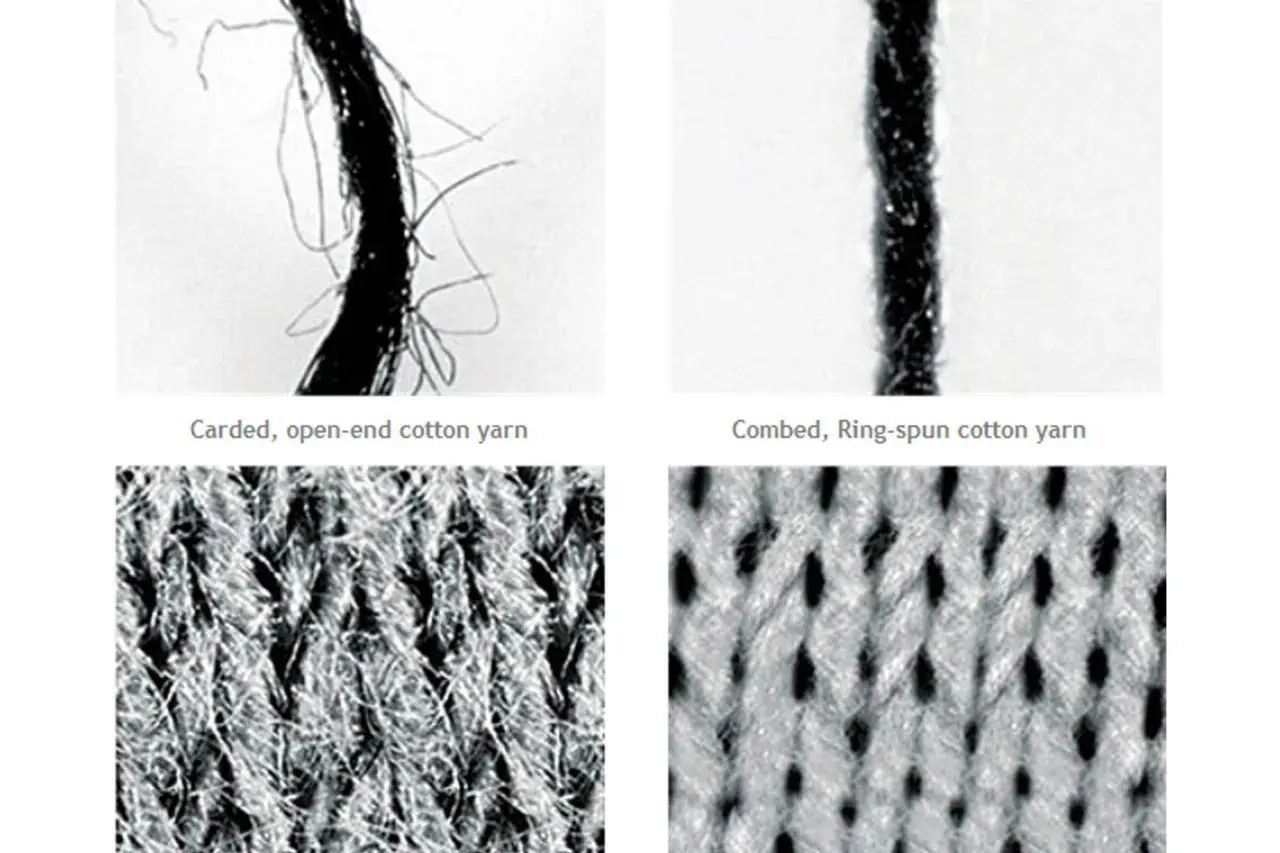
Ring-spun cotton is not a special species of cotton. It is cotton yarn made through a specific spinning method, where prepared fibres are drafted, twisted, and wound at the same time on a ring spinning frame. CottonWorks describes ring spinning as the oldest and most established spinning system, and that history matters because the process is still the benchmark for fine, soft yarn.
The important detail is that the process creates a tighter, more controlled yarn structure. Instead of leaving fibres loosely arranged, ring spinning aligns them more uniformly and inserts twist in a way that produces a cleaner yarn surface. That is why the same raw cotton can end up feeling ordinary in one fabric and noticeably more refined in another.
I think this is the first thing many shoppers miss: ring-spun refers to how the yarn is made, not just how the fabric feels. Once that clicks, the rest of the comparison becomes much easier to read, because the yarn structure explains a lot of the comfort, durability, and price difference you see later on.
That yarn structure is where the real performance difference begins, so the next step is looking at what the spinning process actually changes in the fabric.
How the spinning process changes the feel
When cotton fibres are twisted more tightly and evenly, the yarn surface becomes less hairy and more uniform. That usually translates into a fabric that feels smoother against the skin, looks a little cleaner, and takes prints more crisply. You are not just buying softness for the sake of softness; you are buying a better yarn architecture.
CottonWorks notes that ring-spun yarns are valued for their strength and soft hand, while compact ring-spun takes things further by using extra rollers and air suction to keep the fibres tighter around the yarn axis. The result is a yarn that is smoother, stronger, more even, and less prone to pilling. That is useful, but it is also a reminder that not all ring-spun cotton is equal.
In practical terms, this is why a ring-spun jersey T-shirt often feels less scratchy than a cheaper basic tee, even before the first wash. The fabric can drape more neatly, wear in more gracefully, and keep its surface looking tidier for longer. Still, finishing matters too, and a poor knit or weak dye process can blunt some of that advantage.
Once you know what the yarn is doing, the obvious question becomes whether ring-spun is actually better than the other common cotton yarns.
Ring-spun cotton versus open-end yarn
For most shoppers, the main comparison is ring-spun versus open-end, sometimes called rotor spun. Open-end yarn is faster and cheaper to produce, which is why it is common in lower-cost basics. Ring-spun takes longer and uses more steps, but the yarn generally ends up smoother and stronger.
| Yarn type | What it feels like | Main trade-off | Best use |
|---|---|---|---|
| Ring-spun | Smoother, softer, more refined | Slower production and higher cost | Premium T-shirts, jersey, underwear, bedding |
| Combed ring-spun | Even smoother and cleaner | More processing, highest cost | High-end basics, babywear, premium loungewear |
| Open-end | Firmer, drier, a bit harsher | Usually less soft and less refined | Budget tees, utility garments, rugged basics |
CottonWorks’ textile guide says open-end yarn is typically 15 to 20 per cent weaker than ring-spun yarn and feels harsher in hand. That does not make open-end bad. It just means the fabric is usually aimed at a different balance of price, speed, and performance.
I would not choose ring-spun cotton simply because it sounds premium. I choose it when the garment sits close to the skin, gets worn often, or needs a cleaner surface for printing. If the job is a hard-wearing basic where budget matters more than hand-feel, open-end can still be the sensible answer.
From there, the next layer of quality comes from how the fibres are prepared before spinning, and that is where combed and compact yarns enter the picture.
Why combed and compact versions feel more refined
Carded, combed, and compact ring-spun cotton are not interchangeable labels. They all involve ring spinning, but the fibre preparation changes how the finished yarn behaves. CottonWorks’ yarn comparison is blunt about the difference: combed yarn is more even, less hairy, stronger, finer, and more lustrous than carded yarn, but it costs more to make.
Here is the practical version of that:
- Carded ring-spun is the standard version. It is decent, soft enough for many garments, and less expensive than combed yarn.
- Combed ring-spun removes more short fibres and impurities, which gives you a cleaner, smoother yarn with less fuzz.
- Compact ring-spun keeps the fibres even tighter during spinning, which reduces hairiness and can lower pilling.
That extra processing does show up in the fabric. Combed ring-spun tees usually hold print details a little better and feel a touch more polished. Compact yarn can be even nicer, but the difference is often most noticeable in close-contact garments and premium basics rather than in heavy outer layers.
For sewing and fabric buying, I treat combed and compact yarns as refinements, not automatic upgrades. They are worth paying for when the finish will be visible and touched often, which leads straight into the question of where ring-spun cotton earns its keep.
Where ring-spun cotton is worth the extra cost
Ring-spun cotton is most useful when softness, drape, and repeated wear matter. That is why it shows up so often in jersey T-shirts, fitted sheets, underwear, pyjamas, babywear, and lounge pieces. These are all categories where a small improvement in yarn quality is easy to feel.
It can also make a difference in towels and home textiles, but the whole construction matters there. CottonWorks notes that for towels, lighter constructions around 400 to 600 GSM dry faster, while 600 to 800 GSM tends to feel plusher and more luxurious. In other words, yarn quality helps, but pile density and fabric weight still do a lot of the work.
There are also times when ring-spun is simply not the priority. If you are buying promotional tees, hard-use workwear, or fabrics where bulk matters more than softness, paying extra for a finer yarn may not give you much visible benefit. In those cases, I care more about durability, density, and the overall construction than about a softer hand.
The real decision, then, is not “Is ring-spun always better?” It is “Is the extra refinement useful for this specific fabric?” That is the more honest way to buy, and the label usually gives enough clues if you know what to look for.
How to read a label without getting fooled by marketing
When I look at a cotton product, I do not stop at the word ring-spun. That term matters, but it is only one part of the story. A good label, or a well-written product page, should tell you enough to judge the yarn, the fabric construction, and the intended use.
- Look for the yarn description rather than a vague “premium cotton” claim.
- Check whether it says combed or compact, not just ring-spun.
- Pay attention to GSM on knitwear, towels, and sweatshirts, because weight changes how the fabric behaves.
- Note the construction, such as single jersey, rib, terry, or woven fabric, because the knit or weave affects the feel as much as the yarn does.
- Look for plying if durability matters, since plied yarns often add strength and stability.
On UK product pages, GSM is often more useful than marketing language. A lightweight ring-spun jersey can still feel delicate, while a heavier open-end sweatshirt can still wear well. That is why I always read the fabric spec as a whole rather than treating one keyword as a guarantee.
If you can read the label properly, you can usually predict the feel and performance of the fabric before you ever touch it, which is the last piece of the puzzle before choosing with confidence.
The buying rule I use for fabric projects
My rule is simple. Choose ring-spun cotton when the fabric will sit close to the skin, get washed often, or needs a cleaner surface for printing or sewing details. Choose open-end when budget, bulk, or rugged simplicity matters more than a soft hand. Pay for combed or compact versions only when the improvement will actually show up in use.
That approach keeps the label from doing the thinking for you. Ring-spun cotton is a better yarn system, but it is not a magic seal of quality on its own. The best result comes from the combination of yarn, weight, construction, and finish.
For most clothing and home-sewing projects, I would treat ring-spun cotton as the safer choice for comfort and appearance, then refine the decision with GSM, knit or weave, and the expected wear. That is the practical way to use the term, and it is usually the difference between a fabric that merely sounds good and one that actually performs well.