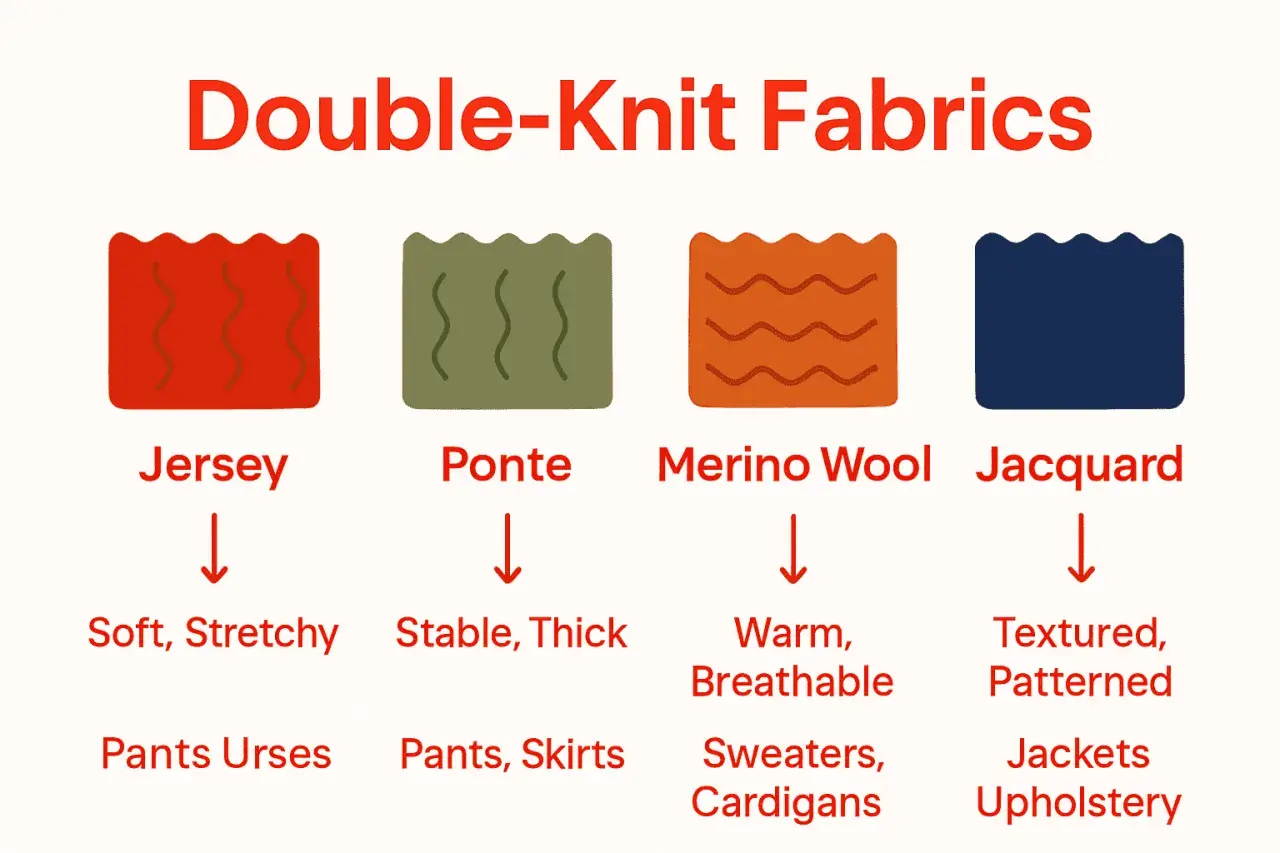
Double knit fabric is one of those materials that looks straightforward until you actually cut into it. It has enough structure to hold a garment’s shape, yet enough give to stay comfortable, which is why it turns up so often in dresses, trousers, jackets and polished everyday wear. In this guide, I explain how it is made, how it behaves, how it compares with other knits, and what I would check before buying it by the metre.
Key things to know before you choose a double knit
- It is a knitted fabric made with two sets of needles, which gives it a denser and more stable structure.
- It usually feels firmer than jersey, with less edge curl and better shape retention.
- Many versions are reversible or nearly the same on both sides, but not every double knit is identical front and back.
- It works well for dresses, skirts, trousers, jackets and structured tops where you still want some stretch.
- It is easier to handle than very drapey knits, but it still needs the right needle, stitch and pressing method.
- Fibre content matters a lot: cotton, viscose, wool and polyester blends all behave differently in wear and wash.
How double knit is built and why it matters
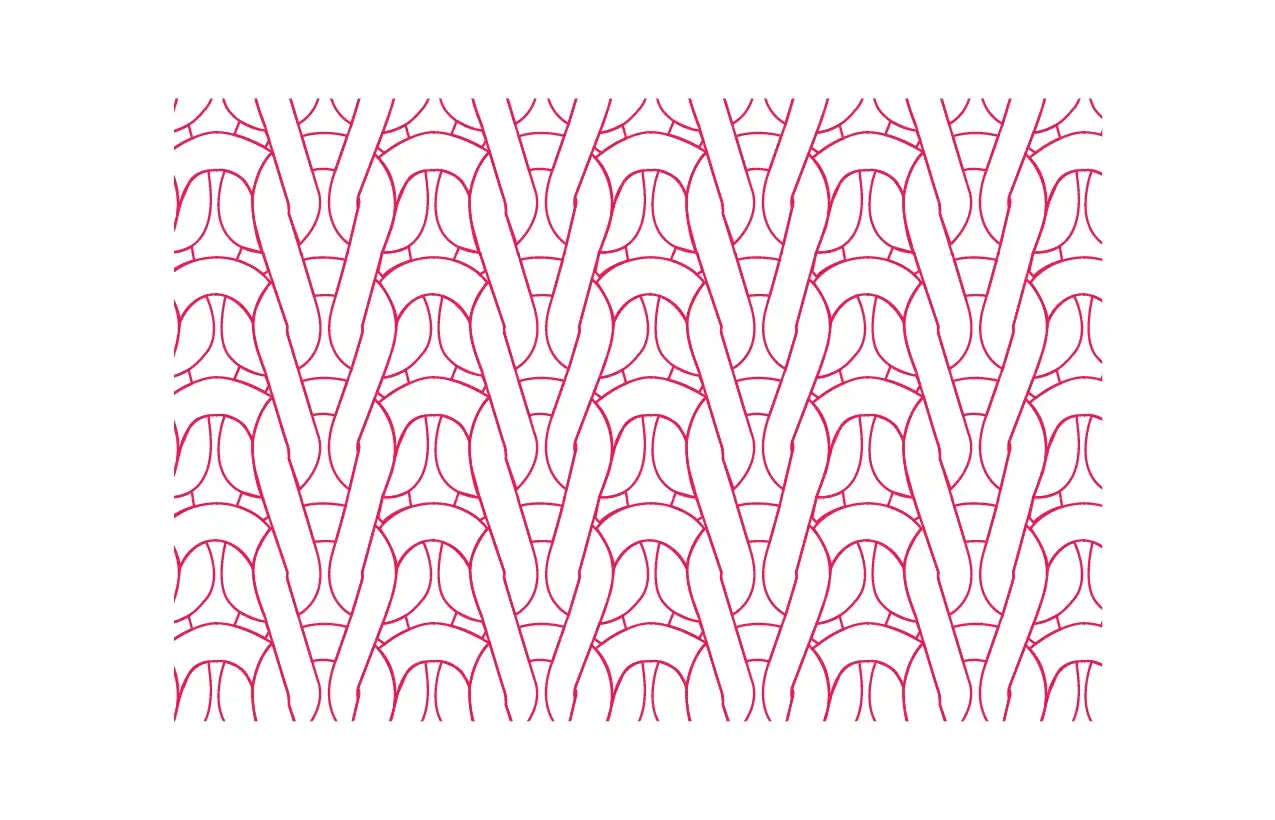
The simplest way I describe it is this: double knit is a knit with more backbone. Britannica’s definition is a useful shorthand here, because it points to the core idea straight away. The fabric is made on two sets of needles, which produces a heavier, firmer cloth that is far less prone to runs than a basic single knit.
That construction changes the way the fabric behaves from the first cut. The loops are locked together from both sides, so the cloth tends to be more stable, less curly at the edges, and better at holding a silhouette. In practical sewing terms, that means it behaves more like a controlled knit than a loose, slinky one.
Most double knits also feel more substantial in the hand. Some are smooth and polished, others are springy or softly textured, but the common thread is body. That is why I would reach for this fabric when I want a garment to skim rather than collapse, or when I need a knit that reads a little more tailored.
That structure is only half the story, though. The next question is how it actually feels on the body and what kind of projects it suits best.
What it feels like to wear
When a sewist says a fabric has “good recovery”, they mean it springs back after being stretched. Double knit usually does this well, which is one reason it is so popular for clothes that need to move with you without growing baggy during the day.
In wear, I usually notice four things first:
- It feels more substantial than jersey. That extra body often makes it feel smarter and more finished.
- It is usually less drapey. Some versions skim the body, but most sit with a bit more authority.
- It is often opaque. That makes it useful for fitted garments where you do not want to add lining for modesty.
- It tends to resist curling. That makes cutting and hemming less frustrating than with many lighter knits.
Fibre content still matters. A cotton-rich double knit will usually feel more breathable and natural, but it may shrink more. A polyester-rich version is often easier to care for and better at keeping its shape. Viscose or wool blends can add softness and drape, but they also change the care profile, so I would never judge the fabric by construction alone.
Once you understand that feel, the next useful step is comparing it with the knits people most often confuse it with.
How it compares with jersey, interlock and ponte
In sewing shops, these fabrics are often grouped together because they all stretch and they all belong to the knit family. In reality, they behave differently enough that the wrong choice can make a pattern feel off before the garment is even finished. This is especially true when you are choosing between a softer drape and a cleaner, more structured result.
| Fabric | General feel | Stretch and stability | Best for | Watch-outs |
|---|---|---|---|---|
| Double knit | Medium to heavy, smooth or softly textured | Moderate stretch with good recovery | Dresses, trousers, skirts, jackets, structured tops | Can be warm or bulky in thick versions |
| Jersey | Lighter, softer, more fluid | Stretchy, but often less stable | T-shirts, easy tops, layering pieces | More curl, more distortion, more visible shaping issues |
| Interlock | Smooth, balanced, often very neat on both sides | Stable for a knit, with gentle stretch | Babywear, tees, base layers, clean casual garments | Can feel similar to double knit, but usually lighter |
| Ponte | Dense, polished and fairly structured | Usually very stable with strong recovery | Workwear-inspired trousers, pencil skirts, fitted dresses | May feel less fluid than you expect from a knit |
If I had to reduce it to one sentence, I would say this: jersey wins for drape, double knit wins for structure. Ponte usually sits near the more polished end of the double-knit family, which is why it so often appears in garments that need a clean line and a little more authority than a basic stretch knit can give.
That difference matters most when you start matching the fabric to a project, because the same cloth can be perfect for one pattern and wrong for another.
The best projects for this fabric
Double knit is at its best when the pattern needs shape, ease and modest stretch all at once. I would usually look at it for garments that should sit close to the body without clinging, or for pieces that benefit from a smooth outer surface and a bit of body underneath.
- Shift and column dresses where you want clean lines without a lining-heavy construction.
- Skirts, especially pencil or straight styles that need recovery at the waist and hips.
- Trousers and culottes when you want comfort but still want the garment to look composed.
- Jackets and cardigan-style layers that should hold shape better than jersey.
- Polished tops for workwear or smarter everyday outfits.
I would be more cautious with very fluid, bias-cut designs, because the fabric may fight the pattern rather than support it. That does not make it bad; it just means the cloth is doing a different job. A drapey dress often wants movement, while double knit is usually better when the design needs a bit of restraint.
Once the project is right, the sewing becomes much easier, provided you handle the fabric the way a knit actually wants to be handled.
How I sew it cleanly without fighting the fabric
Double knit is friendlier than many people expect, but it still rewards a calm setup. The mistake I see most often is treating it like woven suiting on one day and like stretchy jersey on the next. It sits in the middle, so the technique should match that middle ground.
- Use the right needle. A ballpoint or stretch needle in size 75/11 or 80/12 is a sensible starting point for most medium weights.
- Test the stitch first. A narrow zigzag, stretch stitch or overlocker seam usually works well; for hems, a twin needle can give a neat finish.
- Keep the stitch length sensible. Around 2.5 to 3 mm is a practical starting point for many projects.
- Do not pull the fabric through the machine. Let the feed dogs move it. Pulling is the fastest way to stretch a stable knit out of shape.
- Cut with control. A single-layer cut is often cleaner if the fabric is slippery or if the grain is hard to read.
- Press, don’t drag. Use a lift-and-press motion with steam if the fibre content allows it, especially around hems and seams.
If the edges still want to move, a light stabiliser at the neckline or shoulder seam can help. I also like to let a garment hang before hemming if the fabric has any noticeable vertical give, because that small pause can prevent a wavy hem later.
After the sewing comes the part people skip too quickly: care, pre-washing and a realistic look at quality before buying.
What to check before you buy it by the metre
The best double knit is not just the one that feels good in the shop. It is the one that fits the project, survives the wash you plan to give it, and keeps its shape after wear. That is why I always check more than colour and price.
| What to check | Why it matters | What I look for |
|---|---|---|
| Fibre content | It changes shrinkage, softness and care | Polyester for easy care, cotton for breathability, wool for warmth, viscose for softer drape |
| Recovery | It tells you whether the garment will bag out | The fabric should spring back after a gentle stretch |
| Opacity | It affects whether you need lining | Hold it to the light and check for shadowing |
| Surface finish | It changes how polished the final garment looks | Smooth for formalwear, slightly textured for more casual pieces |
| Weight | It affects drape, warmth and bulk | Heavier cloth for jackets and trousers; lighter versions for tops and dresses |
For day-to-day care, I would follow the fibre label rather than assume every double knit behaves the same way. Many blends do well on a cool wash and low heat or air drying, but wool-rich versions may need gentler treatment or dry cleaning. If the cloth contains natural fibres, pre-washing is usually worth the time, because shrinkage is much easier to control before you cut than after you finish a hem.
Choose the version that matches the garment, not just the name
The most useful thing to remember about double knit is that it is not one fixed fabric; it is a family of fabrics built on the same construction principle. That is why one version can feel soft and forgiving, while another feels crisp, warm or almost tailored.
When I am choosing between options, I ask three questions: do I want structure, do I want stretch, and how much care am I willing to give the fabric after the garment is made? If I need a smart everyday dress, I lean towards a stable double knit with good recovery. If I want a softer silhouette, I look for a blend with more drape. If I want the easiest maintenance, I usually give polyester-rich versions a closer look.
That is the real answer in practice: double knit works best when the cloth and the pattern are matched on purpose. Get that pairing right, and you end up with garments that feel comfortable, look neat and hold their shape far better than most people expect.