The quick version for domestic machines
- Most home machines use the same needle system, but not the same needle type.
- Fit, point shape, and size all affect how the machine stitches.
- Universal needles are the safest everyday starting point, but they are not ideal for every fabric.
- Knits usually need a Jersey or Stretch needle, while fine fabrics often sew best with Microtex.
- Wrong needles cause skipped stitches, thread breakage, puckering, and damaged fabric.
- A fresh needle usually gives better results than another tension adjustment.
Why the answer is no
The first thing I separate in my own sewing is fit from function. Most domestic machines use the familiar flat-shank home system, often labelled 130/705 H, but that only tells you the needle will fit the machine. It does not tell you whether it is the right needle for jersey, denim, silk, embroidery thread, or a thick topstitch.
Schmetz’s needle guide makes that distinction clearly: household needles have a flat shank, while commercial and industrial needles are built differently. That is why a packet that fits one machine can still be completely wrong for another setup, especially if you move between a sewing machine, an overlocker, and an industrial machine.
So the answer is no for two reasons. First, not every needle system fits every machine. Second, even needles that fit are designed for different materials and stitch demands. Once you understand that, the next step is easy: look at what actually changes from one needle to another.
The three details that matter most
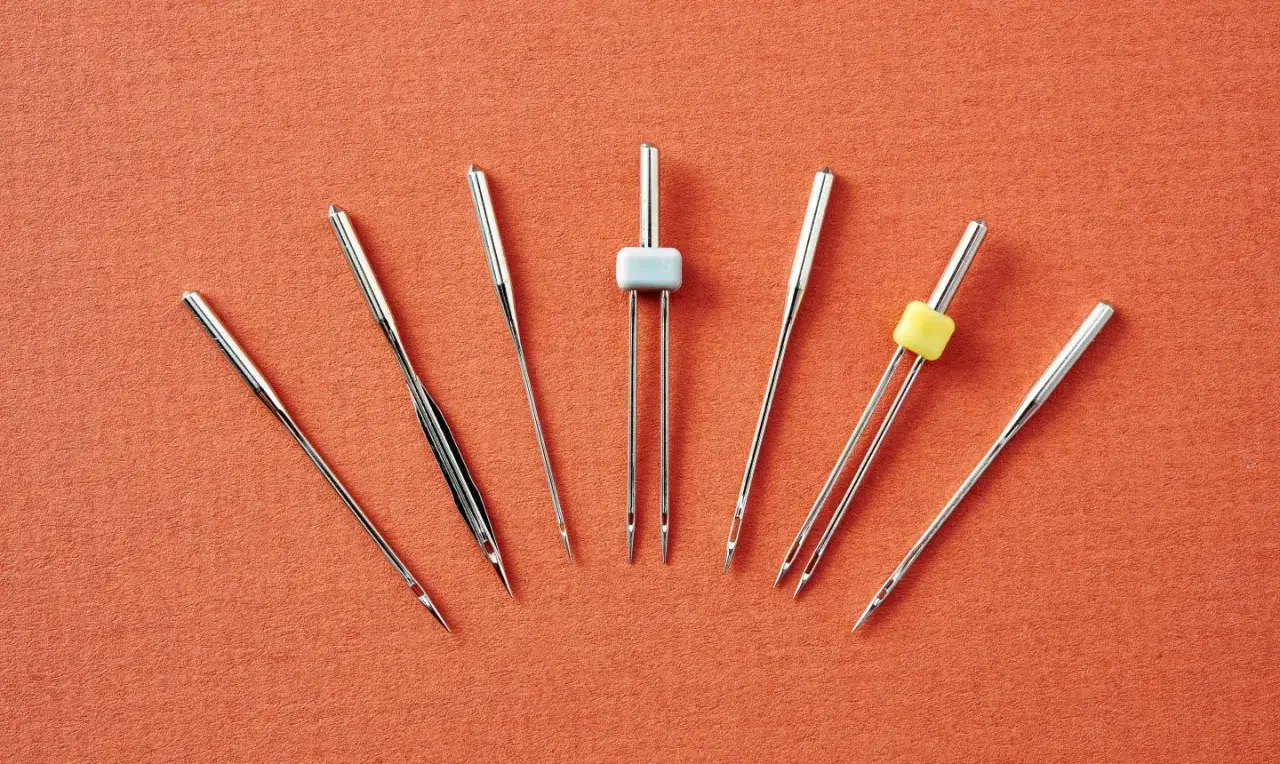
When I choose a needle, I focus on three things: the system, the point, and the size. The eye, groove, and coating matter too, but those three decide most of the day-to-day sewing experience.
| Feature | What it changes | Why it matters |
|---|---|---|
| System or shank | Whether the needle fits the machine correctly | A domestic machine usually expects a flat-shank home needle, while industrial or overlocker machines may need a different system. |
| Point shape | How the needle enters the fabric | A ball point separates knit fibres, a sharp point pierces tightly woven cloth, and a cutting point is used for leather. |
| Size | The thickness of the blade | Needle size changes how much space the thread has and how much damage the needle does to the fabric. |
Size is easy to misread because it is shown in two systems on the packet, for example 75/11 or 90/14. A smaller number means a finer needle. Schmetz notes that size 75 corresponds to a 0.75 mm blade diameter, which is a useful reminder that the number is not just a label, it reflects the physical thickness of the needle.
In the UK, that dual sizing is especially handy because you can judge both the metric and familiar sewing size at a glance. Once you know how those three variables work, choosing a needle starts feeling practical instead of guesswork.
Which needle type matches which fabric
If you want the shortest path to better stitching, match the needle to the fabric first. I usually think in terms of fabric behaviour: does it stretch, does it fray, is it dense, or is it delicate?
| Needle type | Best for | My practical note |
|---|---|---|
| Universal | Everyday woven fabrics, light synthetics, and some knit projects | A good general-purpose starting point, but not the best choice for every stretch fabric. |
| Jersey or ball point | Knits and stable stretch fabrics | The rounded tip helps the needle pass between loops instead of cutting them. |
| Stretch | Highly elastic knits, activewear, and fabrics with elastane | Useful when a ball point still skips stitches on a very stretchy cloth. |
| Microtex | Silk, microfibre, fine woven fabrics, and precise topstitching | A sharp, slim point gives cleaner seams on fabrics where a bulky needle would leave marks. |
| Jeans or denim | Denim, canvas, quilt layers, and thick woven fabrics | The reinforced blade resists deflection better than a standard universal needle. |
| Leather | Leather, faux leather, and heavy non-wovens | Its cutting point is useful only on the right materials, not on knit or woven cloth. |
| Topstitch | Visible topstitching and heavier thread | The larger eye gives thicker thread more room, which helps reduce shredding. |
Needle size matters just as much as needle type. As a broad rule, 70/10 to 75/11 suits fine fabrics, 80/12 works well for many general projects, 90/14 is a sensible step for medium-weight cloth, and 100/16 or above is usually reserved for heavy layers. The right size keeps the stitch neat without punching a hole larger than it needs to be.
Once you see how point shape and size work together, the warning signs from the machine become much easier to read.
What goes wrong when the needle is wrong
Most sewing problems are not dramatic failures. They are small clues. I treat them as diagnostics rather than random machine mood swings.
- Skipped stitches often mean the point shape is wrong for the fabric, or the needle is worn.
- Shredded or broken thread can point to a rough eye, a needle that is too small for the thread, or a bent needle.
- Puckering usually means the needle is too large, too blunt, or too aggressive for the fabric weight.
- Visible holes or runs are common when a sharp or thick needle is used on a delicate cloth.
- Loud knocking or popping can mean the needle is dull, bent, or simply the wrong size for the layers being sewn.
The important thing is that the stitch usually tells you what is wrong before the machine does anything more serious. If I see puckering on a lightweight woven fabric, I do not immediately blame tension. I first ask whether the needle is too large for the job. If a knit skips stitches, I reach for a Jersey or Stretch needle before I change settings on the machine.
That habit saves time because it solves the most common problems at the source. It also keeps you from chasing a perfectly good machine setup when the real issue is a worn or mismatched needle.
How I choose a needle in practice
My selection process is simple, and I think it is the safest way to work when you are not sure what to use.
- Check the machine manual first. If the machine expects a domestic flat-shank needle, stay within that system.
- Identify the fabric behaviour. Woven, knit, stretch, dense, coated, or leather all point to different needle families.
- Choose the smallest size that handles the thread cleanly. Bigger is not better unless the fabric actually needs it.
- Test on scraps before committing to the project. A good scrap test is faster than unpicking a full seam.
- Change the needle if the stitch quality drops, even if the needle looks fine at a glance.
For overlockers, I am even more careful. Some newer machines use the same home needle system, but others need a different overlocker-specific system, so I never assume the packet is interchangeable just because the needle looks similar. The machine manual is the final authority there.
SINGER recommends changing the needle every 6 to 8 hours of sewing, and that is a practical rule I trust. A fresh needle is cheaper than chasing broken thread, missed stitches, and fabric damage caused by a dull point.
In other words, selection is only half of the job. Freshness matters too, and it is one of the easiest ways to keep the machine sewing cleanly.
What to keep near your machine so the next project starts cleanly
If I were building a small, realistic needle kit for a domestic sewing room in the UK, I would keep only what I actually use. That makes the choice faster and reduces the temptation to use the wrong needle “just this once.”
- 80/12 Universal needles for everyday woven sewing.
- 90/14 Jersey or Stretch needles for knitwear and anything with noticeable recovery.
- 70/10 or 75/11 Microtex needles for fine fabrics and crisp seams.
- 90/14 or 100/16 Jeans needles for denim, canvas, and layered seams.
- Topstitch needles if you regularly use heavier thread for visible stitching.
I also keep a simple habit: when I finish a project, I note what needle was in the machine and whether it still feels fresh. That tiny bit of organisation makes the next project smoother, especially when you move between a cotton dress, a stretch hem, and a heavier home-decor seam in the same week. So no, the needles are not all the same, but once you match system, point, and size to the job, sewing becomes noticeably calmer and more predictable.