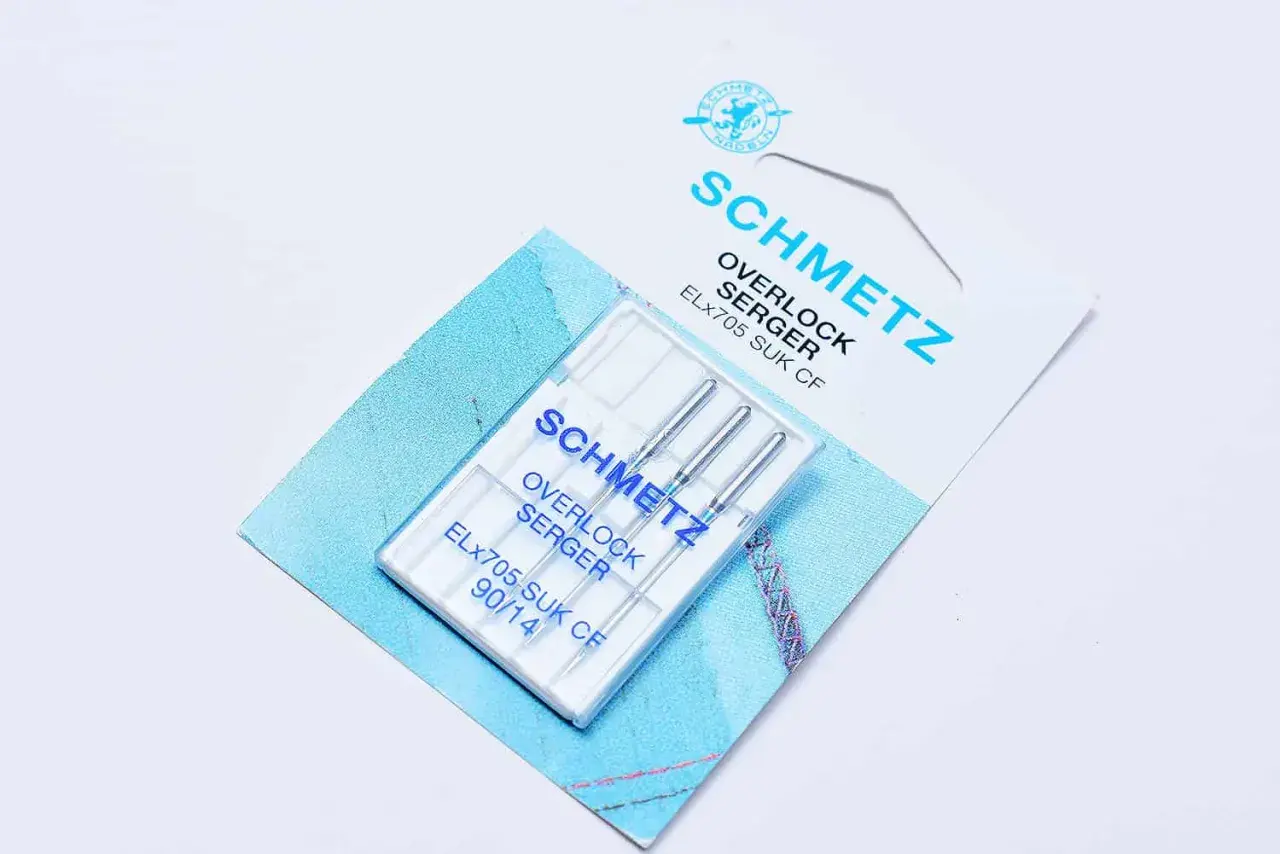
Knit fabrics move under the needle instead of staying locked in place, which is why the wrong size can leave holes, skipped stitches, or seams that split the first time the garment is stretched. The practical answer to what size needle for knit fabric is usually a 75/11 or 80/12 ballpoint or jersey needle, with a 70/10 for delicate knits and a 90/14 for heavier ones. I will show you how to match the size to the fabric, when to switch to a stretch needle, and which machine settings make the biggest difference.
The key choices before you sew
- 80/12 jersey is the safest starting point for most medium-weight knits.
- 70/10 works better on fine, lightweight knits that bruise easily.
- 90/14 is the better choice for heavier sweatshirting, fleece-backed jersey, or bulky seams.
- Stretch needles are worth using on fabrics with a lot of elastane, especially swimwear and activewear.
- If the seam skips or tunnels, check the needle first before adjusting tension.
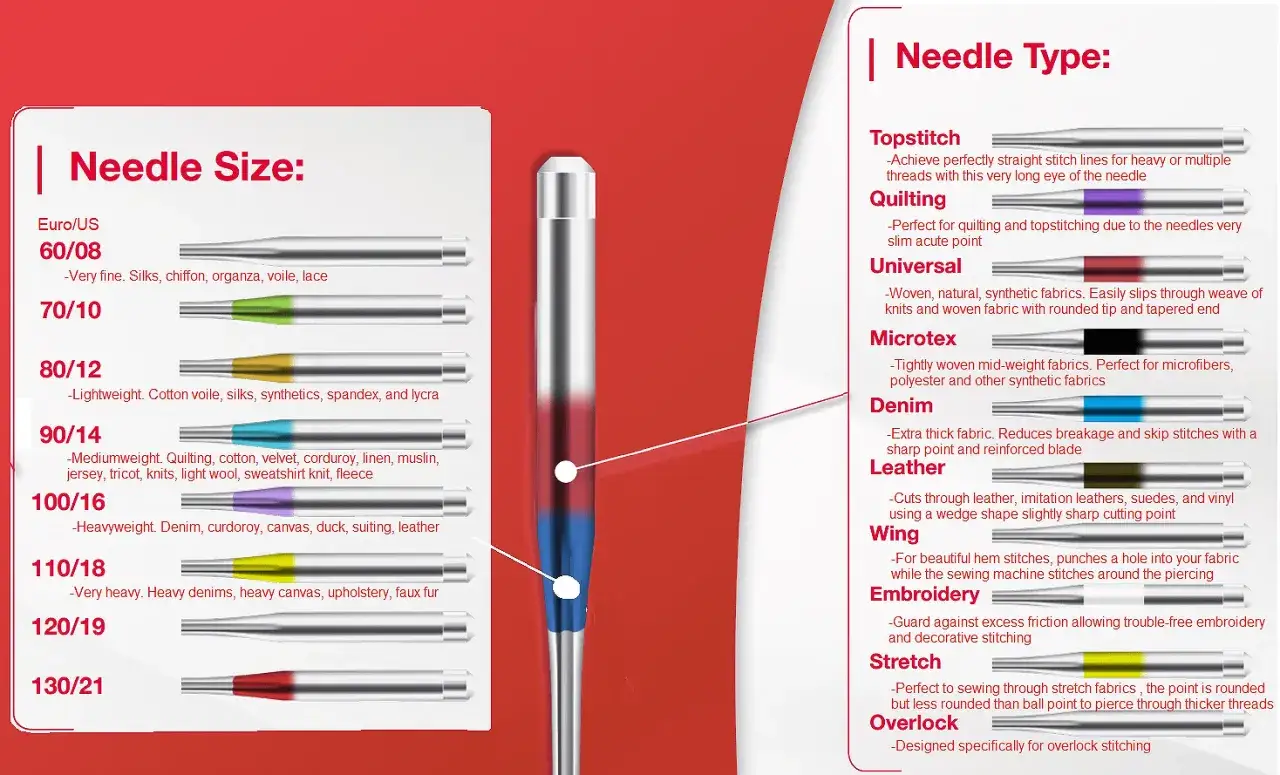
The size I reach for first on most knit fabrics
If I am sewing an ordinary T-shirt knit, interlock, or ponte, I usually start with an 80/12 jersey needle. It is small enough to respect the fabric but sturdy enough to sew a neat seam without fighting the machine. In UK packaging, the same family often appears as 70/10, 75/11, 80/12, and 90/14, with the larger number meaning a thicker needle.
| Fabric type | Needle to start with | Why it works |
|---|---|---|
| Light jersey, pointelle, fine rib knit | 70/10 or 75/11 jersey | Gives the fabric a lighter touch and helps avoid visible holes. |
| Standard cotton jersey, interlock, everyday knit tops | 80/12 jersey | The best all-round choice for most home dressmaking projects. |
| Ponte, French terry, medium sweatshirt knits | 80/12 or 90/14 jersey | Handles more body and seam bulk without feeling too aggressive. |
| Sweatshirting, loopback fleece, heavier knit layers | 90/14 jersey | Stronger shaft, better for thicker seams and denser cloth. |
| Lycra, swimwear, very stretchy activewear | 75/11 or 80/12 stretch | Better suited to high elasticity and more likely to prevent skipped stitches. |
The table is only a starting point, not a law. I still test on a scrap because thread thickness, seam bulk, and the actual stretch percentage of the fabric can move the best choice up or down one size.
Why the needle tip matters as much as the number
Needle size tells you how thick the needle is, but the tip shape tells you how it behaves in the fabric. On knits, I want the point to slip between the loops rather than spear straight through them, because piercing the loops is what creates runs, tiny holes, and that miserable wavy seam that never quite recovers.
- Jersey or ballpoint needles have a rounded tip and are my default for stable knits.
- Stretch needles are a better bet when the fabric has a lot of elastane and skipped stitches start showing up.
- Super stretch needles handle thicker thread, thicker seams, and more demanding elastic fabrics.
- Universal needles can work on a very stable knit, but I only use them when I have no better option.
That is the real reason the needle choice matters: the fabric structure is knitted, so the machine should separate the fibres, not cut through them. Once that is sorted, the next question is how to tell when you have picked the wrong one.
How to spot the wrong needle before the seam fails
A bad match usually announces itself quickly, and I trust the fabric before I trust the settings dial. If the first test seam looks wrong, I change the needle before I touch tension or stitch length, because the needle is often the cheapest fix.
- Skipped stitches usually mean the needle is too blunt, too small for the thread, or the wrong type for elastic fabric.
- Small holes or little ladders mean the tip is piercing the knit instead of parting it.
- Puckering or tunnelling often comes from the wrong needle plus a stitch that cannot stretch.
- Thread shredding or breakage can happen when the eye is too small or the needle is already worn.
My rule is simple: fix one variable at a time. I replace the needle, sew a fresh scrap, and only then decide whether the fabric needs a smaller size, a stretch needle, or a different stitch.
The machine settings that help knit seams behave
Once the needle is right, the machine should be set up to follow the fabric's movement rather than lock it down. For home sewing, that usually means a stretch-friendly stitch, sensible tension, and a test seam before the real project starts.
- Use polyester thread for most knits. It has more give than cotton thread and usually copes better with movement.
- Choose a narrow zigzag or stretch stitch for seams. A straight stitch is too rigid for most knits.
- Start with a stitch length around 2.0 to 2.5 mm. For a narrow zigzag, I keep it around 1.5 mm wide and about 2.0 to 2.5 mm long.
- Use a walking foot or reduce presser-foot pressure if the layers are feeding unevenly or the fabric is stretching out as it sews.
- Do not pull the fabric. Let the feed dogs move it. Pulling is one of the fastest ways to create wavy seams.
- Test a seam you can stretch with your hands. If the stitches snap when the fabric stretches, the stitch choice is wrong even if the seam looks neat flat.
For hems, I often switch to a twin needle rather than forcing a straight seam to do the job. It gives a cleaner finish and still leaves enough stretch for wear.
Where twin needles and overlockers fit into the picture
Twin needles are not the same thing as ordinary sewing needles, but they are one of the most useful finishes for knit garments. I use them for hems, necklines, and sleeve edges when I want a store-bought look without losing stretch.
- Use a stretch twin needle on most knit hems.
- Choose a narrower spacing for light knits and a wider spacing, such as 4.0 mm, for heavier knits.
- Pair it with a stretch stitch or a slightly looser tension if the underside starts tunnelling.
- Use the correct overlocker needle if you are sewing on an overlocker; household machine needles are not always a direct substitute.
- Move up to a super stretch needle when thicker thread or bulky seams keep breaking the stitch line.
This is the point where many sewists blame the machine, but the real issue is often that the needle family does not match the job. Once you separate seam sewing, hemming, and overlocking, the choices become much clearer.
The small habits I rely on before every knit project
The cleanest knit seams usually come from boring habits, not clever tricks. I start with a fresh needle, sew a 10 cm test seam on scrap, stretch it hard between my hands, and only then move to the garment pieces. If the seam skips, I change the needle type first; if it stretches but waves, I change the stitch before I touch anything else.
As a practical rule, I would keep three sizes in the sewing box: 70/10 for fine knits, 80/12 for everyday jersey, and 90/14 for heavier knits. Add a stretch needle for elastane-rich fabrics, and replace the needle after roughly 2 to 3 garments or sooner if you hit a pin. That small bit of discipline saves more fabric than any amount of tension fiddling ever will.