Ribbed fabric is one of those details that looks simple until you start choosing between knits, trims and finishes. In plain English, what does ribbed mean? It usually describes a fabric or surface with raised, parallel lines that you can see and feel. In textiles, that texture matters because it changes stretch, recovery, and the way a garment sits on the body.
The practical signs of ribbed fabric
- The surface has raised vertical ridges rather than a flat face.
- It is usually a knit, so it stretches and springs back better across the width than along the length.
- Fine 1x1 rib looks neat and close; 2x2 and 3x3 rib look broader and more obvious.
- It is especially useful for cuffs, neckbands, waistbands, socks and fitted tops.
- It is not the same as jersey, which is smoother and more likely to curl at the edges.
What ribbed means in a fabric context
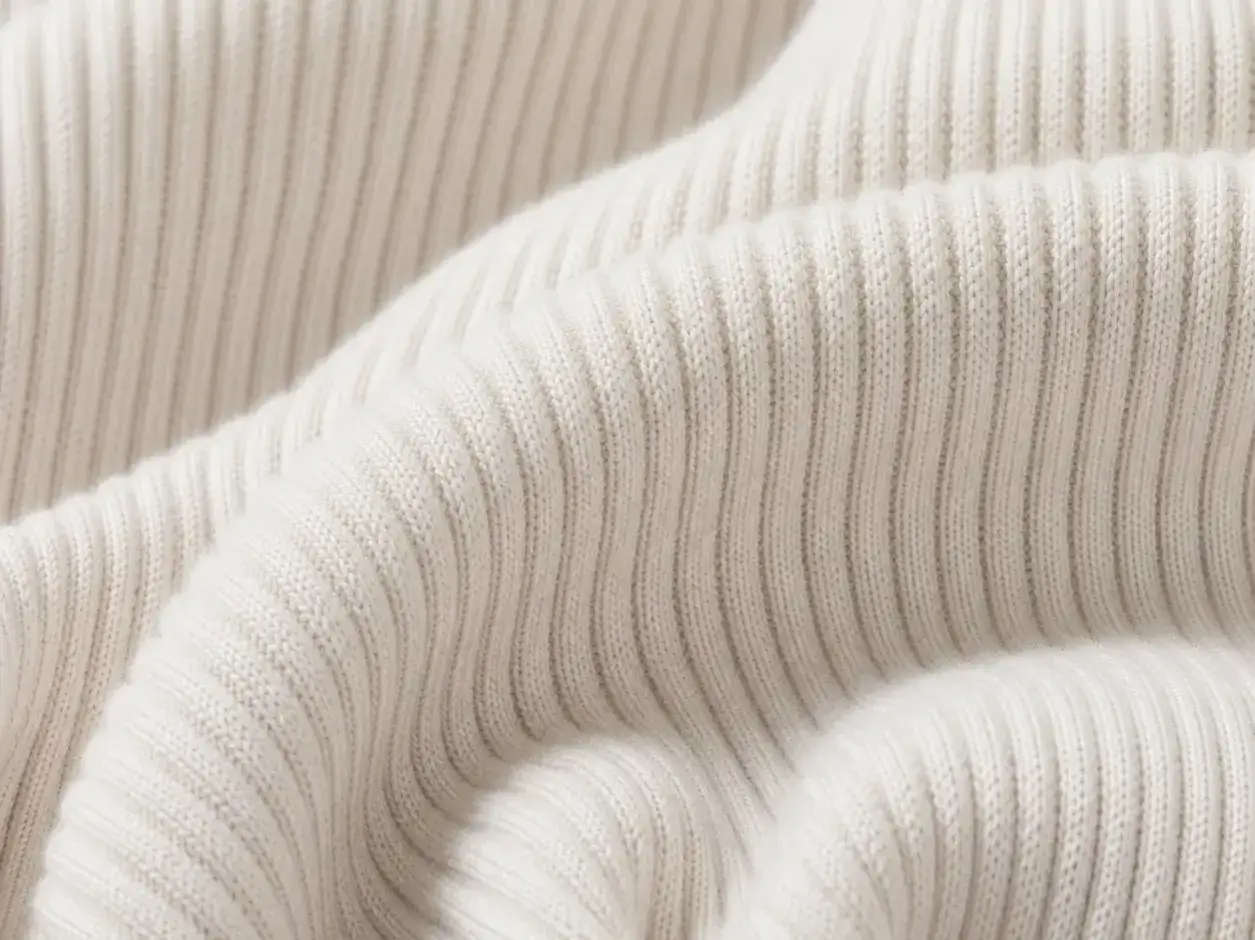
In fabric language, ribbed describes a surface made up of repeated raised columns or ridges. I treat it as a texture first and a style cue second, because the texture is what changes how the cloth behaves. The important part is not just that you can see lines, but that those lines are part of the structure of the fabric itself.
That is why ribbed fabrics feel different from a printed stripe. A print only changes the look; ribbing changes the actual surface and often the stretch. In everyday sewing talk, the word usually points to a knitted construction, although you may occasionally see it used more loosely for other rib-like surfaces. For garment making, though, ribbed almost always means a knit with visible depth.
It is also worth clearing up one common assumption: ribbed does not automatically mean thick, warm or heavy. A fine cotton rib can be light and breathable, while a heavier wool rib can feel cosy and dense. What links them is the raised pattern and the way that pattern affects fit and recovery. That leads naturally to how the fabric is built.
How ribbed fabric is built
Ribbed knit gets its texture from alternating knit and purl stitches. The knit stitches form the visible columns; the purl stitches sit beside them and create the recessed channels. That alternating structure is what gives ribbing its spring and its distinct vertical appearance.
The stitch ratio changes the look and the feel. A 1x1 rib alternates one knit stitch with one purl stitch, so the lines are fine and close together. A 2x2 rib makes broader columns, which usually look softer and more relaxed. A 3x3 or wider rib gives a bolder, more obvious surface that can feel a little fuller in the hand.
| Rib type | Visual effect | Typical behaviour | Best use |
|---|---|---|---|
| 1x1 rib | Fine, tight lines | Snug and neat with strong recovery | Neckbands, cuffs, close-fitting trims |
| 2x2 rib | Broader, softer columns | Stretchy but a little more relaxed | Jumpers, tops, soft waist finishes |
| 3x3 rib | Bold, clearly visible ridges | Fuller feel, often slightly heavier | Cosier garments, statement trim, chunky knitwear |
| Wide rib | Strong texture and depth | Depends heavily on yarn and fibre blend | Fashion-led tops, cuffs, decorative panels |
In practice, the exact result depends on yarn thickness, fibre content and finishing. A cotton-rich rib behaves differently from a wool-rich one, even if the stitch ratio is the same. When I am choosing fabric, I always think about the finished use first and the stitch pattern second. That question of where ribbing performs best is the next piece of the puzzle.
Where ribbed fabric works best
Ribbed fabric earns its place when a garment needs to stretch, sit close to the body and return to shape cleanly. That is why it shows up so often on edges and close-fitting pieces. It gives structure without becoming stiff, which is a difficult balance to get from smoother knits.
| Use | Why ribbed fabric suits it |
|---|---|
| Cuffs and neckbands | It stretches enough to pass over hands or heads, then settles back neatly. |
| Waistbands and hems | It helps the garment stay in place without adding much bulk. |
| Fitted tops and tanks | It follows the body and moves with it instead of fighting the shape. |
| Socks and beanies | It grips gently, which helps the item stay put. |
| Babywear and loungewear | It is forgiving, comfortable and easier to pull on and off. |
I would be more cautious with ribbed fabric if the design depends on a smooth drape or a crisp, architectural silhouette. Heavy rib can add visual weight, and very stretchy rib can cling more than some people expect. In UK fabric shops, you will often see it labelled as cotton rib, rib jersey or by stitch ratio, such as 1x1 rib, which is useful because the label gives a clue about the way it will behave. Once you know that, comparing it with other knits becomes much easier.
How ribbed fabric compares with other common knits
Ribbing is only one way to create a knit surface, and the differences matter when you are choosing fabric for a project. The quickest way to judge it is to compare texture, stretch and stability side by side. I do this because two fabrics can both be stretchy, yet behave very differently on the sewing table and on the body.
| Fabric | Surface | Stretch and recovery | What it feels like | Best for |
|---|---|---|---|---|
| Rib knit | Raised vertical ridges | Strong widthwise stretch with good recovery | Textured, flexible, often snug | Trims, fitted garments, comfort-led pieces |
| Jersey | Smoother, flatter face | Stretchy, but usually less springy than rib | Soft and familiar, with a lighter feel | T-shirts, drapey tops, everyday basics |
| Interlock | Very smooth on both sides | Stable, with moderate stretch | Thicker and more uniform | Polished tees, babywear, cleaner finishes |
| Waffle knit | Grid-like texture | Stretch varies, usually less snappy than rib | Loftier and airier | Layering pieces, warmer tops, relaxed loungewear |
How to choose, sew and care for ribbed fabric
Before I buy ribbed fabric, I check three things: fibre content, weight and recovery. Cotton rib is breathable and easy to wear; cotton with a little elastane has more spring; wool or wool blends feel warmer but often need gentler handling. The easiest test is still a small swatch: stretch it across the width, let it go, and see whether it returns cleanly or stays baggy.
When I sew ribbed fabric, I keep the stitching flexible. A ballpoint or stretch needle helps avoid snagging the loops, and a stretch stitch or narrow zigzag lets the seam move with the cloth. It also helps to avoid pulling the fabric as it goes under the presser foot, because over-stretching is a fast way to create wavy seams. For heavier rib, I prefer to support the fabric and let the machine feed it naturally rather than forcing speed.
Care is just as practical. Wash ribbed fabric gently, especially if it contains wool, viscose or elastane. Cool washes and low spin settings are safer than aggressive heat, and heavy rib is usually better dried flat than hung wet, because gravity can distort the shape. If you want the ridges to stay tidy, treat the fabric as a knitted structure rather than a plain woven cloth.
The common mistakes are predictable: choosing rib because it looks nice without checking recovery, sewing it like stable cotton, and assuming all rib behaves the same. Those three shortcuts are usually where fit problems begin. Once you start looking at rib as a performance choice rather than just a texture, the final result gets much easier to control.
The small detail that decides whether a garment feels finished
Ribbing is one of those fabric details that quietly does a lot of work. It adds texture, improves fit and helps garments hold their shape where they need to. That is why it shows up so often in the parts of clothing that take the most movement and the most wear.
If I had to reduce it to one rule, it would be this: choose ribbed fabric when you need stretch and recovery, and choose a smoother knit when you need softness and drape. That one decision often separates a garment that feels thoughtfully made from one that looks technically fine but not quite resolved.