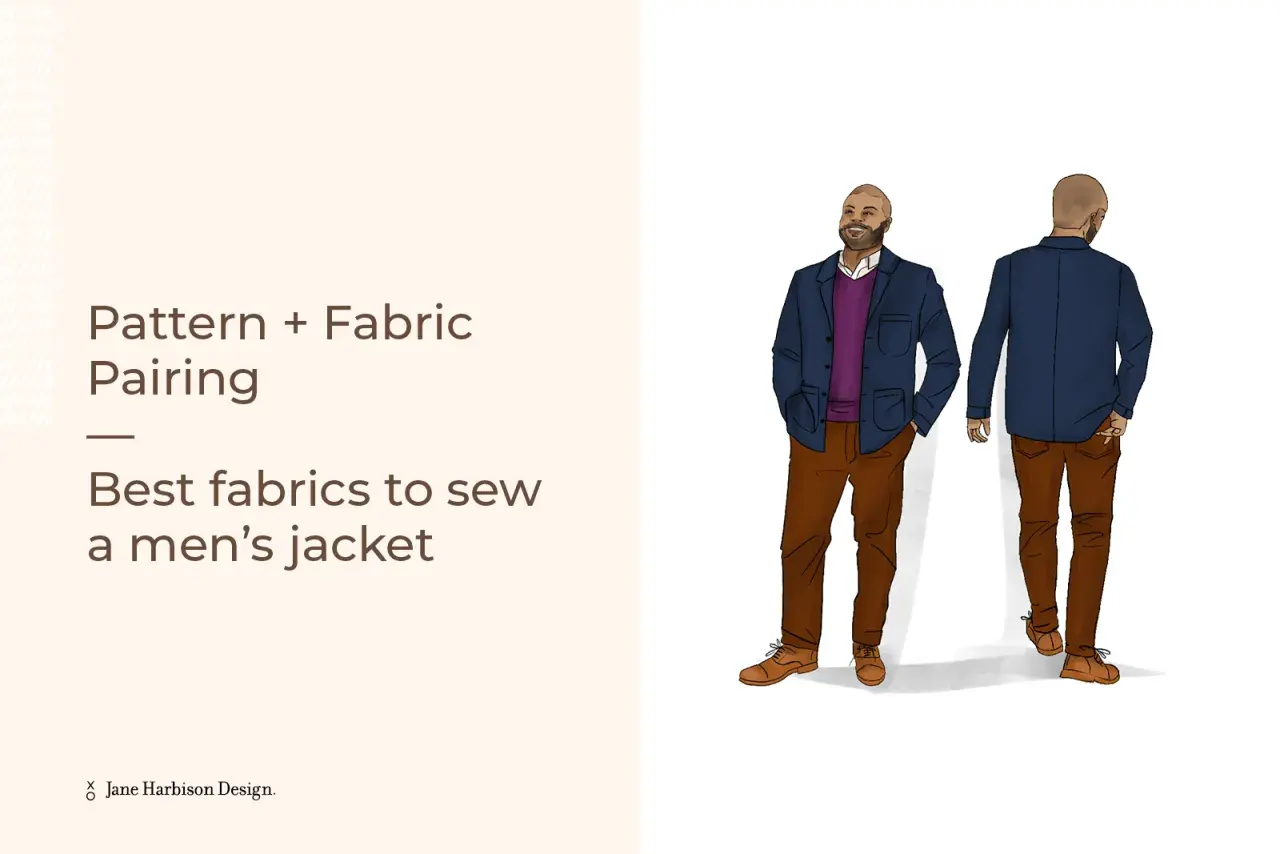
A good jacket starts with the cloth, not the pattern. The same silhouette can feel sharp, rugged, or cosy depending on whether I cut it in tweed, denim, waxed cotton, or a technical shell. This guide breaks down the main jacket fabric types, explains how each one behaves in wear, and shows how I would choose for British weather, sewing comfort, and long-term use.
The right jacket cloth is a balance of weather, structure, and care
- Heavier woolens such as tweed and melton give warmth and body, but they need lining and careful pressing.
- Cotton twill, gabardine, denim, and moleskin are the easiest everyday options when you want durability without too much fuss.
- Waxed cotton and technical nylon are the best starting points for damp, windy conditions because they handle weather better than plain cloth.
- Softshell and fleece are comfortable, but they work best as part of a layered jacket system rather than as a standalone shell in heavy rain.
- The lining matters almost as much as the outer fabric, especially for sleeve glide, warmth, and comfort indoors.
The fabrics I reach for most often
When I narrow outerwear down to the fabrics that actually get worn, I usually come back to a small core group. Each one solves a different problem: some give shape, some give warmth, some give weather resistance, and some simply age well. I treat the list below as a practical starting point rather than a fashion ranking, because the best choice depends on the jacket you want to make.
| Fabric | Typical weight | Best for | Strengths | Trade-offs |
|---|---|---|---|---|
| Wool tweed | 300-500 g/m2 | Tailored jackets, winter blazers, country style outerwear | Warm, resilient, textured, visually rich | Can feel bulky and usually needs a lining |
| Melton wool | 400-700 g/m2 | Peacoats, structured winter jackets, clean edges | Dense, wind-resistant, polished look | Heavy, expensive, and less forgiving to press |
| Cotton twill or gabardine | 180-320 g/m2 | Chore jackets, safari jackets, smart casual layers | Crisp, durable, relatively easy to sew | Needs treatment or layering if you want true weather protection |
| Denim | 270-475 g/m2 | Workwear and casual jackets | Tough, familiar, breaks in beautifully | Can be stiff and bulky at seams |
| Corduroy | 200-350 g/m2 | Autumn jackets, overshirts, relaxed tailoring | Warm, tactile, easy to wear | The pile can crush and show wear |
| Waxed cotton | 200-400 g/m2 base cloth | Field jackets, rain-ready casual outerwear | Good water resistance and a strong heritage look | Needs reproofing and dislikes aggressive heat |
| Nylon ripstop | 40-120 g/m2 | Packable shells, sport jackets, travel layers | Very light, strong for its weight, quick to dry | Can feel noisy or less natural in hand |
| Softshell | 200-300 g/m2 | Active jackets, commuting layers, light hiking | Stretchy, comfortable, decent wind resistance | Rarely fully waterproof |
| Fleece | 200-350 g/m2 | Midlayers, casual zip jackets, indoor-outdoor comfort pieces | Warm, soft, quick-drying | Poor wind resistance unless paired with a shell |
| Leather | 0.8-1.4 mm | Biker jackets, fashion pieces, hard-wearing statement outerwear | Very durable and shapes to the wearer | Specialist care, higher cost, and more weight |
I also keep moleskin in mind for workwear-inspired jackets. It sits between cotton twill and corduroy: dense, brushed, and pleasantly soft without losing the sturdy feel that makes a jacket practical. Once you know the cloth family, the next decision is whether the jacket itself needs structure, stretch, or weather resistance.
Match the fabric to the jacket you actually want to wear
I find this is where many projects either succeed quickly or drift off course. A fabric can be excellent in isolation and still be wrong for the garment if the silhouette, climate, or intended use does not match. For a jacket, I start by asking what the wearer will do in it most of the time, because that answer narrows the choice faster than any trend forecast.
- Tailored jacket or blazer - wool tweed, flannel, gabardine, or a compact wool blend if you want shape without stiffness.
- Workwear or chore jacket - cotton twill, denim, moleskin, or canvas when durability matters more than drape.
- Rain-ready field jacket - waxed cotton or a coated technical nylon if wind and drizzle are part of the brief.
- Winter coat - melton wool or heavy tweed when warmth and body matter more than lightness.
- Casual overshirt - corduroy, brushed cotton, or lighter denim for something that layers easily indoors.
- Active jacket - softshell or a technical polyester/nylon shell if movement and fast drying matter.
For the UK specifically, I give more weight to damp resistance and layering comfort than to extreme insulation. A jacket that handles drizzle, wind, and indoor overheating tends to earn far more wear than one that only looks right on the hanger. That balance depends on the structure of the cloth itself, which is why weave and finish matter so much.
Weave, weight, and finish change the feel more than most people expect
Two fabrics can both be called wool or cotton and still behave very differently. The weave, the weight, and the finish determine whether the jacket feels crisp, relaxed, warm, airy, or protective. I would never choose on fibre name alone, because that leaves out the details that most directly affect wear.
Weave
Plain weave fabrics are stable and easy to handle, which is why they show up so often in lightweight jackets and shells. Twills, including gabardine and denim, have more diagonal structure, usually more body, and a slightly richer drape. Textured weaves such as tweed and bouclé can look brilliant in outerwear, but they also need more thoughtful lining and pressing because the surface itself adds visual and physical bulk.
Weight
For most unlined or lightly lined jackets, I think 200-350 g/m2 is the sweet spot. It gives enough substance without turning the garment into upholstery. Once you move above 350 g/m2, you are usually in winter jacket territory, where warmth and structure increase but mobility drops. Technical shells are the exception: they can be much lighter, sometimes under 120 g/m2, because the performance comes from coatings, membranes, or layering rather than raw fabric mass.
Read Also: Does Lyocell Wrinkle? The Truth & How to Keep it Smooth
Finish
Finish can completely change the reading of a fabric. Brushed finishes feel softer and warmer, which is why they suit casual or cold-weather jackets so well. Waxed or coated finishes add water resistance, but they also change care: you lose some easy ironing freedom and often gain a need for special maintenance later. If I am planning a jacket for regular wear, I like a finish that suits the real use, not just the look on a mood board.
Those details matter because they shape how the jacket performs after the first season, not just how it photographs on day one. The inside construction is the next piece of that puzzle.
The lining and inner layers matter just as much
When a jacket feels uncomfortable, the outer cloth is not always the culprit. A lining that drags in the sleeves, traps heat, or adds too much bulk can ruin an otherwise good fabric choice. For sewing projects, I treat the lining and interlining as part of the same design decision, not an afterthought.
| Inner layer | What it feels like | Best use | Watch out for |
|---|---|---|---|
| Viscose or rayon lining | Cool, fluid, comfortable | Tailored jackets and spring coats | Less durable than some synthetics |
| Cupro lining | Silky and breathable | Better-quality tailoring and comfortable sleeves | Usually costs more and can be harder to source |
| Polyester lining | Slippery and hard-wearing | Everyday jackets, schoolwear, workwear | Can feel static or less breathable |
| Quilted or padded lining | Warm and slightly bulky | Winter coats and insulated outerwear | Adds thickness and reduces drape |
| Cotton lawn or poplin | Light, natural, breathable | Unstructured summer jackets and lighter overshirts | Not as slick in the sleeves |
Interfacing deserves a mention here too. A woven fusible in a collar or front facing can sharpen the whole jacket, while a heavy interfacing can make a soft fabric feel cardboard-stiff. I like to test that relationship on small samples first, because the wrong inner layer is one of the fastest ways to spoil a good outer cloth. Once the inside is right, the remaining mistakes are usually easier to spot.
Where jacket choices usually go wrong
I see the same problems repeatedly, and most of them come from choosing fabric by appearance alone. The cloth may look right in a swatch book or online image, but if it cannot support the pattern or the intended weather, the finished jacket disappoints. A few small checks save a lot of frustration later.
- Ignoring drape - a fabric that is too limp will collapse in a structured jacket, while a fabric that is too rigid can fight the pattern lines.
- Forgetting seam bulk - heavy tweeds, denim, leather, and coated cloth need seam planning, especially at collars, cuffs, hems, and pocket edges.
- Mixing the wrong layers - a warm shell with a slick, breathable lining feels very different from a heavy shell with a static one.
- Skipping care checks - waxed cotton, leather, and some coated fabrics have very specific cleaning and pressing limits.
- Not testing needles and thread - technical fabrics, leather, and dense coatings all need the right setup before you commit to the full garment.
- Buying enough only for the shell - if you need lining, facings, interfacing, or quilted layers, the fabric budget and yardage change quickly.
My habit is simple: I sew a small test piece with the exact needle, thread, and interfacing I plan to use. That sample tells me more than a thousand product descriptions, especially when the fabric has a coating, a nap, or a lot of body. Once those risks are under control, the final choice becomes much clearer.
The quickest way I narrow the options for a new jacket
When I want a fast, reliable decision, I use a short chain of questions. First I decide whether the jacket needs warmth, structure, weather resistance, or movement. Then I choose the cloth family that supports that job instead of trying to make one fabric do everything.
- If I want structure, I start with tweed, gabardine, denim, or melton wool.
- If I want weather resistance, I look at waxed cotton, coated nylon, or a technical polyester shell.
- If I want comfort and mobility, softshell, brushed cotton, or lighter corduroy usually make sense.
- If I want classic British character, tweed, moleskin, and waxed cotton are hard to beat.
- If I want easy daily wear, cotton twill and denim are still some of the safest choices.
That is the rule I come back to most often: start with climate, then decide how much shape you want, and only then choose the fibre and finish. If you are still torn between two options, order swatches, handle them in daylight, and fold them around your sleeve or shoulder line before you buy the full length. That small test usually tells you which cloth will earn a place in the wardrobe and which one will stay on the cutting table.