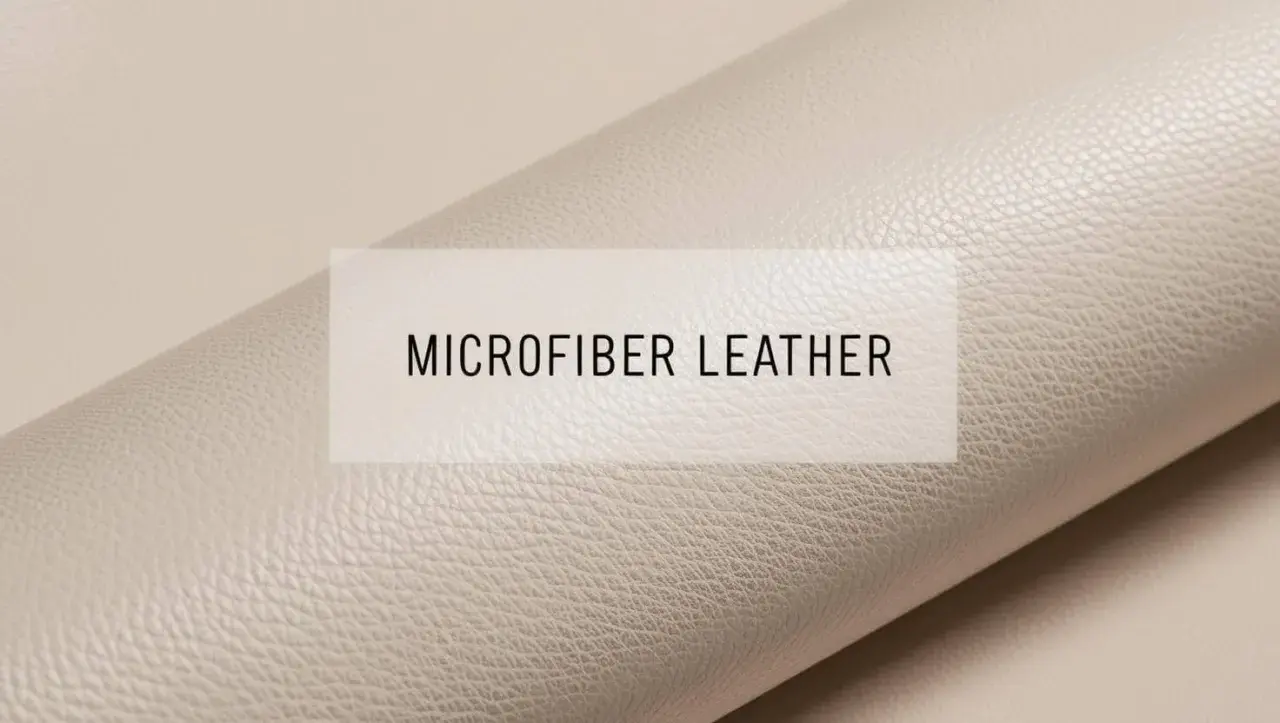
Microfibre leather sits in that awkward middle ground between textile and hide: it looks leather-like, behaves differently, and can be a smart choice when you need a durable, easy-care surface. This guide gives a practical answer to what microfiber leather is, how it behaves, and when I would choose it over PU or natural leather. I also cover sewing, upholstery, cleaning, and the buying checks that separate decent material from disappointing faux leather.
Microfibre leather in one glance
- It is a synthetic leather alternative built on fine fibres with a polyurethane surface layer.
- It usually offers better abrasion resistance and a more stable surface than basic PU leather.
- It is easier to clean than natural leather, but it will not age in the same way.
- It suits bags, footwear, upholstery, trims, and accessories where consistency matters.
- Good results depend on thickness, backing, finish, and how the material is sewn or cared for.
What microfibre leather actually is
At its core, microfibre leather is a manufactured leather substitute made from a very fine fibre base, usually polyester and polyamide, with a polyurethane finish on top. Polyamide is a nylon-family fibre that gives the backing structure, while polyurethane is the coating that creates the leather-like surface and helps with water resistance. In practice, that means you get a material engineered to imitate the look and handling of leather without using an animal hide.
I think that distinction matters because it explains both the strengths and the limits. A natural hide has irregular grain, scars, and fibre variation. Microfibre leather is built for consistency, so the grain is more controlled, the thickness is more even, and the surface is easier to reproduce at scale. That is useful in products that need a neat, repeatable finish, but it also means the material behaves more like a designed product than a living skin. Once you know that structure, the more useful question is how it performs in real use.
The qualities that matter in real use
The reason many makers and buyers prefer this material is not just the appearance. It tends to offer good abrasion resistance, a fairly stable surface, and less visible defecting than natural leather. For bags, seat covers, shoes, and accessories that get handled often, that combination is genuinely practical. It also wipes clean more easily than full-grain leather, which is one of the reasons it shows up so often in interiors and fashion items.
There are trade-offs, though. Lower-grade versions can feel flat or overly plastic, and the surface may be less forgiving under heat, solvents, or hard creasing. It is usually more breathable than the cheapest sealed synthetics, but it still does not breathe like premium leather. If a project needs a soft drape, a rich patina, or visible ageing over time, microfibre leather is not trying to do that job. I would describe it as a material that wins on consistency, not romance.
That is why it helps to compare it directly with the other two materials buyers most often consider.
How it compares with genuine leather and PU leather
| Material | Main strengths | Typical trade-offs | Best fit |
|---|---|---|---|
| Microfibre leather | Consistent grain, strong wear resistance, easy maintenance, more premium feel than basic faux leather | Less natural ageing, can mark or crack if the quality is poor or the care is harsh | Bags, shoes, upholstery, trims, everyday accessories |
| PU leather | Lower cost, wide availability, many colours and finishes | Usually thinner, less durable, more likely to peel or wear quickly | Budget projects and short-life decorative use |
| Genuine leather | Natural grain, long life when cared for well, develops character over time | Higher cost, more maintenance, natural imperfections, can stain or dry out | Premium goods, traditional leatherwork, projects that benefit from patina |
For me, the biggest practical difference is this: PU leather is often chosen because it is cheaper, while microfibre leather is chosen because it is usually more durable and more stable in daily use. Genuine leather still has its own place, especially when a project benefits from natural variation and ageing, but it asks for more care. If the brief is a clean finish, regular handling, and predictable output, microfibre leather often sits in the sweet spot. The right choice depends on the project, not just on the label.
Where it works best in sewing and design projects
Microfibre leather is at its best in projects where a smooth, controlled surface matters more than natural grain variation. I would reach for it first for handbags, wallets, laptop sleeves, light upholstery, chair panels, footwear uppers, strap details, and decorative trims. It also works well for products that need repeated colour matching, because you do not have to work around the same level of hide-to-hide variation that comes with natural leather.
- Bags and small goods because the material holds its shape well and looks tidy on panels and edges.
- Upholstery accents because the surface is easy to wipe and the grain is consistent across larger runs.
- Footwear and accessories because the finish can look polished without the cost of premium leather.
- Sample and display pieces because the colour and texture are easier to control from one piece to the next.
- Costume and craft work when a leather effect is needed without the weight or expense of hide.
Where I would be more cautious is in projects that need deep stretch, strong drape, or repeated high-heat exposure. Thick structured jackets, soft garments, and anything intended to sit very close to strong heat sources need more careful testing. That brings us to the practical part: handling it cleanly at the sewing machine.
How to cut, sew and finish it cleanly
Microfibre leather is friendly enough to sew, but only if you treat it like a coated material rather than a fabric that can take rough handling. I usually start with an offcut and test the needle, stitch length, and presser-foot pressure before I touch the final piece. A sharp needle that matches the material weight is a safer starting point than guessing, and a walking foot can help if the backing wants to shift while you sew.
- Use pattern weights or clips instead of pins, because holes can remain visible.
- Increase stitch length slightly so the seam does not become overly perforated.
- Reduce presser-foot pressure if the surface starts to mark or drag.
- Topstitch only when it helps the design, because extra stitching is very visible on this kind of surface.
- Press with caution from the wrong side, using a press cloth and low heat first.
- Finish raw edges with binding, folding, edge paint, or a clean topstitched seam, depending on the project.
One detail that catches beginners out is seam planning. Because the surface is smooth and often fairly dense, seam allowances can become bulky faster than expected. I would trim and grade carefully, then check how the finished seam behaves before committing to a full run. Once the piece is made, the way you care for it determines how long it keeps its finish.
Caring for it so it keeps its shape
Good care is straightforward, but it needs to be gentle. For day-to-day cleaning, a soft cloth and a mild soap solution are usually enough to lift dust and light marks. Wipe spills promptly, avoid soaking the surface, and keep harsh solvents, abrasive pads, and bleach well away from it. If the piece is upholstered, I would also avoid saturating the seams, because moisture can collect there even when the surface looks sealed.
The other risk is heat. Long exposure to strong sun, radiators, or hot tooling can stress the coating and make the material age faster than it should. That is one reason why cheap faux leather often disappoints: the outer layer fails before the user expects it to. A better-quality microfibre version usually lasts much longer, but it still does not behave like natural leather that can be conditioned and slowly developed over years. If the surface starts to peel, that is usually a sign of coating failure rather than something you can easily repair.
If you are buying for a sofa, chair, or any other upholstered item in the UK, I would also ask for the supplier’s fire-safety paperwork before I commit. The material itself may be fine, but the finished product still has to meet the right domestic upholstery requirements. That final check is often what separates a sensible purchase from a very expensive mistake.
When microfibre leather is the smarter choice
I would choose microfibre leather when I need a leather-like finish that stays neat, cleans easily, and performs predictably across multiple pieces. It makes sense for bags, footwear, upholstery details, and accessories where the main priorities are consistency, durability, and a controlled appearance. It is also a sensible option when the brief asks for a non-animal alternative but still expects a more refined surface than basic faux leather usually delivers.
I would pass on it when the project depends on natural ageing, a softer drape, or the character that only real hide tends to develop. That is the practical rule I use: if the design benefits from order and repeatability, microfibre leather is worth serious consideration; if it needs warmth, patina, and the quirks of an organic material, I look elsewhere. Used well, it is one of the most useful synthetic options in a modern fabric guide, but it rewards clear expectations more than blind enthusiasm.