The phrase types of shorts covers far more than holiday wear. I usually look at shorts through three lenses: cut, length, and fabric, because those are the details that change fit, movement, and how polished a pair feels. In this guide, I break down the main categories, explain what each one is good for, and point out the construction details that matter if you are buying or sewing a pair.
The quickest way to sort short styles
- Length changes the mood fastest. Short inseams feel sporty, 7-9 inches are the most versatile, and knee-skimming lengths read more relaxed or tailored.
- Fabric decides the character. Denim and cotton twill feel casual, linen feels lighter, and synthetics are better when performance matters.
- Fit is more important than the label. Two pairs with the same name can look completely different depending on rise, leg width, and pocket placement.
- Most wardrobes are built from five or six core shapes. Chino, denim, Bermuda, cargo, tailored, and athletic shorts do most of the work.
- Sewing details matter. Hem finish, reinforced seams, and pocket depth often decide whether a pair feels cheap or well made.
How I classify shorts in practice
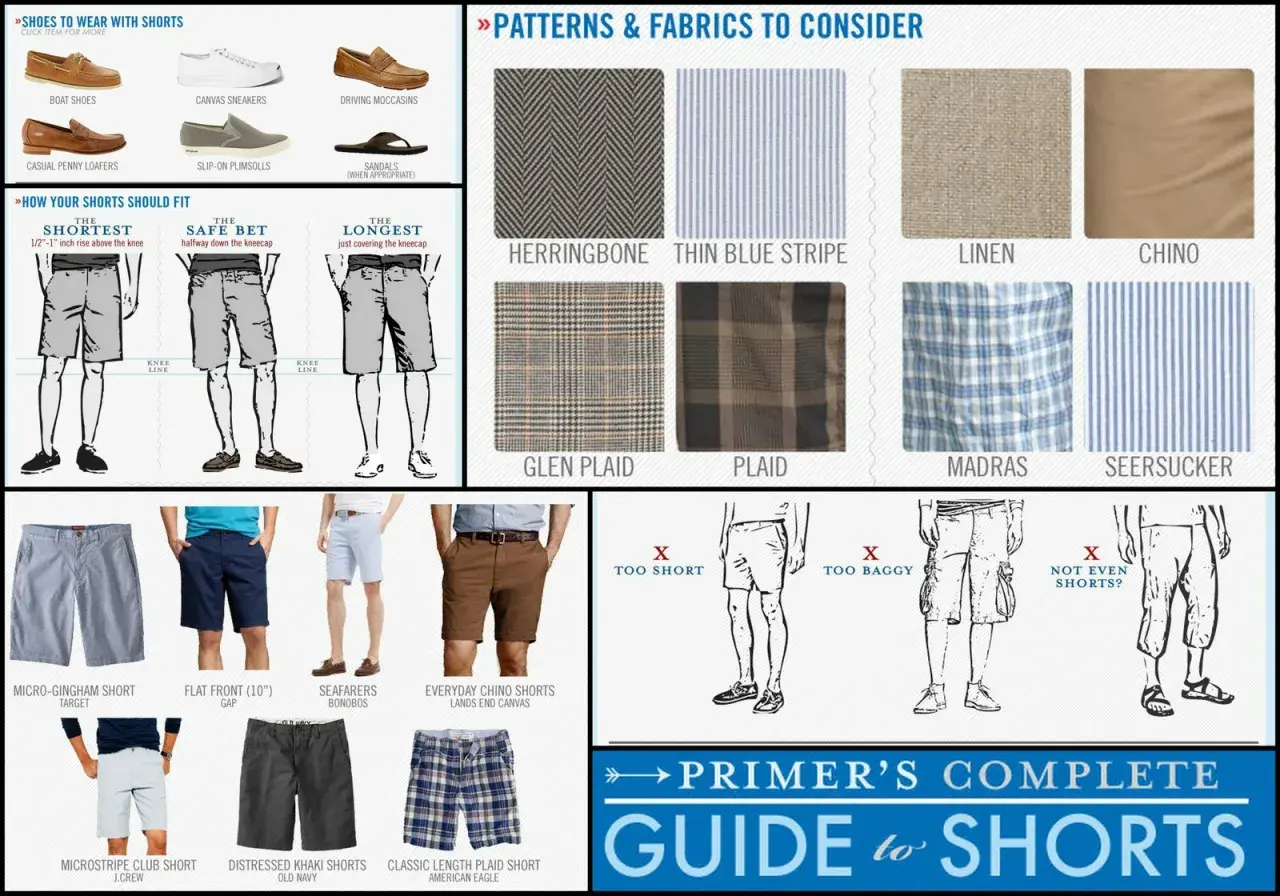
I find it easiest to separate shorts by purpose first, then by silhouette, then by cloth. Inseam is the inside-leg measurement, rise is the distance from the crotch seam to the waistband, and both affect how secure or relaxed a pair feels. A 7-9 inch inseam usually lands in the most versatile zone, 3-5 inches feels shorter and more athletic, and 11-13 inches starts moving into Bermuda territory.That simple framework is more useful than memorising marketing names, because the same label can cover very different garments. One brand’s “casual short” may be a flat-front chino, while another’s could be a loose cargo shape with a drawcord waist. Once you know how length, rise, and fabric work together, the rest of the classification becomes much clearer. From there, the everyday staples are the best place to start.
Everyday styles that make up most wardrobes
When I think about the shorts most people actually wear, I keep coming back to a small group of reliable shapes. These are the pairs that move easily between weekends, travel, and warm-weather city dressing, and they are also the easiest to recognise when you are comparing cuts.
| Style | What it looks like | Best for | Fabric and construction clues |
|---|---|---|---|
| Chino shorts | Straight or gently tapered, usually mid-thigh | Smart-casual wear, holidays, everyday summer outfits | Cotton twill or cotton blends; flat front, clean waistband, neat topstitching |
| Denim shorts | Heavier, more structured, often slightly rugged | Relaxed casual outfits and off-duty dressing | Rigid or lightly stretchy denim; can be clean-hemmed or cut off |
| Tailored shorts | Sharper line, sometimes with pleats or darts | Dressier summer looks, city wear, events | Press creases, waistband construction, lighter suiting fabrics, careful finishing |
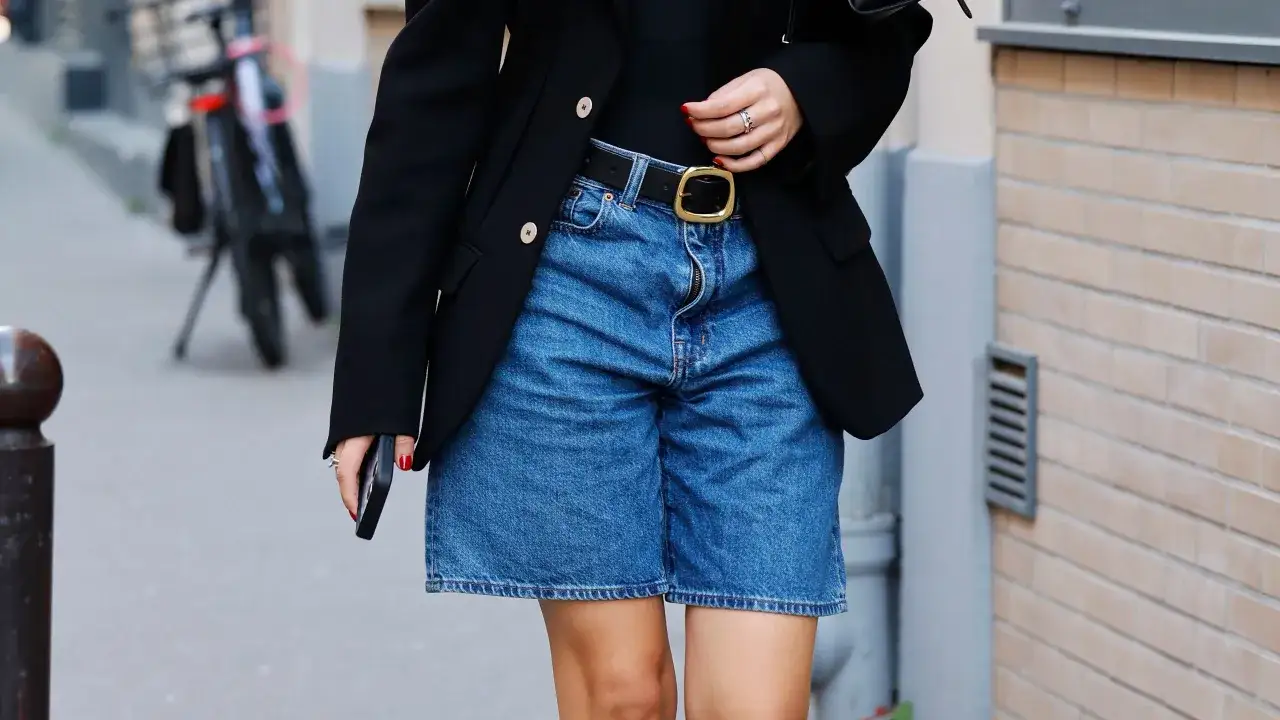
| Bermuda shorts | Longer leg, often close to the knee | More coverage, polished casual styling | Usually straighter through the leg; works well in cotton, linen blends, or soft tailoring cloth |
| Cargo shorts | Utility pockets, more volume, relaxed shape | Travel, outdoor use, casual wear | Patch pockets, durable cloth, and enough structure to keep pockets from sagging |
I would reduce this whole group to two broad ideas: the clean short and the utility short. Chino and tailored pairs lean toward the first, while denim and cargo styles lean toward the second. In the UK, that distinction matters because a pair has to work not just for heat, but for the occasional cooler, windier day as well. That is why fabric choice becomes the next major filter.
Sport and outdoor shorts that are built for movement
Technical shorts solve a different problem. They are designed to dry quickly, reduce friction, or make movement easier, and their details are usually there for function rather than decoration. If you ignore the fabric and only look at the shape, these styles can seem interchangeable, but the construction tells a different story.
| Style | What makes it different | Typical use | What I look for |
|---|---|---|---|
| Running shorts | Lightweight, often split for stride freedom | Running, training, high-movement activity | Breathable shell, built-in liner or brief, secure pocket |
| Gym shorts | Simple, roomy, and comfortable | Strength training, general fitness, lounging | Soft waistband, enough ease at the thigh, fabric that does not cling |
| Board shorts | Longer, water-friendly, usually without a mesh liner | Surfing, beachwear, swimming-adjacent use | Quick-dry fabric, secure closure, durable stitching |
| Hiking shorts | Practical pockets and abrasion resistance | Walking, travel, outdoor trips | Stretch, reinforced seams, pocket placement that stays comfortable under a backpack |
| Cycling shorts | Close-fitting, often with compression properties | Road cycling, spin classes, performance wear | Flat seams, grip at the hem, and padding when the pair is made for riding |
| Swim shorts | Designed to handle water without holding too much weight | Swimming, poolside wear, holiday packing | Fast-drying cloth, mesh lining if needed, and a waistband that stays put when wet |
The easiest mistake here is assuming all active shorts can do the same job. They cannot. Running shorts are built for stride, board shorts for water, and hiking shorts for carrying things without constant adjustment. If you want one pair that can move between errands and exercise, a simple gym short is usually less fussy than a highly technical model. That practical distinction leads neatly into the more style-led end of the category.
Fashion-led cuts that push beyond the basics
Some shorts are less about everyday utility and more about shape, attitude, or styling effect. These are the pairs that can look sharp in the right outfit but feel awkward if the proportions are wrong. I treat them as fashion-led because their success depends more on silhouette than on pure function.
- Hot pants sit at the very short end of the scale. They are a statement choice, not a neutral staple, and they work best when the rest of the outfit is deliberately restrained.
- Skorts look like a skirt from the outside but behave like shorts in motion. They are useful when you want coverage without losing mobility.
- Culottes sit on the edge of the category. They are wide through the leg and often read more like a split skirt than a traditional short, which makes them useful for a softer, more architectural look.
- Pleated shorts bring extra volume at the waist. I like them when a pair needs to feel smarter, because the pleats add structure without making the garment stiff.
- Cut-offs are less about a standard pattern and more about finish. A frayed denim hem gives them a deliberately rough edge, and that unfinished look is the point.
In 2026, I still see longer Bermudas, sharper tailoring, and cleaner lines carrying more weight in everyday dressing than overly tiny or overly bulky fashion experiments. That does not make the bolder cuts irrelevant, but it does mean proportion is doing most of the work. Once you know which shapes are fashion-first, the next question is how to choose the version that actually suits your body, fabric, and wardrobe.
How length, rise, and fabric change the result
Three variables decide whether shorts feel balanced or awkward: length, rise, and fabric. If one of them is off, the whole pair can look wrong even when the pattern is well made. I use the table below as a quick decision tool when I am comparing options or planning a sewing project.
| Factor | What it changes | My practical rule |
|---|---|---|
| Length | Silhouette, coverage, and how formal the pair feels | 3-5 inches is short and sporty, 7-9 inches is the easiest everyday range, and 11-13 inches reads as Bermudas |
| Rise | Where the waistband sits and how long the leg appears | Mid-rise is the safest all-rounder; high-rise can lengthen the leg; low-rise is more trend-led and less forgiving |
| Fabric weight | Drape, breathability, and structure | Denim and heavier twill hold shape, while linen and light cotton breathe better in warm weather |
| Stretch content | Comfort and recovery after sitting or walking | 1-3% elastane is often enough for comfort; too much stretch can make tailored shorts lose their shape |
For a UK wardrobe, I usually favour cotton-linen blends over pure linen when the brief is “easy summer shorts”, because they crease less aggressively and cope a little better with changeable weather. If the goal is a sharper silhouette, I prefer a fabric with more body and less drape. That same logic matters even more when you are making or altering a pair yourself.
What I check when sewing or altering shorts
Shorts look simple, but the small construction choices are where quality shows. When I am sewing or adjusting a pair, I start with the parts that affect comfort first, not the decorative details. The waist, crotch curve, pocket depth, and hem finish do more to shape the final result than most people expect.
- Crotch curve controls comfort and range of motion. If the seat pulls or the front hangs strangely, the problem is often here, not at the leg opening.
- Pocket depth should be usable, not symbolic. Shallow pockets make shorts feel cheaper and less practical.
- Bar tacks are dense reinforcement stitches used at stress points such as pocket openings or fly ends. They stop tearing where the fabric gets the most strain.
- Hem finish changes the whole mood. A narrow turned hem suits lightweight cloth, a blind hem looks cleaner on smarter shorts, and a topstitched hem works well on denim.
- Waist finishing decides how the garment sits. Elasticated waists are forgiving, while a shaped waistband and fly give a sharper look.
As a rule, I allow a 2.5-4 cm hem allowance on most woven shorts, and I avoid making the hem too deep unless the fabric has real body. If the legs feel wrong but the waistband fits, I fix the rise or crotch depth before I touch the hem width. That is the point many beginners miss: the visible length is only part of the fit story. Once those construction choices are under control, you can build a much more useful wardrobe with fewer pairs.
A shorts wardrobe that covers most real-life situations
If I were building a compact shorts wardrobe from scratch, I would keep four pairs: a clean chino short, a relaxed denim or cut-off pair, a technical pair for exercise or travel, and one smarter Bermuda or tailored style. That mix covers warm weekends, city wear, holidays, and the occasions where you want a little polish without switching to trousers.
- One neutral pair in navy, stone, or olive
- One tougher casual pair in denim or twill
- One quick-dry pair for movement
- One longer, cleaner pair for smarter outfits
For me, the useful question is not which style is best in the abstract, but which silhouette, fabric, and inseam solve the job you actually have in mind. Once those three are aligned, shorts stop feeling interchangeable and start working like properly designed garments.