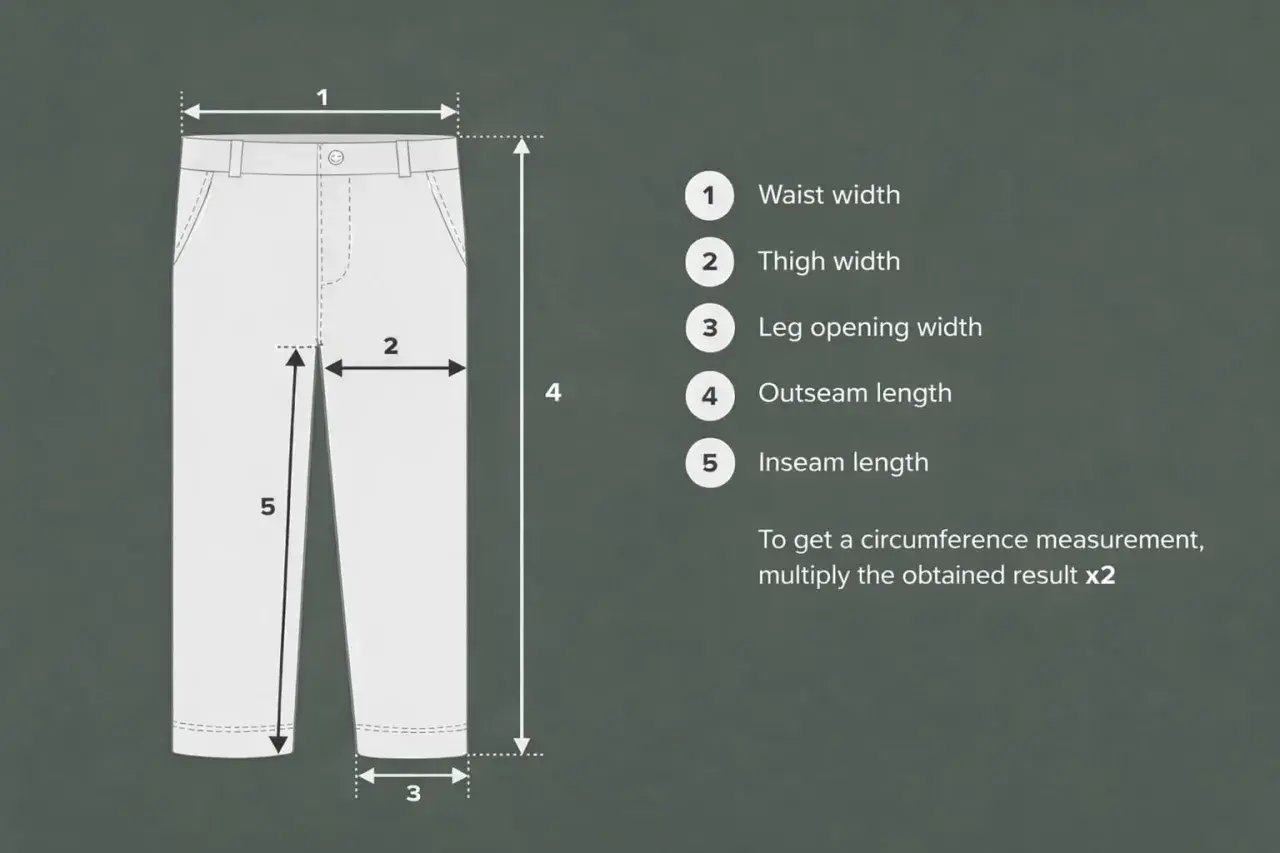
The crotch inseam is one of those small measurements that decides whether trousers skim cleanly, bunch awkwardly, or need a quick hem. I treat it as the inside leg length from the crotch point to the hem, and in UK clothing terms that is usually the number that matters when you buy jeans, check a size chart, or plan an alteration. This guide explains how to measure it on the body and on a garment, how it differs from rise, and why a correct length can still feel wrong if the rest of the fit is off.
These are the measurements that matter before you buy or alter trousers
- Inside leg, inseam, and leg length usually mean the same thing in retail and sewing.
- The measurement runs from the crotch point to the hem, not from the waistband.
- Body length and garment length are different, and both can be useful.
- Rise, crotch depth, thigh width, and fabric all affect fit even when the leg length is right.
- The shoe you wear changes the way the hem looks more than most people expect.
What the inside leg measurement really tells you
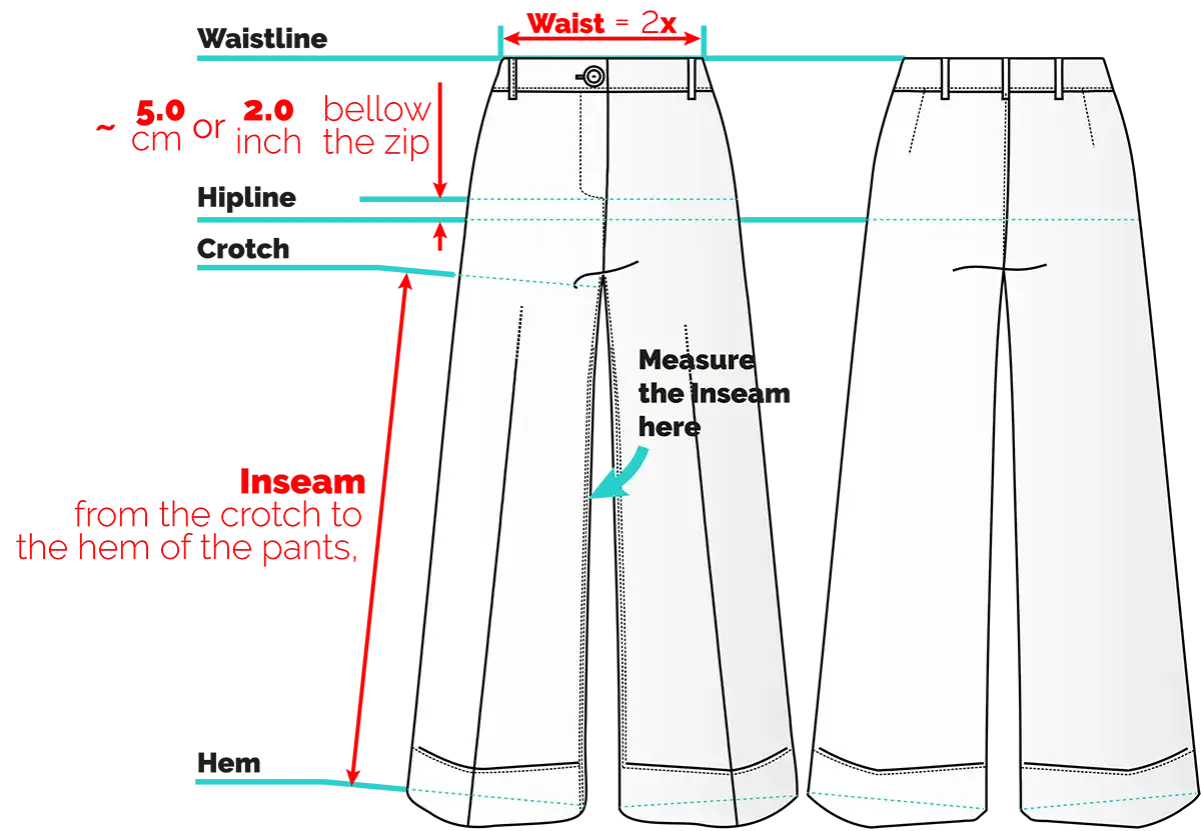
In practical sewing and retail language, inside leg, inseam, and leg length are the same idea: the distance from the crotch point down the inside seam to where the trouser should end. I like to separate that from the rise, because rise starts at the waistband and ends at the crotch, which is a different job entirely. The rise is not the inseam, and confusing the two is a fast way to shorten the wrong part of a garment and still end up with a poor fit.
| Measurement | Starts at | Ends at | Use it for |
|---|---|---|---|
| Inside leg | Crotch point | Hem | Choosing trouser length and hemming |
| Rise | Waistband | Crotch | Seat and torso fit |
| Crotch depth | Waistline | Seated crotch level | Checking how much space the trousers need through the seat |
Once that distinction is clear, measuring becomes much easier, because the practical method is mostly about placing the tape in the right place.
How I measure it on the body without guessing
Measure with a soft tape, while standing naturally, feet a little apart. I usually start the tape high in the inner thigh, as close to the crotch point as I can place it without forcing the tape into the body, then run it straight down to the point where I want the hem to finish. If I am measuring jeans for a specific pair of shoes, I check the length with those shoes on, because the break changes the look more than many people expect.
- Stand upright and relax your legs.
- Place the tape at the crotch point on the inside leg.
- Run it down the inside seam to the ankle bone or chosen hem point.
- Keep the tape smooth and vertical without pulling it tight.
- Repeat the measurement two or three times and write down both inches and centimetres.
If you are measuring alone, a mirror helps, but a second person is better because it is easier to keep the tape in the right place. The result should be a body measurement, not a stretched or compressed one. Once you have that number, the next question is how to read the same length on an existing pair of trousers.
How to measure a pair of trousers or jeans accurately
For an existing pair of trousers or jeans, lay the garment flat, smooth the inside seam, and measure from the crotch seam intersection to the hem along the inner leg. If the seam curves, follow it in short sections rather than trying to measure straight through the fabric; that is how you avoid shaving off a centimetre here and there without noticing. This method is especially useful when a pair already fits well and you want to copy the length instead of starting from the body measurement.
| What you measure | Best use | Common mistake |
|---|---|---|
| Body inside leg | Buying online and estimating the right hem point | Measuring from the waistband instead of the crotch |
| Garment inside leg | Matching a favourite pair | Flattening the trouser so hard that the seam shifts |
| Listed leg length | Quick size filtering | Assuming every brand cuts a 32-inch leg the same way |
That last point matters more than most people think. Two pairs with the same listed length can still finish differently if one has a deeper rise, a longer crotch curve, or a softer fabric that hangs more heavily. That is where fit problems start to show up, so the next step is learning what the length cannot tell you on its own.
Why the right inseam can still give a bad fit
A correct inside leg length does not guarantee a good fit through the seat, thigh, or crotch. If trousers pull across the fork, the issue is often rise or crotch depth rather than hem length; if they pool around the ankle but sit cleanly everywhere else, the leg is simply too long. I see the same confusion with jeans all the time: people blame the hem when the real problem is that the garment is too tight through the thigh or too short in the rise.
| What you see | Likely cause | What to check first |
|---|---|---|
| Diagonal drag lines from the crotch | Not enough room through the fork | Rise, crotch curve, thigh width |
| Loose folds under the seat | Too much crotch length or rise | Seat fit and fork depth |
| Twisting at the knee or hem | Balance issue or fabric twist | Pattern balance and grainline |
| Pooling at the shoe | Inside leg too long for the intended break | Hem length and shoe choice |
| Tight pull across the thigh | Leg width too narrow | Thigh measurement and taper |
The hem can improve the look, but it cannot fix a seat that is cut too short. If the trousers feel wrong while standing, sitting, and walking, the problem is probably structural, not cosmetic. Once you know which part of the fit is doing the damage, choosing the right finish becomes a lot simpler.
Choosing the right finish for jeans, chinos, and tailored trousers
For jeans, chinos, and tailored trousers, I choose the finish based on the fabric and the shoes, not just the body measurement. Straight-leg jeans usually look better with a little stack or a soft break, while slimmer jeans often work best when they finish cleaner above the shoe. Tailored trousers are the strictest: a sharp no-break or slight break reads neater, especially in wool, flannel, or gabardine.
| Style | Good finish | Why it works |
|---|---|---|
| Slim jeans | Clean hem or slight break | Keeps the leg line tidy and avoids pooling at the ankle |
| Straight jeans | Slight stack or gentle break | Preserves the classic denim shape without looking too short |
| Chinos | Slight break | Works for both trainers and smarter shoes |
| Tailored trousers | No-break or slight break | Shows the silhouette cleanly and keeps the hem deliberate |
| Cropped trousers | Hem above the ankle bone | Makes the shorter length look intentional, not accidental |
If you are shopping in the UK, it also helps to remember that many brands sell leg lengths in whole-inch steps such as 30, 32, 34, and 36, but the same number can still land differently depending on the rise and the shape of the cut. Measure with the shoes you will actually wear, because a pair that looks right with loafers can suddenly feel too short with boots. The final check is simple, and it saves a lot of avoidable alterations.
The checks I would make before shortening a pair
Before I shorten anything, I check three things: whether the trousers fit properly through the seat, whether I will wear them with flat shoes or boots, and whether the fabric is likely to shrink after washing. If all three are clear, the inside leg length usually becomes an easy decision rather than a guessing game.
- Use a well-fitting pair as your reference when online listings feel vague.
- Measure after laundering if the fabric is cotton-heavy or unwashed denim.
- Keep the shoes in mind, because hem length is always read in context.
- Do not let a good hem hide a bad rise or an awkward crotch curve.
When those basics are right, trouser shopping gets calmer, alterations get cheaper, and the fit looks more deliberate from the first wear.