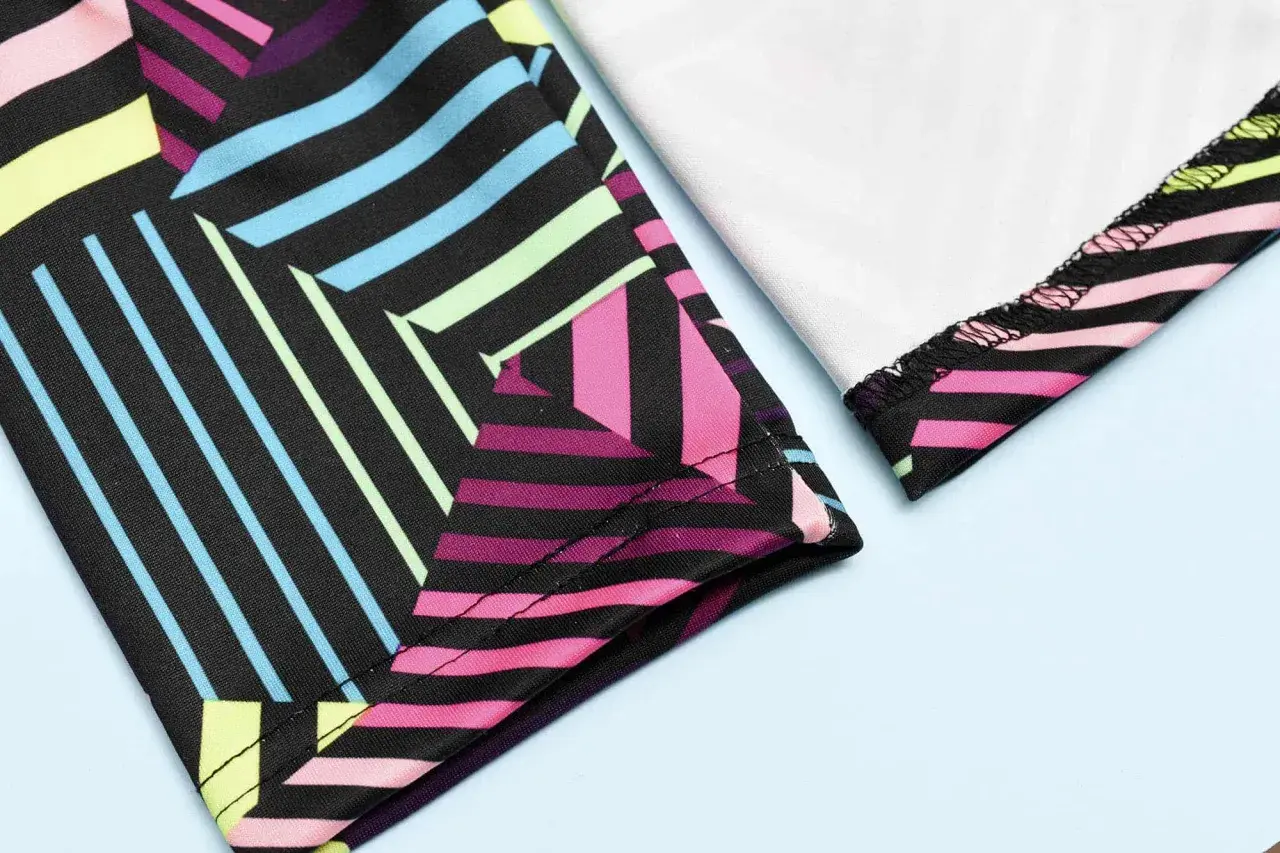
Can you sew leggings? Yes, and when the fabric is right, the result can be better than a lot of shop-bought activewear. What decides the outcome is not just the pattern, but the knit’s recovery, the needle, the stitch, and how carefully the waistband is built. I am going to focus on the parts that actually matter: choosing a stretch fabric, setting up the machine, sewing the garment in the right order, and avoiding the mistakes that ruin fit.
The main things that decide whether your leggings work
- Fabric matters more than almost anything else. For leggings, you want stretch plus strong recovery, not just softness.
- 4-way stretch knits are usually the safest choice for athletic wear because they move with the body in both directions.
- A stretch or jersey needle, polyester thread, and a narrow zigzag or stretch stitch are the most reliable starting point.
- A regular sewing machine can handle the job. An overlocker helps, but it is not essential.
- Most failures come from weak fabric, a sloppy waistband, or seams that do not flex, not from the fact that leggings are "too hard" to sew.
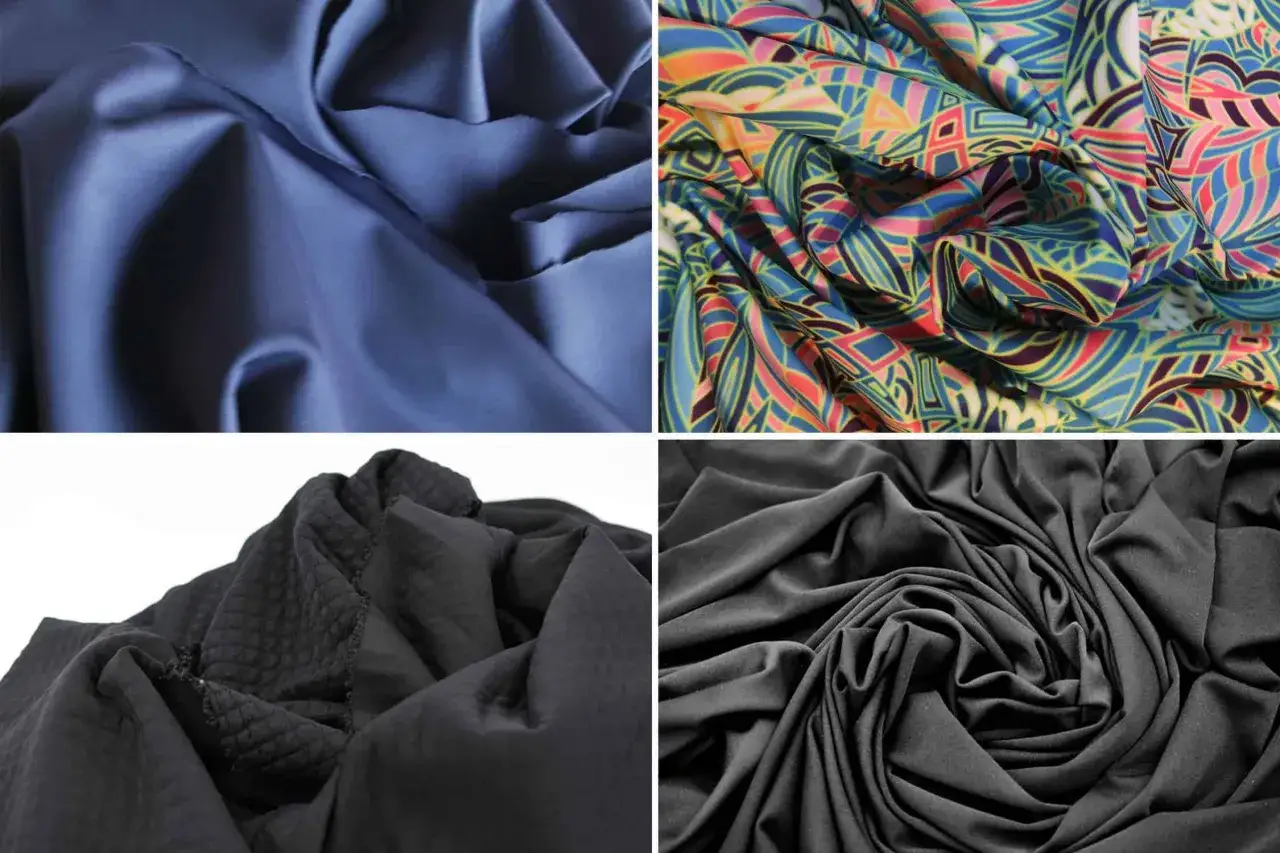
Yes, leggings can be sewn, but the fabric decides the outcome
The first thing I look at is not the pattern, but the knit itself. Leggings depend on stretch and recovery. Stretch is how far the fabric expands; recovery is how well it returns to shape after being pulled. If recovery is poor, the knees bag out, the seat sags, and the whole pair looks tired after a few wears.
For athletic leggings, I prefer a fabric that has 4-way stretch, which means it stretches both across the grain and along it. That is what gives the close fit without making every bend or squat feel restrictive. This is also where negative ease comes in: the paper pattern is intentionally smaller than the body measurements so the fabric can stretch into place.
If you are making casual lounge leggings, you can get away with a softer knit. If you want gym leggings, I would be stricter. The fabric needs enough structure to support movement, and enough opacity to pass the squat test without going sheer. Once the cloth is right, the needle and stitch choice become much easier to judge.
The best fabrics for athletic leggings are not all equal
I would not treat every stretchy fabric as interchangeable. Some are perfect for running and training, some are better for yoga or day wear, and some are simply too unstable for a close-fitting trouser. When people are disappointed with homemade leggings, the fabric is usually the real problem.
| Fabric | Why it works | Where it falls short |
|---|---|---|
| Nylon-spandex | Smooth, durable, and usually excellent at bouncing back into shape | Can be slippery under the presser foot and a little unforgiving to cut |
| Polyester-spandex | Common in sportswear, stable, and often more affordable | Quality varies a lot, and thin versions can go slightly sheer |
| Cotton-lycra jersey | Comfortable, breathable, and easier for beginners to sew | Usually less supportive for training, and some versions bag at the knees |
| Brushed poly-spandex | Soft, opaque, and pleasant for leggings worn all day | Can hold more warmth than you want for high-intensity workouts |
| Power mesh panels | Useful for ventilation, support, and waistband reinforcement | Not suitable on its own for the entire legging |
For most athletic pairs, I would start with a quality polyester-spandex or nylon-spandex knit. That gives you a better balance of stretch, recovery, and durability. Cotton-based knits can still work, but I treat them as a different use case: softer, more casual, and less likely to behave like true sportswear. Once the fabric choice is sorted, the machine setup is the next thing that determines whether the seam looks professional or improvised.
The right needle and stitch setup prevent most problems
This is the point where many home sewers overcomplicate things. You do not need an industrial setup to make leggings. You do need the right needle, the right thread, and a stitch that can move with the fabric instead of fighting it. Needle makers such as SCHMETZ list stretch 75/11 or jersey 70/10-90/14 as a sensible starting point for knits and Lycra, and that is a good practical baseline.
| Item | What I use | Why it matters |
|---|---|---|
| Needle | Stretch or jersey needle, usually 75/11 or 90/14 depending on fabric weight | Reduces skipped stitches and helps the needle move between knit fibres instead of punching holes |
| Thread | Polyester thread | Has a little give and tends to hold up better than brittle thread in activewear seams |
| Main seam stitch | Narrow zigzag or a stretch stitch such as a lightning stitch | Lets the seam flex when the fabric stretches |
| Hem finish | Twin needle or coverstitch if you have one | Keeps the hem neat while preserving stretch |
| Stabilising aid | Clear elastic or soft elastic in the waistband | Prevents the top edge from stretching out and rolling |
| Machine extra | Walking foot or overlocker if available | Helps with slippery knits and cleaner seam finishing, but is optional |
If you use an overlocker, learn the differential feed. That is the setting that controls how the fabric is fed through the machine, and it is the difference between a flat seam and a wavy edge. I also test three things before I cut the real fabric: a seam sample, a hem sample, and a waistband sample. Ten minutes of testing usually saves me an hour of unpicking.
With that setup in place, the sewing order itself becomes much more manageable.
A practical sewing order that keeps the fit under control
When I sew leggings, I keep the process simple and predictable. A good pattern designed for stretch fabric makes the job far easier than trying to force a woven trouser block into a legging shape. For an adult pair in standard 150 cm-wide fabric, I usually allow about 1.25 m to 1.75 m, and I add extra if the design includes pockets, panels, or a high waistband.
- Start with a stretch-specific pattern. A leggings pattern already has the right rise, inseam shape, and negative ease. If you are copying an existing pair, choose one that already has similar stretch to the fabric you plan to use.
- Check the fabric’s behaviour before you cut. Pull it across the width and along the length. If it stretches well but does not spring back cleanly, it is probably not the best choice for close-fitting sports leggings.
- Cut on a flat surface. Knit fabric can distort if it hangs off the table, so I keep it fully supported and use pattern weights when the fabric is slippy.
- Sew the leg seams with a stretch stitch. I keep the fabric relaxed and let the machine feed it. Pulling the fabric through is one of the fastest ways to create wavy seams.
- Join the legs and shape the rise. This is where fit problems often show up, so I match notches carefully and check that the seams line up before stitching.
- Build the waistband with support. A wide yoga band is comfortable, but if the fabric is soft I reinforce the top edge with clear elastic so it does not collapse or roll down.
- Finish the hems last. A twin needle gives a neat look on a normal machine. I press lightly at the end, using low heat and a cloth if the fabric is sensitive.
Most leggings patterns use fairly small seam allowances, often around 6 mm to 10 mm, because too much bulk can make the inside uncomfortable. I still follow the pattern rather than guessing, because knit construction is unforgiving when measurements drift by even a little. Once the basic garment is sewn, the real quality check begins: how it behaves under movement.
The mistakes that make leggings fail fast
- Choosing stretch without recovery. The fabric may feel soft in the hand, but if it does not snap back, the knees and seat will bag out quickly.
- Using a straight stitch. It may look fine on the table, then pop the first time the fabric is stretched.
- Letting the fabric hang while cutting. This can distort one leg enough to twist the whole garment.
- Skipping the squat test. A knit that looks opaque standing still may go see-through under tension.
- Overheating the fabric with the iron. Some sports knits can shine, warp, or lose elasticity if pressed too hot.
- Building a weak waistband. If the top edge is not stabilised, even well-sewn leggings can slide down or curl.
The quickest check I know is the squat test. Hold the cut fabric or the front leg piece up to bright light, bend, and see whether the cloth becomes transparent. If it does, I would not use it for gym leggings. It may still be fine for casual wear, but athletic use asks more of the fabric than most people realise.
That leads into the final question I ask before I start a pair: what details make the finished garment worth wearing repeatedly, not just once.
The details that make a homemade pair worth wearing again
When I want leggings to feel genuinely athletic, I add function before decoration. A gusset, which is an extra diamond- or triangle-shaped piece in the crotch area, improves movement and reduces stress on the seams. A gusset is not mandatory, but it is one of those small construction choices that makes the garment feel more thoughtful and less homemade in the bad sense.
Two other details are worth the effort. First, pocket bags should be cut from a stable knit or mesh, not from the softest fabric in the project. Second, the waistband needs enough structure to stay in place, especially if the leggings are meant for running, cycling, or studio training. I would rather spend extra time on those two things than on decorative topstitching that does nothing for wearability.
- Add a gusset if you want less strain at the crotch and a better range of movement.
- Use stable pocket fabric so the weight of a phone does not drag the side seam out of shape.
- Choose a wide waistband if you want comfort, or reinforce it with elastic if you want more security.
- Wash cool and avoid harsh tumble drying so the fibres and elastic last longer.
My short answer is this: leggings are absolutely sewable, and stretch athletic pants are a very workable home-sewing project if you respect the fabric. Get the knit, needle, stitch, and waistband right, and the rest is mostly careful cutting and patient assembly. If I were making one pair for regular training, I would spend my energy on recovery, fit, and seam security long before I worried about decorative details.