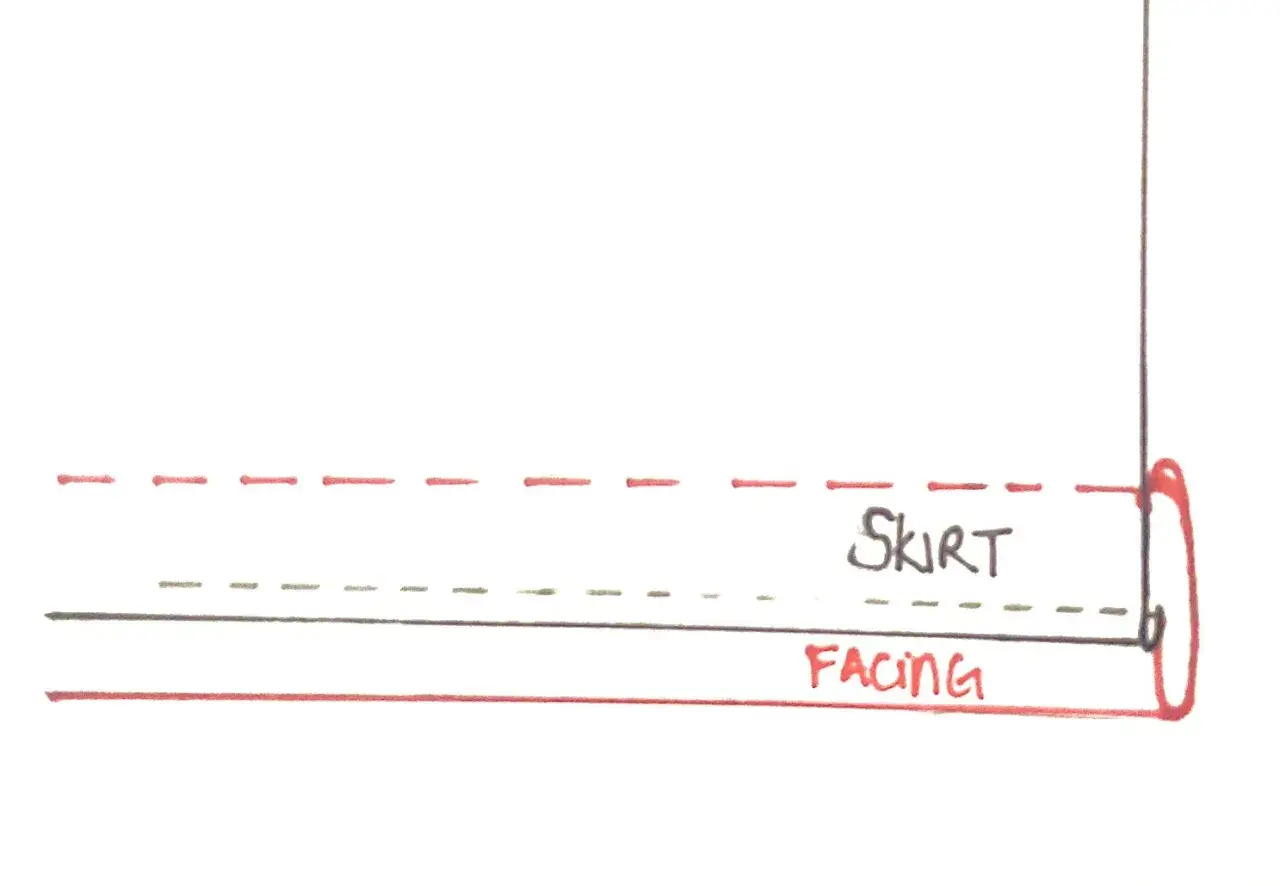
The answer to where is the hem of a skirt is simple: it is the finished bottom edge, the line where the skirt ends after the raw fabric has been turned under and stitched. I am breaking that down here in plain sewing terms, because the hem is easy to locate once you know what you are looking for, but it is just as easy to confuse with the hemline, the hem allowance, or the raw edge. If you sew, alter, or check the length of skirts, that distinction saves a lot of guesswork.
The essential points to know about a skirt hem
- The hem is the finished bottom edge of the skirt.
- The hemline is the line the hem creates when the skirt is worn.
- The hem allowance is the extra fabric turned up inside the garment.
- On a finished skirt, the hem is usually the lowest visible edge of the outer fabric.
- Flared, curved, and lined skirts can make the hem harder to judge by eye.
- For alterations, I always check the skirt on a person or dress form before trimming anything.
What the hem of a skirt actually is
In sewing, the hem is the finished bottom edge of the skirt. It is the part that has been turned to the inside and secured so the fabric does not fray and the garment looks neat. On the outside, you usually see only the finished edge; on the inside, you may see the folded fabric and the stitching line that holds it in place.
I find it helpful to separate three ideas. The hem is the actual finished edge, the hemline is the visible line it forms when the skirt hangs on the body, and the hem allowance is the extra fabric hidden inside. Once that is clear, it becomes much easier to read a pattern, measure a skirt, or explain an alteration to someone else.
That simple distinction matters more than most beginners realise, especially when a skirt has been lined or cut on a curve, which is where the next section becomes useful.
How to spot the hem on a finished skirt
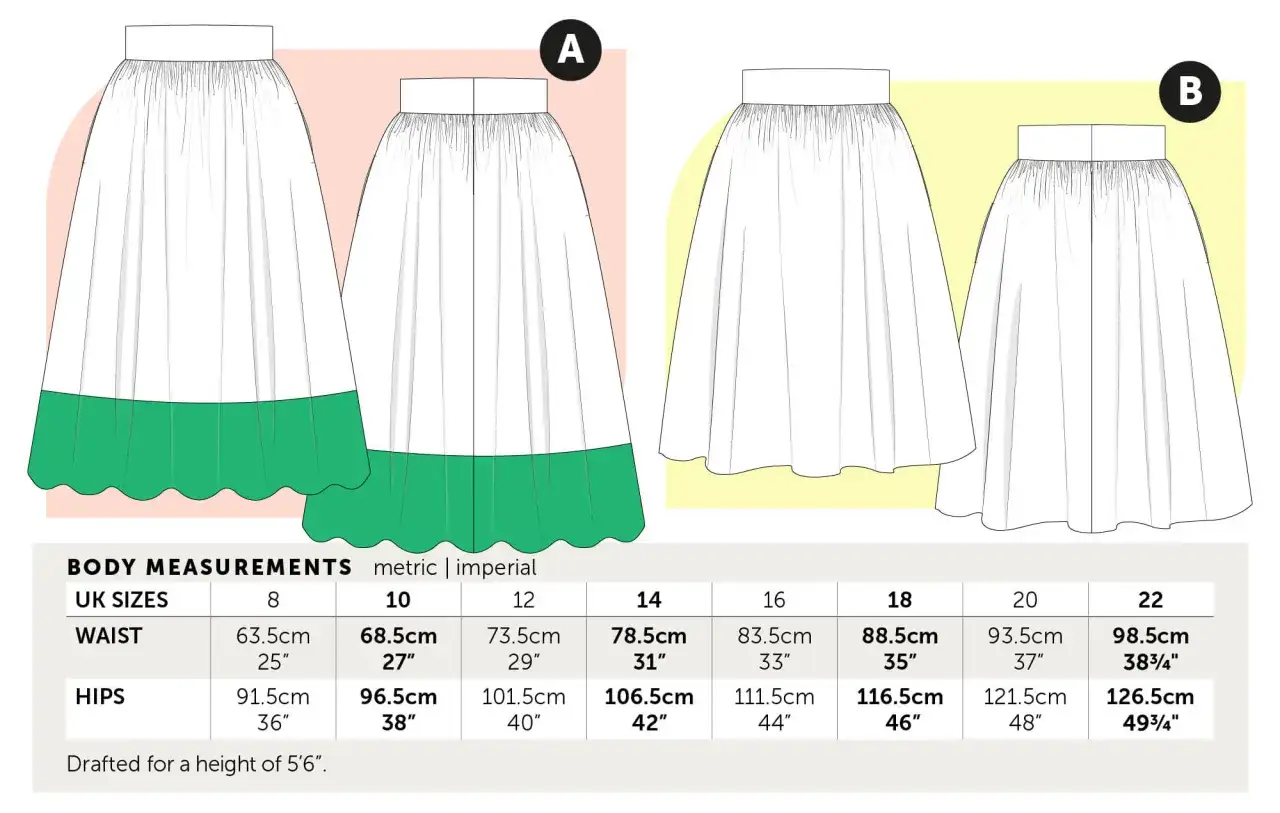
When I check a finished skirt, I start at the lowest finished edge of the outer layer and follow it all the way round. On a straight skirt, that edge is usually easy to see because it runs evenly across the garment. On a flared or shaped skirt, it can curve, dip, or swing slightly, so I look for the point where the skirt truly ends rather than where a seam happens to fall.
- Lay the skirt flat so the side seams are not twisting the shape.
- Follow the outer edge at the bottom of the skirt, not the waistband or hip line.
- Check the inside for the fold and stitching that finish the raw edge.
- Ignore the lining unless you are working on a lined skirt where the lining and shell are meant to finish together.
- Look for vents, slits, or flounces, because those features can have their own finished edges.
If the skirt is lined, the lining may sit a little shorter than the shell so it does not peek out. That is normal. The visible hem is still the finished edge of the skirt itself, not the edge of the lining, and that is the detail people often miss when they are checking length.
Once you can identify the edge on a finished garment, the next step is to stop mixing up the sewing terms that sit around it.
Hem, hemline, hem allowance and raw edge are not the same thing
These terms are close enough to cause confusion, but they do different jobs. I use this quick comparison when I am teaching beginners because it clears the fog fast.
| Term | What it means | Where you look |
|---|---|---|
| Hem | The finished bottom edge of the skirt | At the very bottom of the garment, usually folded and stitched inside |
| Hemline | The line created by the hem when the skirt hangs on the body | Visible as the skirt length from the floor or from the waist, depending on how it is measured |
| Hem allowance | The extra fabric reserved for turning up the hem | Hidden on the inside before and after finishing |
| Raw edge | The cut edge of fabric before it is finished | Usually inside the garment before the hem is sewn |
There is one more term worth keeping separate: seam allowance. That is the fabric beside a seam, not the bottom edge of the skirt. People often use it loosely when they mean hem allowance, but in practice they are different measurements and they serve different parts of the construction.
Once the language is clear, the shape of the skirt becomes the next thing to watch, because not every hem behaves in the same way.
How skirt shape changes where the hem sits
The hem is always the finished bottom edge, but the way it hangs depends heavily on the skirt shape. A straight pencil skirt, for example, usually has a much more predictable hem than a circle skirt, which can drop unevenly after it has been worn. I treat shape as part of the measurement, not just part of the design.
| Skirt shape | What the hem usually does | What I watch for |
|---|---|---|
| Pencil or straight skirt | Hangs almost level, with minimal flare | Evenness at the side seams and centre back |
| A-line skirt | Flares gently, so the hem forms a wider circle than the waist | Balanced length all the way round |
| Circle or flared skirt | Can drop after hanging because of the bias and the weight of the fabric | Letting it rest before trimming the final length |
| Tiered or ruffled skirt | Each tier may end with its own finished edge | Which edge is decorative and which edge is the true hem |
| Asymmetrical skirt | Intentionally uneven, so the hemline is part of the design | The designer’s intended longest and shortest points |
For flared skirts, I usually let the garment hang before I mark the final length. In many cases, 24 hours is enough for a stable fabric, though some bias-cut or very fluid skirts benefit from a longer rest before the hem is trimmed. That patience matters because gravity can pull the lower edge down unevenly, especially on lightweight cloth.
That is why the obvious-looking edge is not always the safe edge to cut, and it leads straight into the mistakes I see most often.
Common mistakes when checking a skirt hem
Most hemming errors come from moving too quickly or checking the wrong reference point. I see the same problems again and again, and they are usually easy to avoid once you know what to look for.
- Measuring from the waistband instead of checking the bottom edge, which can hide an uneven hemline.
- Confusing a decorative border with the true hem, especially on tiered or ruffled skirts.
- Forgetting about the lining, which may be cut to a different length from the outer skirt.
- Checking only on a hanger, even though the real shape appears when the skirt is worn.
- Ignoring fabric behaviour, which matters a lot on knit, bias-cut, or very soft woven fabrics.
My practical rule is to check the skirt both flat and on a body or dress form. Flat tells me whether the stitching is even; on the body tells me whether the hemline actually looks right when the skirt moves. If one view looks perfect and the other does not, I trust the worn view for final length and the flat view for construction accuracy.
That approach matters even more when you are the one marking or sewing the hem from scratch, because the finishing method changes how much room you need.
How I mark and sew a new skirt hem
When I am altering or finishing a skirt, I start with the intended finished length, then work backwards to the fold line. The exact hem allowance depends on fabric, style, and pattern instructions, but these ranges are a useful working guide:
- 1 to 2 cm for narrow hems on lightweight fabrics or delicate curved edges.
- 2.5 to 4 cm for many everyday skirts with a standard turned-up hem.
- 5 cm or more for heavier fabrics, tailored skirts, or styles that need a bit more weight at the bottom.
I always check the pattern first, because some skirts are drafted with a very specific hem depth. If the fabric is bulky, the hem allowance may need to be trimmed or graded so it does not build up too much thickness inside the fold. On very curved hems, I clip or ease the allowance carefully so the edge lies flat instead of rippling.
For the actual finish, I choose the method that suits the fabric: a machine-stitched hem for speed and durability, a blind hem for a less visible finish, or hand stitching when I want the cleanest result on a delicate skirt. The important part is not the stitch name; it is whether the finished edge hangs smoothly and keeps the skirt’s shape.
When the hem is measured well, the final look improves immediately, which is why I keep one simple rule in mind every time I work on a skirt.
The simplest way I remember skirt hems
If it is the finished bottom edge, it is the hem. If it is the line that edge creates, it is the hemline. If it is the extra fabric hidden inside, it is the hem allowance. That small distinction keeps the whole process clearer, whether I am checking a ready-made skirt, shortening one, or finishing a new garment from a pattern.
So when I look at a skirt, I do not start by asking what looks like the hem in theory. I ask where the garment actually ends, how that edge has been finished, and whether the length still works once the skirt is hanging as it will be worn. That is the most reliable way to read a skirt properly and to make sure the final finish looks intentional rather than guessed.