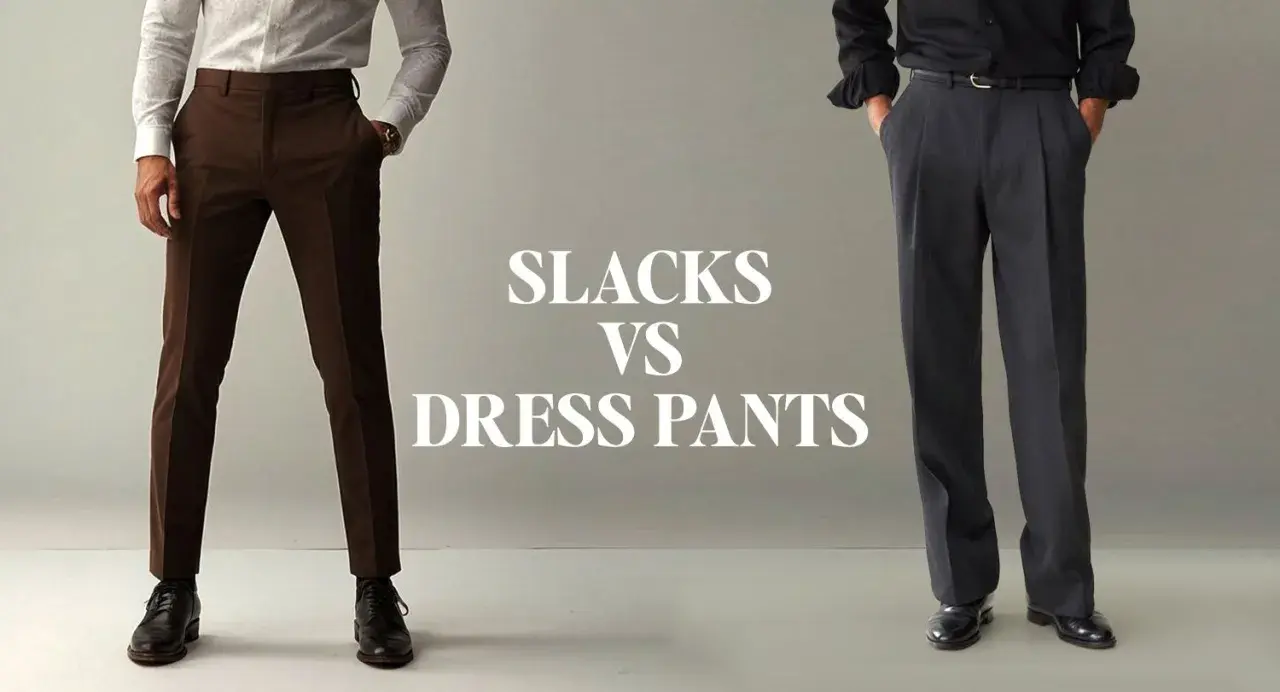
The slacks vs dress pants comparison matters because the two overlap, but they do not behave the same in a wardrobe. One usually reads softer and more relaxed; the other is built to look sharper, cleaner, and closer to suit wear. For a UK wardrobe, that difference affects everything from office outfits to the fabric you choose at the cutting table.
The practical difference comes down to shape, fabric, and formality
- Slacks usually sit on the softer, less structured side of smart trousers.
- Dress trousers are cleaner, sharper, and easier to pair with a jacket or formal shirt.
- In British English, both labels are less precise than the garment itself; fit and cloth tell you more than the name.
- For sewing or buying, the three things I check first are drape, rise, and hem finish.
- If you need one pair for the widest range of situations, a dark, mid-weight tailored trouser is the safest starting point.
How the two names are used in real wardrobes
I would translate the labels into British terms like this: slacks are the softer, slightly more relaxed end of smart trousers, while dress pants sit closer to formal or suit trousers. The catch is that retailers use the words loosely, so a pair called slacks can still look quite sharp, and a so-called dress trouser may wear more casually than you expect.
In practice, I care less about the label and more about whether the trouser is meant to stand alone, work with a blazer, or complete a suit. That one question usually tells you more than the product title does. Once that is clear, the next step is looking at what actually changes in the cloth and construction.
What changes in fabric, structure, and finish
The real difference is rarely dramatic at first glance. It lives in the cloth, the amount of structure inside the waistband and front, and how the leg is finished when it hangs off the body.
| Feature | Slacks | Dress trousers | Why it matters |
|---|---|---|---|
| Fabric | Softer cloth, often with a little stretch or a more relaxed weave | Cleaner suiting cloth, usually wool or a wool blend with a smoother surface | Smoother fabric looks more formal and drapes more neatly |
| Structure | Less internal shaping, lighter waistband feel | More shaping through the waistband and front, sometimes with lining | Structure helps the trouser hold its line through the seat and thigh |
| Leg shape | Can be relaxed, wider, or slightly fuller | Usually more tailored and controlled through the leg | The cleaner the line, the more polished the outfit reads |
| Front detail | May include pleats for ease and movement | Often flat-front for a sharper profile | Pleats add room; flat fronts create a neater silhouette |
| Hem and finish | Can include cuffs, softer hems, or more casual pocket detailing | Typically a crisper hem and fewer decorative details | Small details decide whether the trouser feels smart-casual or properly dressed |
| Weight | Often lighter or more forgiving | Often medium-weight for better drape and recovery | As a practical guide, I like about 160-220 gsm for lighter summer pairs and 220-280 gsm for year-round tailoring |
For sewing, I always think in terms of drape before label. Drape is simply how the cloth falls and moves, and it changes everything: a fabric that hangs cleanly will look expensive even in a simple cut, while a limp or shiny cloth can make a good pattern look cheap. That is why a trouser can be called “slacks” on one site and still behave like dress trousers on the body. With the construction mapped out, the next question is where each pair actually belongs.
Where each pair earns its place
Formality is where the distinction becomes useful. In some settings the difference is small, but in others it is the whole point of the outfit.
| Situation | Better choice | Why I would pick it |
|---|---|---|
| Business-casual office | Either, depending on the cloth and top | A tidy knit or shirt can make softer slacks work, but clean dress trousers are easier if the office leans formal |
| Interview or client meeting | Dress trousers | The sharper line signals intention without needing a full suit |
| Wedding guest outfit | Dress trousers | They pair more naturally with a jacket, polished shoes, and a proper shirt |
| Weekend smart-casual | Slacks | They are easier to wear with knitwear, loafers, or even clean trainers if the rest of the outfit is restrained |
| Warm-weather travel | Lightweight slacks or relaxed tailored trousers | Comfort matters more here, but the fabric still needs enough body to avoid looking rumpled |
| Black tie | Neither | You need proper evening trousers, not a compromise pair dressed up with a good shirt |
A blazer can lift softer trousers, but it cannot rescue a pair that is shiny, baggy, or cut from the wrong cloth. That is the mistake I see most often: people assume a jacket automatically makes any trouser formal enough. It does not. The trouser still has to carry the silhouette, and that is why the next step is choosing the right cut for your own body and wardrobe.
How I would choose the right cut for fit and comfort
When I fit trousers, I start with the seat, rise, and thigh before I think about style labels. If those three areas are wrong, the rest of the garment rarely feels right, no matter how expensive it is.
- Choose a higher rise if you want more comfort when sitting or a cleaner line through the waist. Lower rises can feel modern, but they are less forgiving.
- Use pleats when you need room through the hip or thigh. A pleat is a folded section at the front that opens as you move, which means less pulling and better ease.
- Go flat-front for a sharper look if you want the cleanest possible outline under a blazer or knit polo.
- Pick a no-break or slight-break hem if you want the trouser to look current and precise. A break is the small fold that forms where the hem rests on the shoe.
- Consider side adjusters if you dislike a belt showing at the waist. They are especially useful on smarter trousers because they keep the front visually tidy.
- Check the cloth across the thigh if you are sewing or buying off the peg. Any diagonal pulling there usually means the cut is too tight or the fabric does not have enough recovery.
If you are making the garment yourself, I would pay close attention to seam allowance, pocket placement, and the way the fabric behaves after pressing. A good trouser pattern can look ordinary in the wrong cloth, while a decent wool blend with the right pressing will hang far better than most people expect. My rule is simple: the more formal the trouser is meant to be, the more controlled the front should look. That brings me to the pair I would buy first if I wanted maximum mileage.
The pair that gives you the most mileage
If I were building a small but useful trouser wardrobe in the UK, I would buy charcoal or dark navy dress trousers first. They cover office wear, dinners, and most occasions that ask for a smart appearance without looking stiff. After that, I would add a softer slack-style pair in a lighter cloth for travel, warmer months, and outfits built around knitwear or more relaxed jackets.
- Start with colour in navy, charcoal, or mid-grey, because those shades do the most work with the fewest compromises.
- Prioritise cloth over branding; a good wool or wool blend will usually outperform a trend-led fabric with a glossy finish.
- Keep the front clean unless you specifically need more room through the thigh.
- Budget for tailoring if the waist, rise, or hem is close but not perfect. A small alteration often changes the whole look.
That is the practical answer I come back to again and again: choose the trouser that fits the dress code, then let the fabric and cut decide how refined it feels. If the cloth hangs well and the silhouette is balanced, the label matters far less than the way the trousers behave on the body.