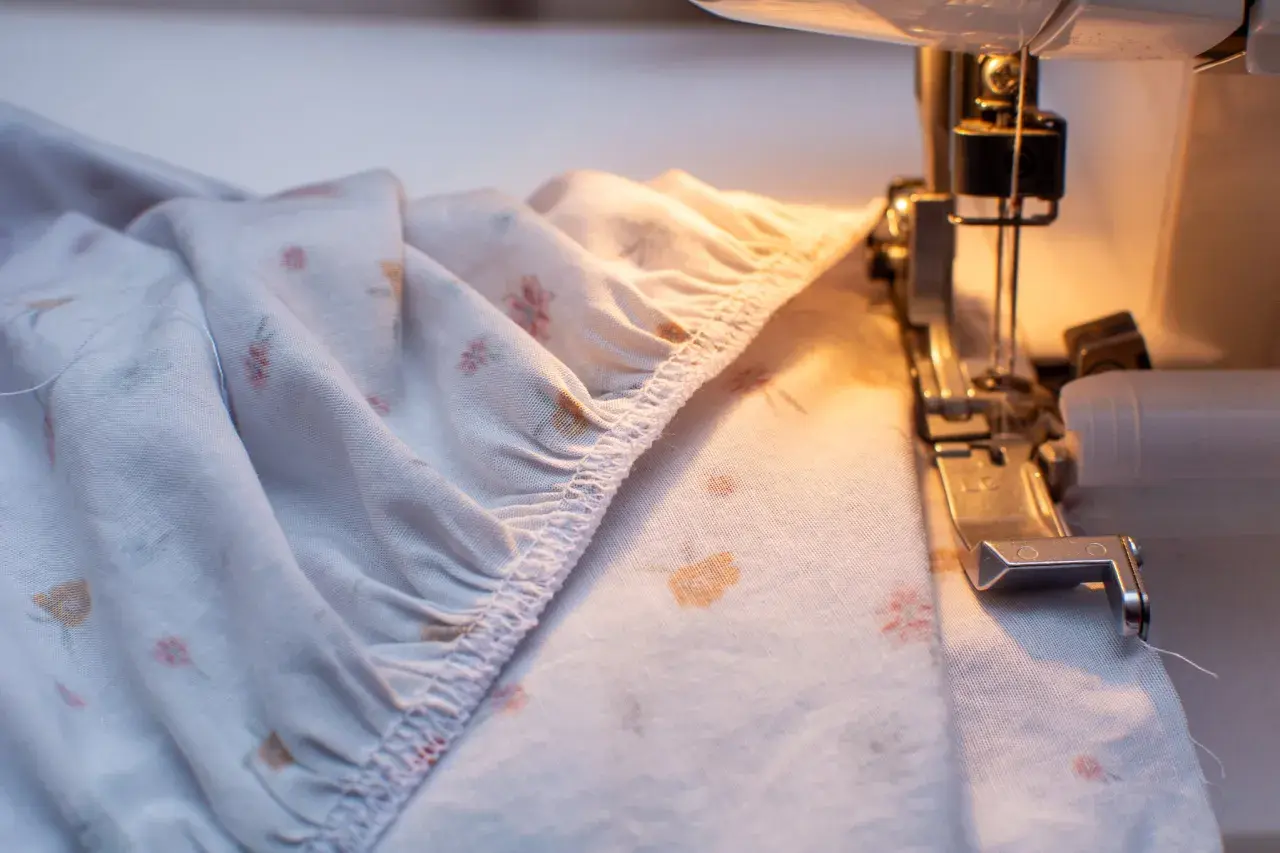
The fastest route to even gathers starts with the right settings
- Above 1.0 on the differential feed gathers fabric; 1.0 is neutral.
- A 4 mm to 5 mm stitch length is a practical starting point on many machines.
- Light to medium-weight fabrics behave best; heavy, stiff fabrics are less predictable.
- A gathering foot can save time when you want ruffles joined in a single pass.
- Scrap testing matters more than chasing one perfect universal setting.
What serger gathering actually does
On a serger, gathers are usually created by changing how the feed dogs move the fabric. When the front and rear feed dogs no longer travel at the same rate, the fabric is either encouraged to bunch up or gently stretched as it feeds through. That is why a serger can give you a ruffle fast: the machine is building the fullness while it stitches, trims, and finishes the edge at the same time.
I find this method most useful for knit hems, tiered skirts, peplums, cuffs, and any project where I want a tidy edge as well as visible fullness. It is less about making a perfect historical gather and more about creating a controlled, modern ruffle that can be sewn on quickly and hold up in wear. The moment you need exact measurement control, though, the method becomes more sensitive, and that is where the machine setup starts to matter.
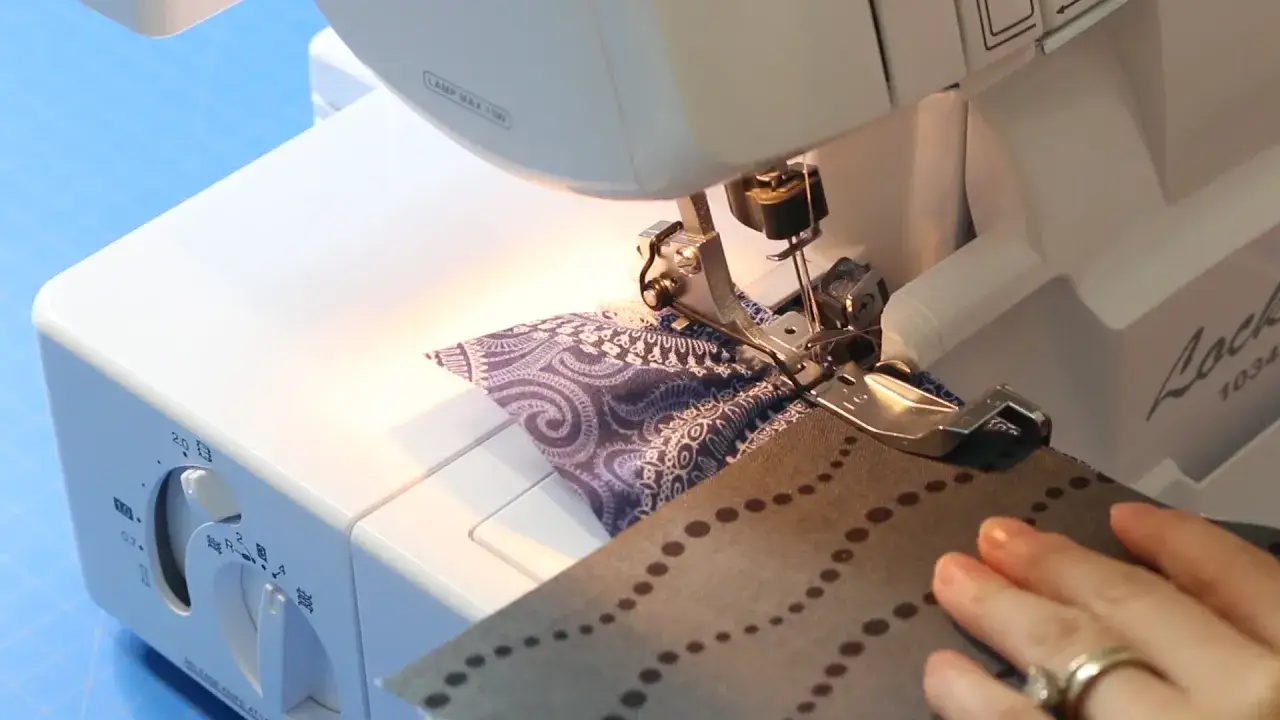
The settings that control fullness
I start with three variables: stitch length, differential feed, and thread tension. If I change all three at once, I lose track quickly, so I prefer to move one setting at a time and keep a scrap beside the machine. Brother describes differential feed above 1.0 as the setting that gathers fabric, which matches what I see on most overlockers: the further you move towards the upper end, the fuller the result becomes.
| Setting | Good starting point | What it changes | What I look for |
|---|---|---|---|
| Stitch length | 4 mm to 5 mm | Longer stitches use less thread per inch of fabric and create more softness | Even gathers without thread loops or skipped stitches |
| Differential feed | 1.5 to 2.0 | More fullness as the front feed dogs move faster than the rear dogs | The fabric bunches smoothly instead of rippling or stretching flat |
| Needle tension | Slightly higher than normal | Helps the fabric draw in a little more | A firmer gather without distorting the seam |
| Fabric weight | Light to medium weight | Affects how easily the cloth compresses | Soft folds rather than stiff, uneven puckers |
If your machine tops out at 2.0 on the differential feed, that is usually enough for a clear gather. For a softer effect, I keep the feed closer to 1.3 or 1.5; for a fuller ruffle, I move towards 2.0 and test again. The trick is not to chase the maximum setting by default, because the cleanest result is often the one that looks slightly less dramatic on the first pass and more balanced once pressed. Once those numbers are in range, the way you feed the cloth makes the biggest difference.
My step-by-step setup for even ruffles
- Thread the machine for the stitch you already know it handles reliably, usually a 3-thread or 4-thread overlock depending on the model.
- Cut a test strip at least 30 cm long from the same fabric, on the same grain direction as the real project.
- Start with a neutral or near-neutral differential feed, then increase it gradually until the fabric begins to gather.
- Raise the stitch length into the 4 mm to 5 mm range and sew a short test seam.
- Guide the fabric lightly. I let the machine feed it; I do not push or pull, because that flattens the gather or warps the edge.
- Check the result, press it very lightly if the fabric can take heat, and compare the length to the piece you need to attach it to.
If I am attaching a ruffle to a flat piece, I mark quarter points first and pin or clip at those points before sewing. That keeps the fullness distributed instead of bunched into one spot. A second test strip is usually faster than unpicking a badly balanced seam, and that is a trade I always take. When the setup is right, the next question is whether a special foot would do the job even better.
When I choose a gathering foot, differential feed, or hand basting
Different projects call for different levels of control. A gathering foot is fast, differential feed is flexible, and hand basting still wins when I need exactness. BERNINA’s gathering feet are designed for light to medium-weight fabric, and they are especially handy when you want to gather and join layers in the same motion.
| Method | Best for | Strength | Limitation |
|---|---|---|---|
| Differential feed only | Knit hems, soft ruffles, quick fullness | No extra accessory required and the finish stays neat | Less predictable on very crisp or heavy fabric |
| Gathering foot | Long ruffles, tiered skirts, sewing a gathered strip to a flat layer | Fast and evenly distributed gathers in one pass | Accessory-dependent and not ideal for stiff fabric |
| Hand basting | Exact measurements, heavier wovens, special couture details | Maximum control over final length and placement | Slowest option and more labour-intensive |
My rule is simple: if the fabric is forgiving and I need speed, I use the serger; if I need exactness, I slow down and baste. That distinction saves a lot of frustration, especially on projects where a few millimetres make the difference between graceful fullness and a lumpy join. Fabric choice is the other half of that decision, and it matters more than many beginners expect.
Which fabrics behave well and which fight back
Lightweight and medium-weight fabrics are the easiest place to start. Cotton lawn, voile, jersey, viscose, and quilting cotton all gather cleanly if the machine is balanced. Knits often behave especially well because the serger’s edge finish and the gathered effect can work together without adding bulk.
- Lightweight woven fabric gives the fullest ruffles, but can look fragile if the thread tension is too tight.
- Quilting cotton is stable and easy to read, which makes it good for learning the technique.
- Knit fabric benefits from the serger because the gather and edge finish happen together.
- Heavy denim, canvas, or coated fabric resists the soft compression that gathers need.
- Slippery satin or very drapey cloth may gather beautifully, but it can also slide out of alignment if you guide it too hard.
When a fabric feels stubborn, I do not force the machine to do a job the fabric will not support. I either move to a manual gathering method or accept a softer, less dramatic ruffle. That is usually the smarter design decision anyway, because fabric behaviour should support the finished look rather than fight it. Even with good fabric, though, there are a few mistakes that can flatten the whole effect.
Common mistakes that flatten the effect
The most common mistake is starting with a setting that is too timid. If the differential feed is barely above 1.0, you may get a slight ripple rather than a true gather. The opposite mistake is even more obvious: turning everything up and ending up with a seam that looks strained instead of softly full.
- Pulling the fabric while sewing, which stretches the edge and cancels the gather.
- Using a stitch length that is too short, which adds thread density but not enough visible fullness.
- Skipping scrap tests, especially on knits or lightweight viscose that can change behaviour quickly.
- Forgetting to reset the machine after gathering, which can ruin the next seam.
- Expecting heavy fabric to behave like cotton lawn, which is where a lot of frustration starts.
One fix I use more often than people expect is a second pass. If I want a stronger ruffle and the fabric is stable enough, I run the gathered strip through again with the same general setup. That can deepen the fullness without adding extra steps by hand, but I only use it when the fabric still feeds cleanly. From there, the real craft is in repeating the result consistently across the whole garment.
The small habits that make serger gathers repeatable
The best time-saver is not a clever trick; it is notes. I keep a small card with the fabric type, stitch length, differential feed, and thread tension that worked. The next time I reach for the same cloth, I can start close to the finish instead of starting from zero.
I also save one finished test strip if the project is likely to repeat, such as a skirt tier, an apron ruffle, or a dress body that appears in several sizes. That sample tells me more than memory does, especially after I have moved on to another project and forgotten the exact feel of the setup. For anyone sewing regularly, that tiny archive becomes as useful as the machine itself.
When I want a fast, tidy ruffle, I choose the serger. When I want precise control, I slow down and baste. Learning which side of that line a project sits on is the difference between fighting the machine and using it well.