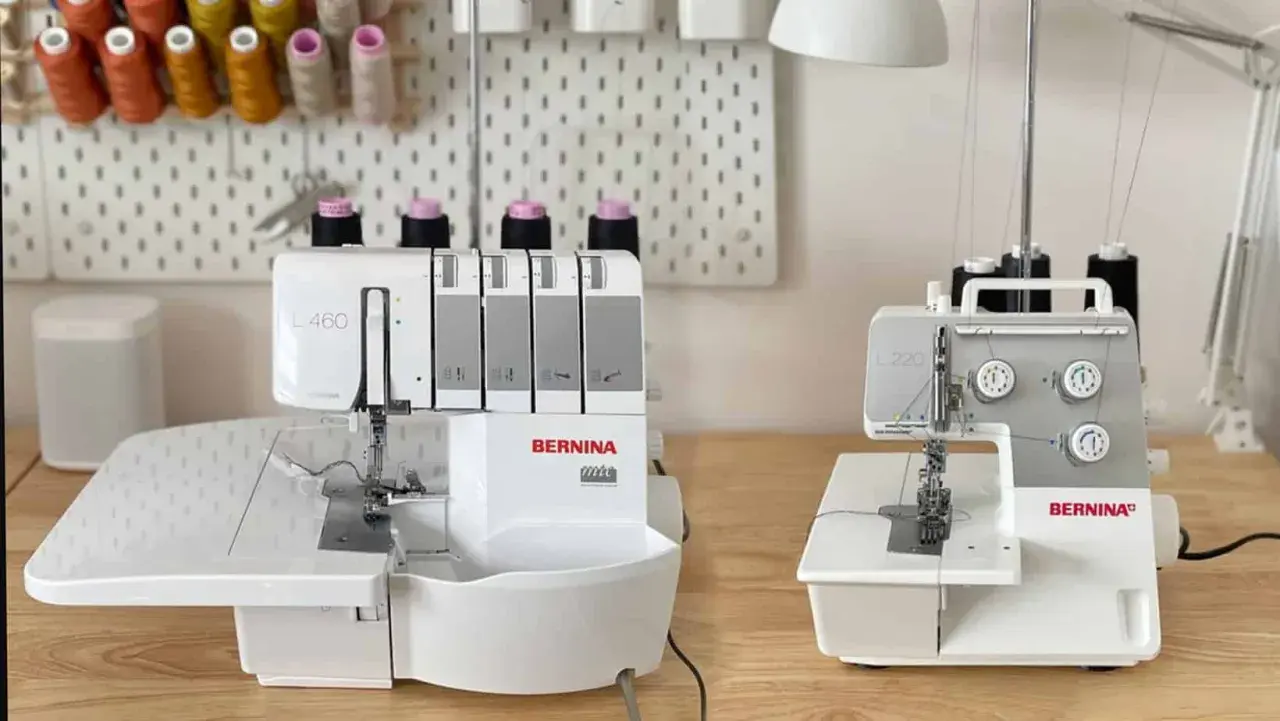
The serger vs overlock comparison is really about language, stitching speed, and whether you need a specialist edge-finisher or a machine that does almost everything. In the UK, the everyday word is "overlocker"; in the US, people usually say "serger", and manufacturers often treat them as the same machine family. What matters for your sewing room is how cleanly it handles raw edges, how often you sew knits or fraying fabrics, and whether you want to speed up the inside finishing of garments.
What matters most is how cleanly the machine trims, stitches, and finishes
- In the UK, "overlocker" is the common term; "serger" is the US name for the same machine family.
- An overlocker trims seam allowance, encloses raw edges, and finishes seams in one pass.
- A standard sewing machine is still better for zips, buttonholes, topstitching, and precise construction.
- Knits, activewear, and fabrics that fray quickly are where an overlocker earns its place.
- Current UK pricing I checked puts entry-level overlockers roughly in the £229-£335 range, with more capable models around £355-£579.
- The best buy depends less on the label and more on how often you sew and what you sew.
What people mean by serger and overlocker
I treat these as two names for the same core machine, not two competing products. An overlocker sews with loopers instead of a bobbin; loopers are the thread carriers that wrap thread around the edge of the fabric so the seam stays enclosed.
That matters because the machine is built to do a very specific job quickly: neaten raw edges, join seams, and stop fraying at the same time. A regular sewing machine can finish edges too, but it usually does so with a separate stitch, not the one-pass edge trimming that makes an overlocker so efficient. A coverstitch machine is different again, because it is mainly for hems and topstitching on knits rather than trimming the edge.So when people compare the terms, they are usually talking about terminology, not a meaningful mechanical divide. The real comparison starts with what each machine actually does to fabric.
How the machine finishes an edge in one pass
An overlocker uses a knife blade to trim the seam allowance while the needles and loopers form a seam around the edge. In practice, that means less bulk, a cleaner inside finish, and much less time spent zigzagging or overcasting every raw edge by hand.
A regular sewing machine builds a lockstitch, which is the classic stitch formed by one upper thread and one bobbin thread. It is brilliant for construction, topstitching, buttonholes, and precision work, but it does not wrap the edge in the same way. That is why an overlocker looks so neat on the inside: the thread is enclosing the edge instead of merely sitting beside it.
| Feature | Overlocker | Regular sewing machine |
|---|---|---|
| Main job | Trim, stitch, and finish the edge in one pass | Construct seams and handle a wide range of sewing tasks |
| Thread system | Uses loopers to wrap thread around the fabric edge | Uses a needle thread and bobbin thread to form a lockstitch |
| Best use | Knits, fraying fabrics, speed finishing, neat inside seams | Zips, buttonholes, topstitching, repairs, general sewing |
| Key limitation | Less flexible for corners, hardware, and detailed construction | Needs a separate stitch or extra step to finish raw edges well |
One feature I would not ignore is differential feed, which lets the front and rear feed dogs move at different speeds. That helps prevent waviness on jersey and other stretch fabrics; Brother also notes that it should not be used casually on thick, non-stretch denim, because the setting is about controlling fabric movement, not forcing heavy cloth through the machine.
Once you see how the stitch is built, it becomes much easier to judge when a sewing machine is enough and when it starts to feel clumsy.
Where a normal sewing machine still makes more sense
I would still reach for a standard sewing machine first for zips, buttonholes, topstitching, patch pockets, quilt piecing, and anything that needs exact pivoting around corners. It is also the safer choice when you want one machine to do repairs, dressmaking, bag making, and general household sewing without setting up a second tool.
- Precision seams - easier to control when the seam needs to start, stop, and turn sharply.
- Hardware work - zips, buttonholes, and decorative topstitching are straightforward on a sewing machine.
- Thick or bulky assemblies - bag handles, waistbands, and layered facings often behave better under a conventional presser foot.
- Lower entry cost - a basic sewing machine starts much cheaper than adding a specialised edge-finisher.
- Simple maintenance - fewer threads and less tension juggling make it easier for casual use.
If you sew only occasionally, a good machine with an overcasting or zigzag stitch may be enough for raw-edge control. It will not match the speed of a dedicated overlocker, but it can still produce tidy, durable seams on many projects. That is why I rarely recommend buying a serger first unless edge finishing is already the part you dislike most.
Once that trade-off is clear, the projects that truly benefit from an overlocker stand out very quickly.
Projects that genuinely benefit from an overlocker
For me, the machine earns its place when the fabric is stretch-prone, fray-prone, or part of a garment pipeline that repeats the same finishing step over and over. Jersey tees, leggings, children’s clothes, swimwear, dancewear, and activewear are the obvious wins, because the machine handles stretch seams cleanly and quickly.
Knits and stretchy fabrics
On jersey and other knits, the stitch needs to stretch with the fabric. Differential feed helps stop edges from rippling, which is one of the biggest reasons overlockers feel transformative on T-shirts and knit dresses.
Quick garment finishing
If you make clothes regularly, the time savings are real. A seam that would take two or three separate steps on a standard machine can be joined, trimmed, and enclosed in one pass on an overlocker.
Read Also: Perfect Topstitching - Your Guide to the Right Foot & Flawless Seams
Decorative and specialist effects
Rolled hems are useful for scarves, ruffles, and lightweight woven fabrics, while flatlock-style finishes can add a sporty look to seams. These are not the reason I would buy the machine, but they are a strong bonus once you already need it for edge finishing.
There are limits, though. An overlocker is not the best tool for sharp corners, heavy topstitching, or anything that needs frequent unpicking and repositioning. If your sewing leans toward bags, tailoring details, or very structured garments, its value is more selective than universal. That balance is what makes the buying decision worth thinking through carefully.
How I would choose one in the UK without overpaying
Current UK pricing makes the gap fairly clear: I am seeing entry-level overlockers around £229-£335, while more capable machines sit closer to £355-£579. That means you should buy for frequency of use, not for the label on the box. If you sew once in a while, the cheapest reliable model is usually enough; if you sew clothes every week, the better threading and feed system pays for itself in reduced frustration.
| What to look for | Why it matters | My practical view |
|---|---|---|
| 3/4-thread capability | Gives you the standard options for everyday seam finishing and stronger joins. | Enough for most home sewists. |
| Differential feed | Helps control stretch fabrics and prevents waviness. | Essential if you sew knits often. |
| Easy lower-looper access or threading aids | Threading is the part most people dislike. | Worth paying for if you hate setup delays. |
| Rolled hem conversion | Useful for light fabrics and decorative edges. | Nice to have, not the main reason to buy. |
| Free arm and waste tray | Makes cuffs, sleeves, and cleanup easier. | Small convenience, big everyday value. |
If you are trying to decide between a machine at roughly £250 and one closer to £500, I would ask a simple question: will I use this every month, or every week? Weekly use justifies better threading and smoother performance; monthly use usually does not. That rule is much more honest than buying the feature list that looks impressive in a store demo.
That leaves the last question, which is less about specifications and more about how you actually sew.
The choice I would make for most sewists
If I had to choose one machine for a mixed sewing room, I would still start with a solid sewing machine. It gives you the widest range of work: repairs, zips, buttonholes, hems, bags, quilting, and precise construction. An overlocker becomes the second purchase when garment sewing starts to dominate and raw-edge finishing begins to feel like wasted time.
- Buy a sewing machine first if you want one tool for almost everything.
- Buy an overlocker early if you sew jersey, activewear, or children’s clothes regularly.
- Add a second machine when you are already sewing often enough that setup time is part of the workload.
In practice, the two machines complement each other better than they compete. If you want the fastest clean finish on seams, an overlocker is hard to beat. If you want the most flexible all-round tool, a standard sewing machine still does the heavier lifting, and that is the combination I would recommend for most UK sewists.