The inseam on leggings is the inside-leg length from the crotch seam to the hem, and it is the number that decides whether a pair lands cleanly at the ankle or bunches awkwardly around the shoe. The practical answer to what is an inseam on leggings is simple enough, but the useful part is knowing how to measure it, how it differs from rise and outseam, and how to use it when you are buying, sewing, or altering a pair. I’m going to keep this focused on fit, because that is where the measurement actually earns its keep.
The inseam is the inside-leg length that decides how leggings actually sit
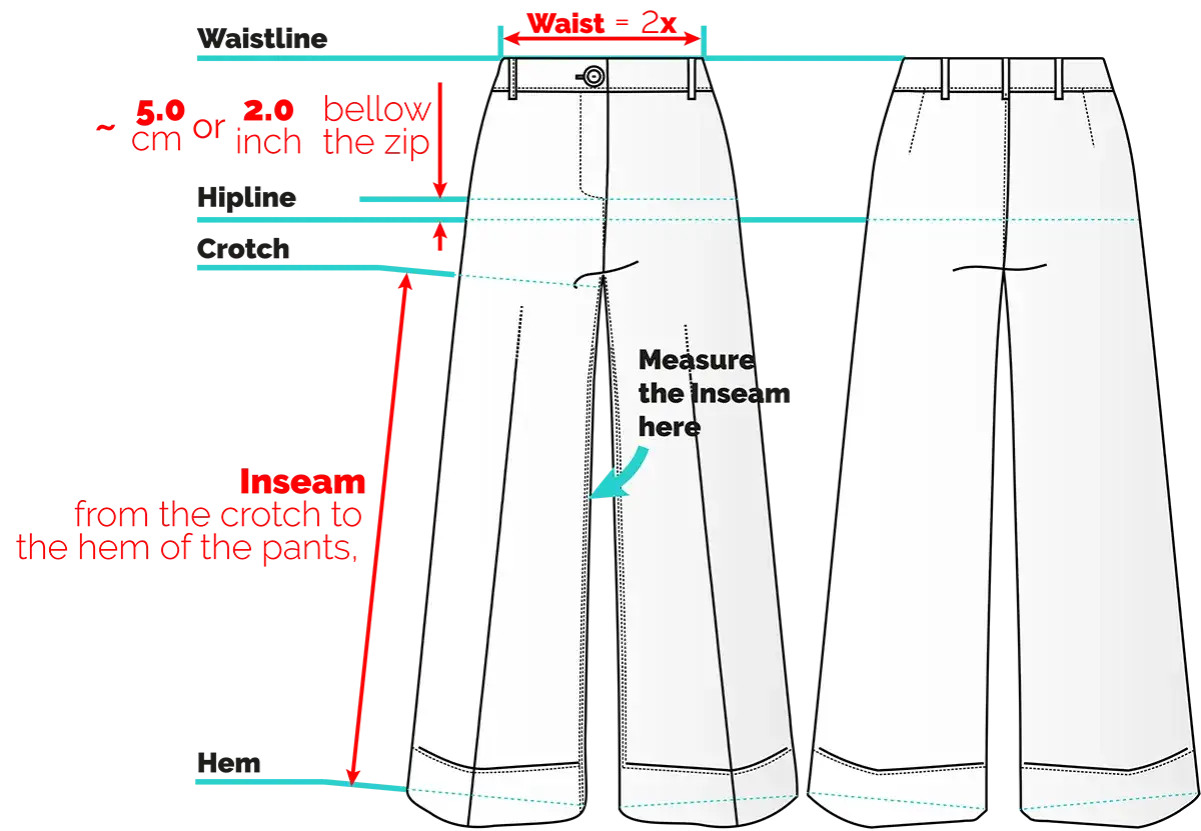
- It is measured from the crotch seam to the hem along the inside leg.
- Some brands use it as a garment measurement; others want your body inside-leg measurement.
- It matters more than the size label when you want a cropped, ankle, or full-length look.
- In the UK, the same measurement is often called the inside leg.
- Getting it right helps avoid ankle bunching, short hems, and unnecessary returns.
What the inseam tells you about legging fit
On leggings, the inseam is not a decorative detail. It is the measurement that tells you how much length you have between the crotch and the end of the leg, which is why it affects the final silhouette so much. If the inseam is too short, the leg can sit high and expose more ankle than you wanted; if it is too long, the fabric can stack, wrinkle, or pull in a way that looks untidy.
I also want to clear up a small but important point: on many leggings, especially technical or seamless styles, there may not be a visible seam running the whole inside leg. Even so, brands still use inseam as a length term. In practice, it is the number that describes how long the leg is meant to be, whether you are reading a size chart or checking a finished garment.
In the UK, you will often hear people say inside leg instead. The meaning is the same, and that language is especially useful when you are comparing leggings with trousers or jeans. Once you understand that link, the next step is learning how to measure it properly rather than guessing from the size label.
How I measure a legging inseam correctly
The cleanest way to measure an inseam depends on whether you are checking a pair you already own or measuring your body for online shopping. I treat those as two different jobs, because they answer two different questions. One tells you what the garment measures; the other tells you what length you probably need.
Measuring a pair you already own
Lay the leggings flat on a table or the floor and smooth them out without stretching the fabric. Find the point where the crotch seam meets the inside leg, then measure straight down to the hem on the inside leg. Use a soft tape measure if you have one, because it follows the line cleanly, and record the number to the nearest half inch or centimetre if possible.
The important part is not to pull the fabric tight. Stretch leggings can look shorter when they are laid flat and longer when they are worn, so the goal is to capture the intended garment length, not to force the fabric into a shape it does not naturally hold.
Measuring your own inside leg
Stand straight, barefoot, with your feet about hip-width apart. Measure from the crotch point down the inside of the leg to the ankle bone or to the exact point where you want the hem to land. If you can, ask someone else to do the measuring so the tape stays straight.
This is the version that is most helpful when a size chart asks for your inside leg rather than listing the garment inseam. It is also the better method when you want to decide between cropped, ankle, and full-length leggings. Once you know that number, the next question is not size at all, but which leg measurement you are actually comparing it against.
Why inseam is not the same as rise or outseam
This is where a lot of shopping mistakes begin. People see one number on a size chart and assume it explains the whole fit, but leggings use more than one length measurement. Inseam, rise, and outseam each describe a different line on the garment, and each one changes something different about the way the leggings feel on the body.
| Measurement | What it runs between | What it changes |
|---|---|---|
| Inseam | Crotch seam to hem on the inside leg | How long the leg looks and where the hem lands |
| Rise | Crotch seam to waistband | How high the leggings sit on your torso |
| Outseam | Waist or upper hip to hem on the outside leg | The full outer length, useful for trousers and pattern work |
That distinction matters because a legging can have a perfect rise and still be the wrong length. If the waistband feels secure but the hem sits too high or too low, the issue is usually inseam, not fit overall. I find this is the point where people stop blaming their body and start reading the chart more carefully, which is the better habit every time.
What different inseam lengths usually look like
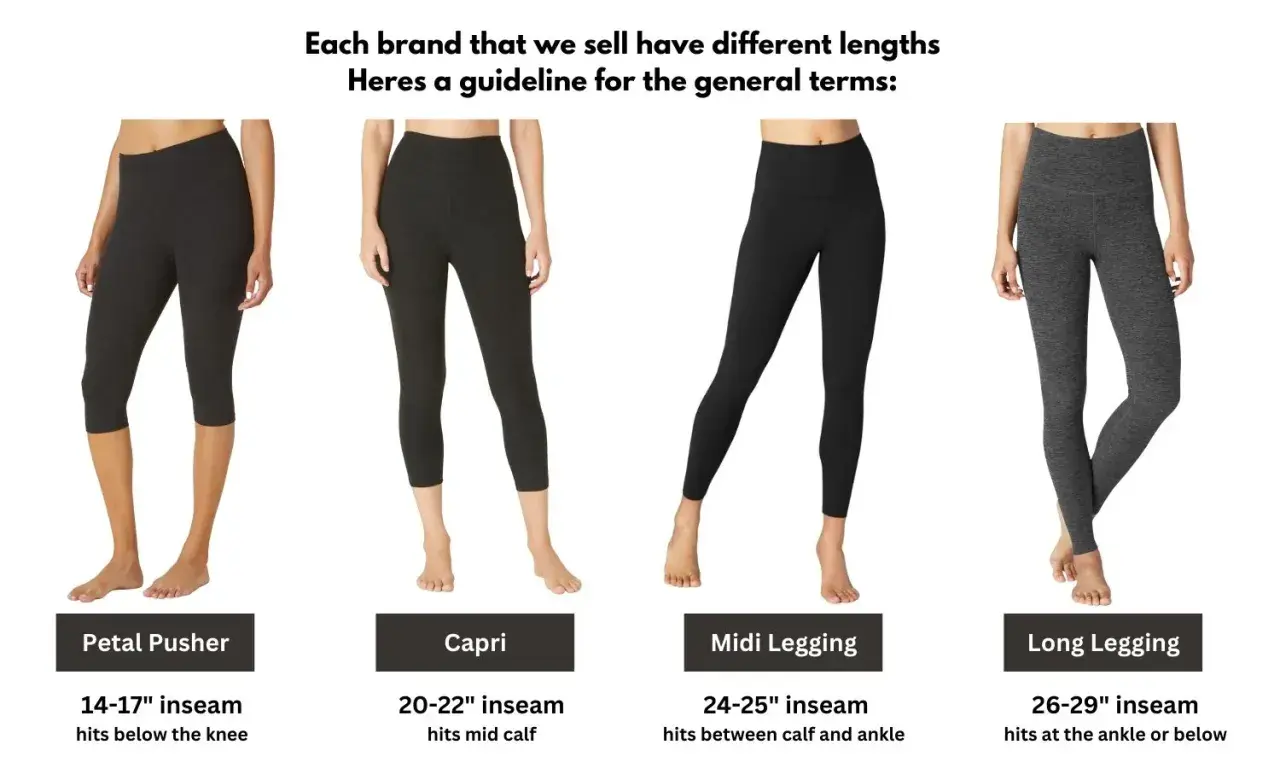
Brands do not all use the same length bands, but the following is a practical shopping guide for women’s leggings in inches and centimetres. Think of it as a rough map, not a universal rule. The same number can look different depending on your height, ankle shape, shoe choice, and how much stretch the fabric has.
| Approximate inseam | Approximate cm | Usual look | Best suited to |
|---|---|---|---|
| 23-25 in | 58-64 cm | Cropped or petite length | Shorter legs, ankle-baring looks, trainers, warmer-weather wear |
| 26-28 in | 66-71 cm | Regular full length | Many average-height wearers and everyday leggings |
| 29-31 in | 74-79 cm | Tall or long full length | Longer legs, extra ankle coverage, fewer awkward ankle gaps |
| 32 in and above | 81 cm and above | Extra-long | Very tall wearers, slight stacking, and styles meant to sit low on the ankle |
Two things are worth remembering here. First, 7/8 leggings are not a fixed measurement; they are a proportioned look. Second, height alone is not enough to predict fit. A person can be fairly short and still need a longer inseam if they have a longer leg line, and a taller person can sometimes wear a shorter length if they prefer the hem to sit higher on the ankle. That is why the next layer of judgment is so useful when you are buying or making them yourself.
How inseam helps when buying, sewing or altering leggings
When I am shopping, I do not let the size label do the thinking for me. I look for the inseam first, then I check whether the brand is talking about the garment length or asking for my body inside leg. That small distinction matters because some size guides are written from the garment’s point of view, while others are designed to match your body to a product length.
For UK shoppers, this is especially helpful because “petite,” “regular,” and “tall” are often only shorthand. They are useful, but they are still shorthand. If you already know your inside leg, you can compare it directly against the brand chart instead of hoping that a general height category will fit your proportions.
Read Also: Inside Leg Measurement - Master Your Trouser Fit
When you are sewing or altering leggings
If you are shortening leggings, I would usually start at the hem rather than the crotch. That keeps the leg shape intact and avoids shifting the balance of the whole pattern. Large changes at the top of the leg can move the knee placement or change the way the leg skims the calf, which is more noticeable than people expect in a close-fitting garment.
Stretch fabric adds one more wrinkle. A legging that looks right on the table can sit slightly differently once it is on the body, especially if the fabric is soft or has a lot of recovery. For home sewing, a stretch stitch or twin needle hem is usually the safer finish, because a straight stitch can snap when the fabric stretches. If the length is the only problem, the hem is usually the easiest place to correct it; if the whole leg line feels off, the pattern itself needs more careful adjustment.
That is the point I always come back to: inseam is useful not just because it helps you buy better, but because it gives you a clean reference when you are shaping the garment yourself. Once you have that reference, the final check is simply whether the length suits the way you actually wear leggings.
The fit checks I would not skip before choosing a length
Before I settle on a legging length, I ask a few practical questions that are more useful than any vague style advice. They sound simple, but they stop a lot of avoidable mistakes.
- Do you want the hem to sit at the ankle bone, slightly above it, or with a little stack?
- Will you wear the leggings mostly with trainers, boots, or barefoot at home?
- Is the brand giving a garment inseam or asking for your inside leg?
- Does the fabric have enough recovery to keep its length after movement?
- If the waistband fits but the leg is wrong, can you alter the length without ruining the proportion?
The strongest rule I can give is this: do not let a perfect waistband force you into the wrong inseam. Waist and leg length are separate decisions, and leggings usually look better when the hem is right, even if the waist needs a small adjustment. That is especially true in styles with strong compression, because the fit can feel correct at first and then shift once you start moving around.
The small details that make the right length feel right
If I had to reduce the whole subject to one practical method, it would be this: measure the inside leg, compare that number with the chart, and then decide where you want the hem to land in real life. That sounds almost too plain, but plain is good here. Leggings are one of those garments where the last 2 cm can decide whether the fit looks finished or merely close enough.
When in doubt, use a pair you already love as your reference point. Measure its inside leg flat, note where the hem sits on your ankle, and use that as your baseline for future buys or sewing adjustments. For trousers and jeans, the same habit is useful too, which is why inseam is one of the few measurements I trust across different legwear styles.
The best leggings are not the ones that sound right on the label; they are the ones whose length feels deliberate when you put them on. If the inseam supports that feeling, the rest of the fit has a much better chance of working.