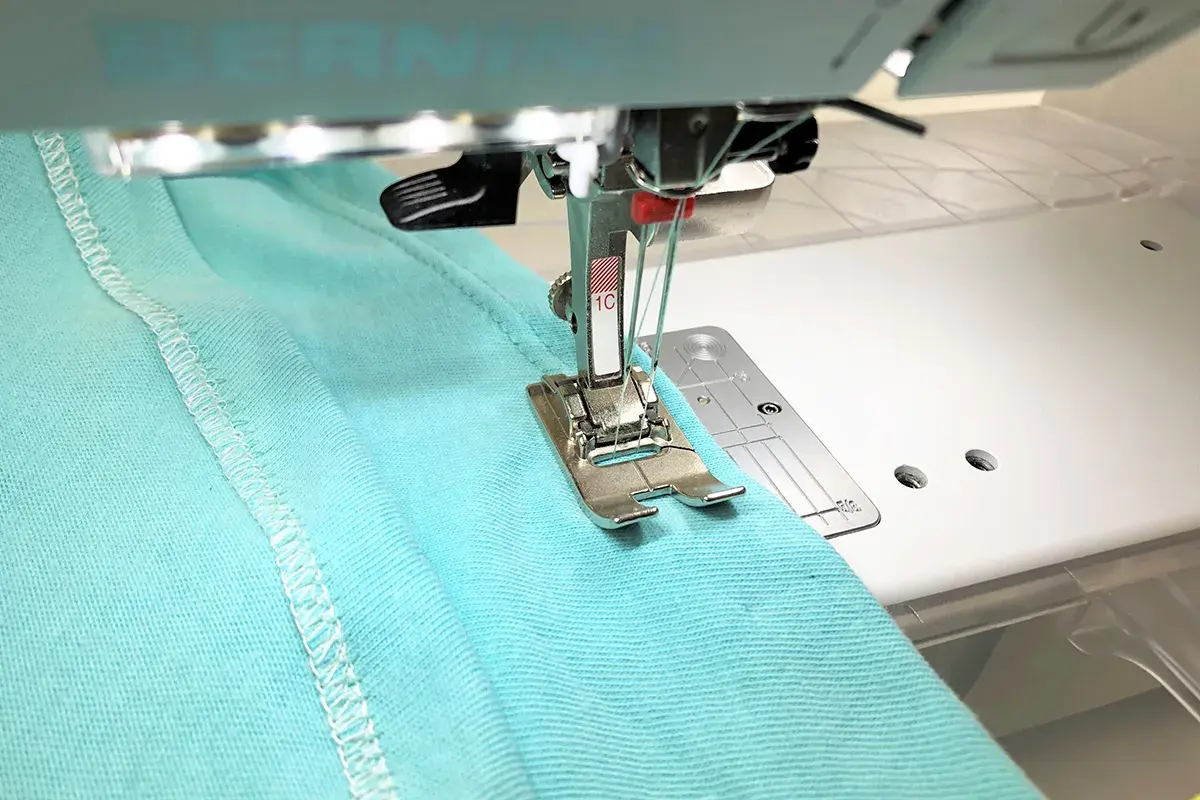
What matters most before you try a twin needle
- Most modern domestic zigzag machines can use a twin needle, but not every machine can.
- Straight-stitch-only machines, sergers/overlockers and some vintage models are the main exceptions.
- Needle-plate clearance is the usual deal-breaker, not the needle itself.
- Use the machine’s twin-needle setting if it has one, or keep the stitch width narrow enough to avoid plate strikes.
- Test on scrap first, especially with knits, thick seams or decorative stitches.
- Use a stretch or ballpoint twin needle for jersey and other elastic fabrics.
The short answer is no, not every machine is a match
In practice, most modern home sewing machines with zigzag capability can handle a twin needle, but that is not the same as saying every machine can. The machine has to leave enough room for both needles to pass through the throat plate without hitting metal, and it has to keep the stitch formation stable while two upper threads feed at once.
I would treat straight-stitch-only machines, sergers and overlockers, and many older or very narrow machines as special cases. If the manual does not mention twin-needle sewing, I do not assume it will work safely just because the needle fits into the needle bar.
| Machine type | Usually compatible? | What to watch for |
|---|---|---|
| Modern domestic zigzag machine | Usually yes | Needle plate opening, stitch width and the machine’s twin-needle setting |
| Straight-stitch-only machine | Often no | Not enough side clearance for two needles |
| Sergers and overlockers | No | They use a different stitch system and are not designed for twin needles |
| Older or vintage domestic machine | Depends | Narrow presser foot, narrow plate opening or missing guidance in the manual |
| Coverstitch machine | Different tool | Built for parallel hems, so you usually do not need a twin needle at all |
That gives you the broad answer. The next step is checking the actual machine in front of you, because compatibility is often decided by small details rather than the brand name on the front.
How I check compatibility before I even thread the needle
When I want to know whether a twin needle will behave properly, I check five things in order. It saves time, and it prevents the very common mistake of blaming the needle when the real problem is the machine setup.
- The manual mentions twin-needle sewing or a twin-needle mode. That is the cleanest sign that the machine was designed with the option in mind.
- The needle plate has enough opening for both points. A wide zigzag plate or a specific twin-needle plate is a good sign; a very narrow straight-stitch plate is not.
- The presser foot clears both needles. A foot that is too narrow or too close to the needles can cause contact, especially on decorative stitches.
- The stitch selector can stay within safe width limits. On some machines the twin-needle option automatically limits the stitch width or disables unsafe patterns.
- I have a usable second spool position. Two top threads need two smooth thread paths, even if one is just an auxiliary pin behind the machine.
If the manual is vague, I do not force the issue. The machine may still work, but I want a clear route for the threads and enough room under the foot before I start sewing on real fabric.
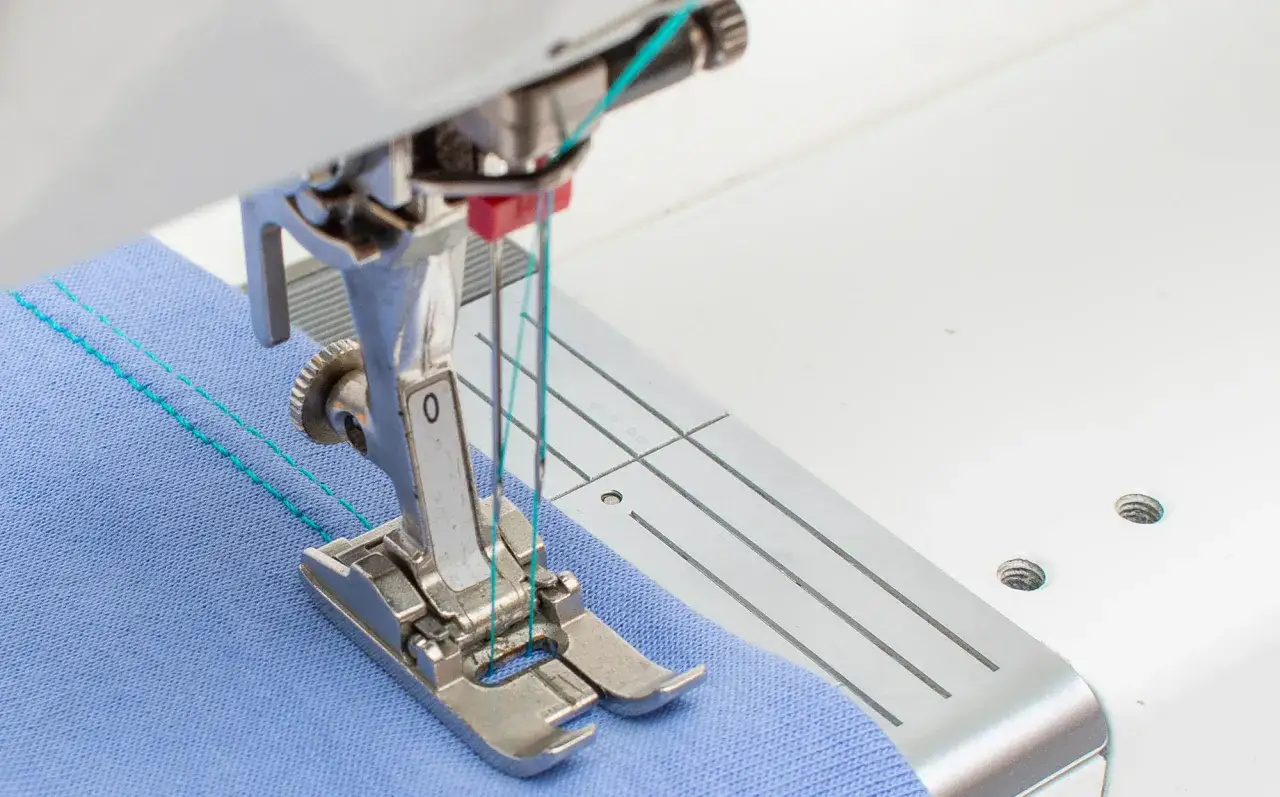
Set up the machine so the twin needle can clear the plate
Once the machine looks compatible, the setup has to be clean. Twin-needle stitching is less forgiving than a standard single needle seam, so little threading mistakes show up quickly as skipped stitches, looping or thread breakage.- Fit a compatible twin needle with the flat side of the shank facing the back of the machine.
- Place two spools on separate thread paths. If the machine only has one spool pin, use an auxiliary pin or a spool stand.
- Thread each needle separately, but keep the paths balanced through the final guides.
- Select a straight stitch or the machine’s twin-needle setting if one is available.
- Keep the stitch width narrow enough that the needles will not strike the plate or foot.
- Turn the handwheel by hand for the first few stitches before you power through the seam.
- Test on scrap fabric folded to the same thickness as the real project.
For jersey hems, I usually start with a stitch length around 2.5 to 3 mm. For visible topstitching on woven fabric, 3 to 3.5 mm often gives a cleaner look. If the underside starts tunnelling, I lower the upper tension a notch rather than trying to force the fabric flat with a longer stitch.
A twin needle is also the moment to be picky about thread. Smooth, good-quality thread feeds more evenly, and that matters when two needles are working in close formation. Uneven thread feeding is one of the quickest ways to turn a neat double row into a frustrating mess.
What the stitch actually does on the fabric
A twin needle creates two parallel rows on the right side and a small zigzag on the wrong side. That underside zigzag gives the seam a little stretch, which is why twin needles are so useful for jersey hems, necklines and cuffs. It is a simple trick, but it changes the behaviour of the seam quite a lot.
- On knits, it gives a neat hem that can still move with the fabric.
- On woven fabrics, it gives crisp parallel topstitching that looks more finished than a single row.
- On light decorative work, it can create pintucks or border effects without extra attachments.
- On bulky seams, it can become unreliable because the needles deflect more easily and the fabric sits unevenly under the foot.
The limit is not the look, it is the mechanics. A twin needle does not magically solve every hem or finish. It works best when the fabric is medium-light, the seam is not overly bulky, and the stitch width stays safely inside the opening of the plate.
When a different finish is the better choice
If I only need a quick, neat finish, a twin needle is usually my first choice because it uses the machine I already own. If I want a truly professional knit hem and I sew that way often, I start comparing it with other methods rather than assuming the twin needle is always the best answer.
| Method | Best for | Main advantage | Main limitation |
|---|---|---|---|
| Twin needle | Everyday hems, topstitching and light decorative work | Cheap, quick and uses a standard domestic machine | Needs plate clearance and careful tension control |
| Coverstitch machine | Professional knit hems | Designed for parallel hems from the start | Separate machine and higher upfront cost |
| Single-needle topstitch | Denim, heavy seams and precise edge stitching | More control over bulky areas | No paired-line look |
| Overlocker or serger | Seam construction and raw-edge finishing | Fast and tidy on stretch fabrics | Not a replacement for a twin-needle hem |
The practical takeaway is simple: the twin needle is a compromise in the best sense of the word. It gives you a professional-looking finish without changing machines, but it is not meant to replace every specialised stitch or every specialist machine.
The mistakes that cause skipped stitches and broken needles
Most twin-needle problems are setup mistakes, not a sign that the needle itself is bad. When the stitch goes wrong, I look first at clearance, thread path and fabric thickness.
| Problem | Likely cause | What I change first |
|---|---|---|
| Needles tap the plate or foot | The stitch width is too wide or the plate opening is too narrow | Reduce the width, switch to the twin-needle setting or fit the wider needle plate if the machine supports it |
| Skipped stitches | Wrong needle type, dull needle or unsuitable fabric | Use a stretch or ballpoint twin needle on knits and replace any needle that has already been bent |
| Thread loops underneath | Upper tension is too tight or the two threads are feeding unevenly | Rethread both paths, then back off the upper tension slightly |
| Tunnelling between the rows | The fabric is too light or the tension is pulling the top layer in | Add stabiliser, shorten the stitch slightly or reduce tension |
| Needle breaks at a seam | The seam is too bulky or the machine is being driven too fast through the ridge | Slow down, grade the seam allowance and support the hump with a seam jumper |
One habit saves me a lot of grief here: I always hand-turn the first few stitches over a folded scrap before I commit to the real seam. If there is any tapping, wobbling or thread snagging, I stop there instead of letting the machine bury the problem in the garment.
The pre-stitch check I use before I commit to the hem
Before I sew the actual piece, I run the same short check every time. If the machine passes it, I sew with confidence. If it fails, I adjust the stitch or choose a different finish.
- Does the manual allow twin-needle sewing?
- Does the needle plate and presser foot leave enough room?
- Does the test seam look clean on the same fabric and thickness?
- Do the two rows stay even when I cross a seam or curve?
That five-minute check usually tells me everything I need to know. If the machine, the plate and the fabric all behave on scrap, a twin needle is a practical, low-cost way to get a neat finish. If they do not, I would rather change the method than risk a broken needle on the final garment.