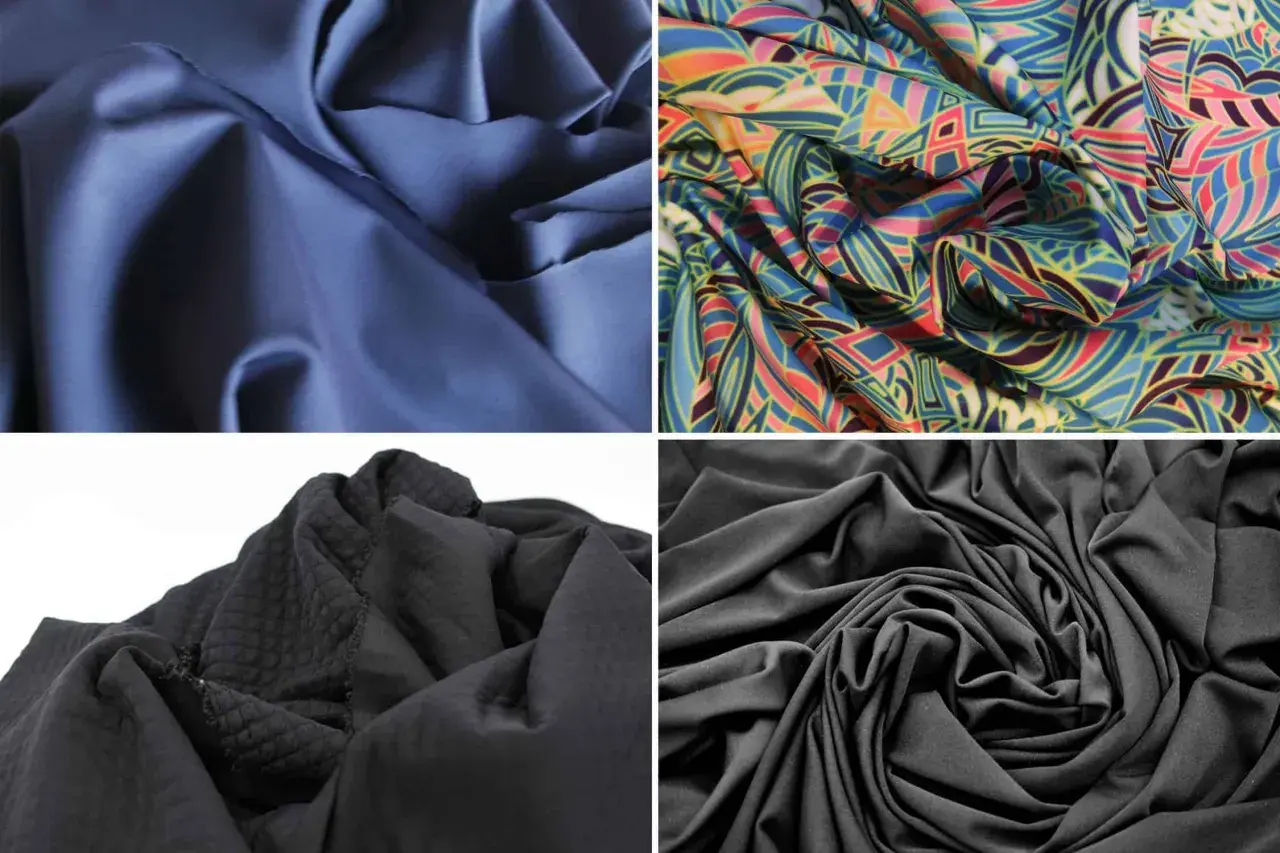
Key points to keep in mind before you choose a training fabric
- Polyester and nylon are the safest all-round picks for sweaty sessions because they dry quickly and handle abrasion well.
- Merino wool is excellent for changeable weather, longer sessions, and lower odour build-up, especially in the UK climate.
- Cotton feels comfortable at rest, but it holds moisture and can make hard training feel heavy and chilly.
- Elastane is rarely the main fibre, but it is what gives leggings, tops, and bras their stretch and recovery.
- Construction matters too: knit structure, seams, and ventilation panels can improve comfort as much as the fibre name on the label.

What makes a training fabric actually perform
When I evaluate activewear, I start with four things: how it handles sweat, how fast it dries, how much it moves with the body, and how well it survives repeated washing. A fabric can feel fine in the changing room and still become miserable halfway through a circuit class if it traps moisture or loses shape.
Moisture management
This is the big one. A good training fabric pulls perspiration away from the skin or spreads it across the surface so it can evaporate faster. That matters because damp fabric sticks, chills, and increases the chance of chafing.
Breathability and drying time
Breathability is not just about holes in the fabric. It is also about yarn size, knit construction, and thickness. A lightweight, open-knit top can feel cooler than a heavier fabric with the same fibre content.
Stretch and recovery
Activewear needs to stretch without bagging out. Elastane gives that spring-back effect, which is why fitted leggings and sports bras usually contain it. Without good recovery, even a technically smart fabric can end up sagging at the knees or waistband.
Durability and odour resistance
High-friction areas such as thighs, underarms, and seat seams need abrasion resistance. Odour resistance matters too, especially if you train before work or travel with your kit. That is where some fibres, and especially some blends, pull ahead of the rest.The fabrics I would shortlist first
If I had to narrow the field quickly, I would look at these five materials first. They cover most training scenarios without forcing you into a single niche fabric.
| Fabric | What it does well | Trade-offs | Best use |
|---|---|---|---|
| Polyester | Quick-drying, durable, widely available, easy to engineer into lightweight knits | Can hold odour if the finish or construction is poor | Running, gym sessions, HIIT, budget-friendly basics |
| Nylon | Soft feel, strong abrasion resistance, good recovery in blends | Often costs more than polyester | Leggings, cycling shorts, compression pieces, repeated wear |
| Merino wool | Temperature regulation, natural odour resistance, comfortable in changeable weather | Usually pricier and less durable in very thin garments | Outdoor training, travel, cooler or stop-start sessions |
| Lyocell or TENCEL-style fibres | Soft hand feel, moisture control, a less synthetic feel against the skin | Usually not as tough as technical synthetics for very sweaty, high-impact sessions | Yoga, low-impact classes, everyday training tops |
| Cotton | Soft, familiar, breathable when you are not sweating much | Absorbs moisture and dries slowly; Nike notes it can hold around 7% of its own weight in sweat | Warm-ups, casual wear, light stretching, low-sweat movement |
Match the fabric to the workout, not the marketing
A fabric that is excellent for yoga may be the wrong choice for intervals, and a fast-drying running tee may feel too technical for a slow mobility class. The right answer depends on how your body generates heat and moisture during the session.
Running and HIIT
For hard, sweaty work, I would reach for a polyester or nylon blend with elastane. These fabrics usually dry quickly, stay light when wet, and keep chafing down better than cotton. For road running in damp UK weather, that fast-dry behaviour is especially useful because a sweat-soaked top can turn cold fast when the pace drops.
Weight training
In the gym, abrasion resistance matters more than many people realise. A nylon-based legging or short tends to handle repeated contact with benches, barbells, and floor work better than softer, flimsier fabrics. You still want some stretch, but I would rather have a stable, durable knit than a fabric that feels overly buttery and then pills after a few washes.
Yoga and pilates
Comfort and drape matter more here than maximum sweat transport. Lyocell blends, soft nylon blends, and carefully made cotton blends can all work if the fabric has enough recovery to keep its shape through deep stretches. The mistake I see most often is choosing a fabric that feels nice standing still but turns see-through or loose under movement.
Outdoor training and cooler weather
Merino comes into its own when the temperature shifts, the session is stop-start, or you are moving from a windy pavement to a warmer indoor space. Woolmark points out that merino can absorb and release moisture vapour efficiently while still feeling comfortable next to the skin, which is exactly why it works so well for layers and variable conditions. In real life, that means fewer sweaty chills and less lingering odour after longer sessions.
Lower-intensity classes and recovery days
For walking, stretching, or lighter studio work, I am more forgiving. A soft lyocell blend or a cotton-rich piece can be perfectly fine if the workout will not leave you soaked. The key is to be honest about the intensity. If you know the class will become sweaty, do not let softness fool you into picking a fabric that will stay wet for hours.
Why blends usually beat pure fibres
Pure fibres sound neat, but activewear is rarely better when it is stripped down to one ingredient. Blends let manufacturers combine the best parts of each fibre: moisture control from one, stretch from another, and durability from a third.
For fitted garments, I usually expect some elastane in the mix. A small percentage goes a long way, and in practice many performance pieces sit somewhere in the roughly 5 to 15 percent elastane range. That is enough to improve recovery without turning the fabric into something overly compressed or unstable.
- Polyester + elastane is the standard all-round formula for general training wear because it balances drying speed, stretch, and cost.
- Nylon + elastane is often the better choice for leggings and shorts that see a lot of friction.
- Merino + nylon gives you more durability than pure merino while keeping the temperature-regulating and odour-resistant benefits.
- Lyocell + synthetic fibre can soften the hand feel of a garment without giving up all performance.
If you are comparing labels, I would not obsess over a single fibre name. I would ask what the blend is trying to achieve. A smart blend will usually outperform a “premium” single fibre that has been chosen for branding more than function.
The details that matter more than the fibre name
Two garments can share the same fibre content and still behave very differently. This is where good activewear either earns its price or exposes its shortcuts.
Knit structure
A mesh knit can breathe better than a dense one, even if both use polyester. That is why ventilation zones under the arms, down the back, or behind the knees make a visible difference in comfort.
Seams and fit
Flatlock seams sit flatter against the skin and reduce rubbing. A gusset, which is the extra panel inserted in a high-stress area, helps leggings and shorts move more naturally and usually improves durability too. Fit matters just as much: moisture-wicking works best when the fabric sits close enough to the body to move sweat away efficiently.
Fabric weight and opacity
Lightweight sounds good until the fabric becomes translucent in a squat or too fragile for repeated training. I prefer to check opacity, recovery, and bounce-back rather than assuming that lighter always means better. A slightly heavier knit can often perform better and last longer.
Finishes and coatings
Some performance treatments help with odour or water resistance, but they can also wear out over time. That is not automatically a problem; it just means you should judge the garment as a system, not only by the headline fabric label.
How to keep performance fabrics working after the first wash
Good fabric choice can be undone by careless care. Sweat management fabrics are engineered to move moisture, so anything that leaves a residue on the fibres works against that function.
- Wash technical kit promptly so sweat and bacteria do not sit in the fibres for long.
- Use a mild detergent and avoid fabric softener, which can leave a coating that reduces absorbency.
- Turn garments inside out to protect the outer surface and printed details.
- Choose cooler washes when the care label allows it; hot water is rarely necessary for activewear.
- Air-dry where possible, because high heat can shorten the life of elastane and stress printed finishes.
That care routine is especially important for synthetics. A technically strong fabric can start to feel sticky or less effective if it is loaded with residue from too much detergent, too much softener, or repeated overheated drying.
The fabric choices I trust for different training needs
When someone asks me for a straight answer, I keep it simple and practical. The right choice depends on what kind of discomfort you are trying to avoid.
- Best overall for most workouts: polyester or nylon blended with elastane.
- Best for outdoor changeable weather: merino wool, ideally in a smart blend for durability.
- Best for a softer, less synthetic feel: lyocell blend or TENCEL-style fabric.
- Best for heavy abrasion and leggings: nylon-led blends.
- Best to avoid as a main training fabric: 100% cotton for anything sweaty or high intensity.
If I were buying only one new training top for a mixed routine, I would choose a lightweight polyester or nylon blend with a little elastane and a knit that breathes well. If I were building a wardrobe for walking, running, and colder outdoor sessions in the UK, I would add at least one merino piece for the days when temperature swings and damp air change the equation. The fabric label matters, but the smartest choice is the one that matches your actual training habits.