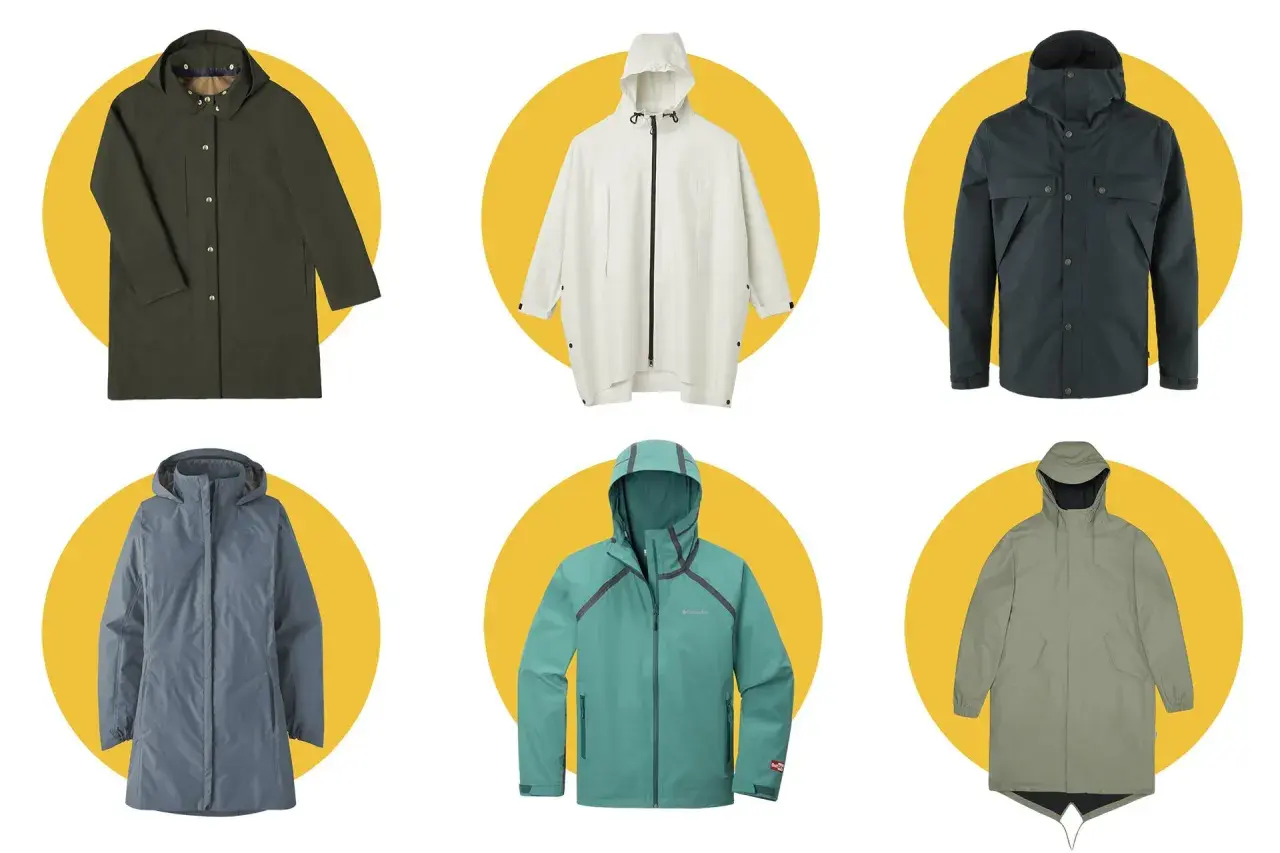
Raincoats work best when the outer cloth, the waterproof layer, and the finishing details all do their job together. The answer to the question what fabric are raincoats made of is usually polyester or nylon, sometimes cotton gabardine or waxed cotton, and in technical shells a bonded membrane system. That distinction matters whether you need a smart coat for city showers, a hard-wearing shell for the countryside, or a fabric choice for a sewing project.
Most raincoat fabric choices fall into a few practical families
- Polyester and nylon are the most common bases because they are light, strong, and easy to waterproof.
- PU-coated or laminated shells do the real waterproof work in many everyday raincoats.
- Cotton gabardine and waxed cotton are favoured for heritage styles and lighter shower protection.
- Seams, hoods, and finishes matter almost as much as the fabric itself.
- Breathability becomes important once a raincoat is worn for more than a short walk.
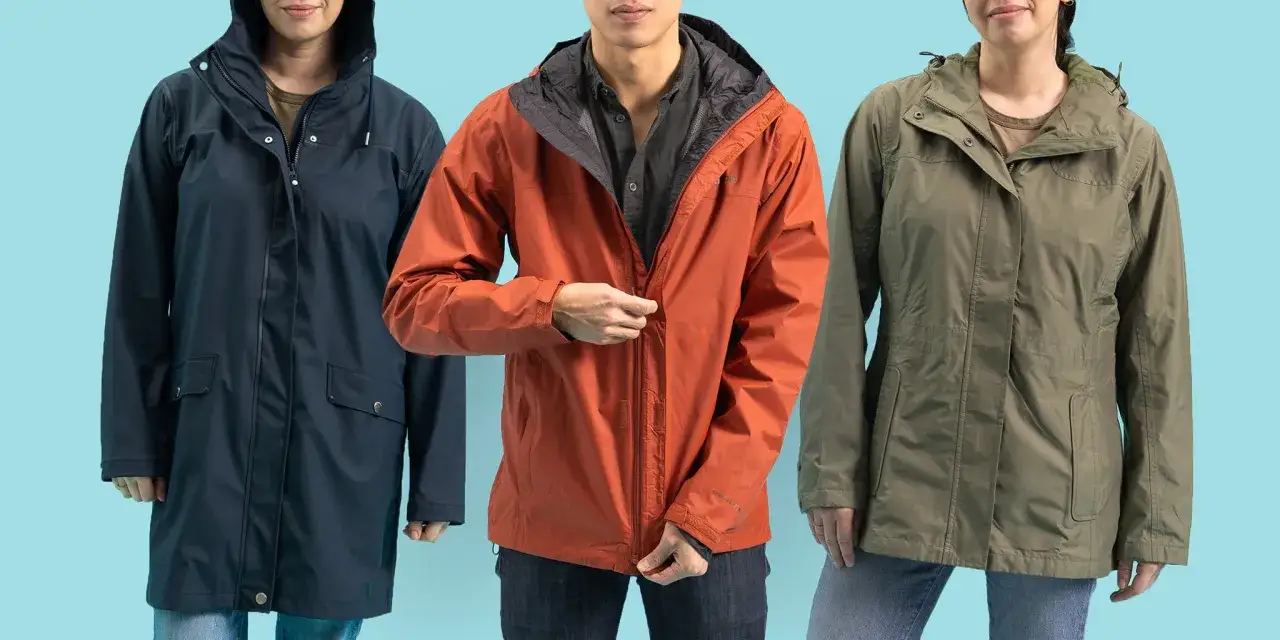
The main fabrics used in raincoats
When I look at raincoat fabrics, I separate them into two big groups: synthetic performance fabrics and traditional outerwear fabrics. The first group is what you see in most modern waterproof jackets. The second group is what gives trench coats and country coats their familiar look and feel.
| Fabric or construction | How it works | Best for | Trade-offs |
|---|---|---|---|
| Polyester with PU coating | A polyester base cloth is backed with a polyurethane layer that blocks water. | Budget raincoats, commuter coats, children’s outerwear | Can feel less breathable and sometimes a bit plasticky |
| Nylon with coating or membrane | Light nylon face fabric is paired with a waterproof layer. | Packable shells, hiking jackets, travel rainwear | More expensive than basic coated polyester |
| Three-layer technical laminate | An outer fabric, waterproof membrane, and inner backer are bonded together. | Serious wet-weather use, outdoor activities, premium shells | Costs more and usually needs better care |
| Cotton gabardine | A tightly woven cotton cloth with a dense, shower-resistant finish. | Trench coats and smart city rainwear | Usually shower-resistant rather than fully waterproof |
| Waxed cotton | Cotton is impregnated with wax so water beads on the surface. | Heritage jackets, country wear, practical everyday coats | Heavier, warmer, and needs rewaxing over time |
What actually makes a raincoat waterproof
A raincoat is rarely waterproof because of the fabric alone. What matters is the whole construction: the outer face fabric, the coating or membrane behind it, the seam treatment, and the water-repellent finish on the surface.
The easiest way to think about it is this: the outer fabric gives the coat its shape and durability, while the barrier underneath stops water from getting through. A DWR finish - short for durable water repellent - makes rain bead and roll off the surface. It is useful, but it is not the main waterproof layer. If the DWR wears off, the coat may still be waterproof underneath, but the outer fabric will soak up water more quickly and feel heavier.
Seams matter just as much. Every stitch makes a tiny hole, so a genuinely waterproof raincoat needs taped, sealed, or welded seams. Without that detail, even a good fabric can leak at the stress points. Breathability also matters: a coat can keep rain out and still leave you damp from condensation if it does not let body heat escape.
| Feature | What it does | Why it matters |
|---|---|---|
| DWR finish | Makes water bead on the surface | Helps the coat stay lighter and feel drier in drizzle |
| Coating or membrane | Blocks liquid water from passing through the fabric | Provides the main waterproof barrier |
| Taped seams | Seals stitch holes | Prevents leaks in sustained rain |
| Breathable construction | Lets moisture vapour escape | Reduces clamminess during walking or commuting |
If you want one rule to remember, it is this: a raincoat only performs as well as its weakest detail. That is why the next question is not just which fabric is used, but which fabric suits the way you actually wear the coat.
Which fabric suits which kind of raincoat
I would not choose raincoat fabric by name alone. I would choose it by use case. A coat for a five-minute dash to the station needs something different from a shell for a wet day in the hills, and both need something different from a trench coat worn over office clothes.
| Use case | Best fabric choice | Why it works |
|---|---|---|
| Daily city commuting | Polyester or nylon with PU coating or a light membrane | Light, practical, and usually affordable |
| Long walks and wet weekends | Breathable laminated shell | Handles steady rain better and feels less clammy |
| Smart or classic styling | Cotton gabardine | Clean drape, polished look, good for lighter rain |
| Country wear or heritage outerwear | Waxed cotton | Durable, characterful, and easy to reproof |
| Sewing an everyday raincoat | PU-coated polyester | Easier to source and usually simpler to sew than a high-end membrane fabric |
For the UK, I would be especially cautious with anything described only as “water-resistant.” That can be fine for drizzle, but it is not the same as staying comfortable in a proper downpour. If your raincoat will see repeated wet days, a membrane or a well-finished coated fabric usually makes more sense than a purely decorative outer layer. That brings us to the numbers and features that are actually worth checking on the label.
How to read the label without getting misled
Waterproof marketing can get vague quickly, so I look for details that tell me how the coat will behave in real weather. A useful starting point is the waterproof rating, often shown in millimetres. This is a hydrostatic head figure, which describes how much water pressure the fabric can resist before it leaks.
As a practical guide, 5,000 mm is usually fine for lighter showers and short exposure, 10,000 mm is a solid everyday benchmark, and 20,000 mm+ is better for heavier rain or more demanding use. Those figures do not tell the whole story, though. I have seen coats with decent ratings fail to feel dry because the seams were weak, the hood was poor, or the fabric wet out on the surface.
- Check the seams - taped seams matter in real rain.
- Check the hood - a deep, adjustable hood is more useful than a stylish one.
- Check the lining - mesh or tricot linings improve comfort.
- Check the cut - room for layering makes a coat far more usable in cold rain.
- Check the care instructions - a coat you cannot maintain will stop performing early.
That is the logic I use when buying, and it is even more important if you are sewing your own coat. The fabric may be the headline, but the construction decides whether the result is genuinely wearable.
If you are sewing a raincoat, choose the construction before the pattern
For sewing, I would start with the end use and then pick the fabric. A home-sewn raincoat does not need the most expensive textile on the market, but it does need a fabric that matches your machine, your skill level, and the level of waterproofing you actually expect.
PU-coated polyester is usually the most forgiving choice for beginners. It is stable, widely available, and easier to handle than many technical laminates. Nylon with a waterproof backing is lighter and often nicer to wear, but it can shift more under the presser foot. If you want a heritage look, cotton gabardine or waxed cotton can be rewarding, but they come with a trade-off: they give you style and decent weather resistance, not the same all-day waterproof performance as a sealed technical shell.- Use a fine needle suited to coated or technical cloth.
- Avoid unnecessary pin marks on waxed or coated surfaces.
- Keep bulky seam allowances under control so the coat does not feel stiff.
- Plan for seam sealing if you want true waterproof performance.
- Choose a lining that helps the garment slide over layers instead of clinging to them.
I would also be careful with pressing. Some waterproof backings and membranes dislike heat, so test everything first and use the lowest effective temperature. If you are making a first raincoat, a simpler coated fabric is usually a better learning project than a highly technical laminate. That choice often saves more frustration than any fancy pattern ever will.
The fabric choice that saves the most regret
If I had to reduce the whole topic to one practical rule, it would be this: choose the fabric for the weather you actually face, then verify the construction that keeps water out. The best-looking raincoat is still disappointing if it leaks at the seams, and the most technical shell is overkill if you only need a polished coat for short city showers.
For everyday UK wear, synthetic shells are the most flexible answer. For a classic trench, cotton gabardine still earns its place. For a rugged, characterful coat, waxed cotton remains a strong option. The useful decision is not which fabric sounds best on paper, but which one matches your climate, your wardrobe, and the amount of maintenance you are willing to do. Once those three line up, rainwear becomes much easier to get right.