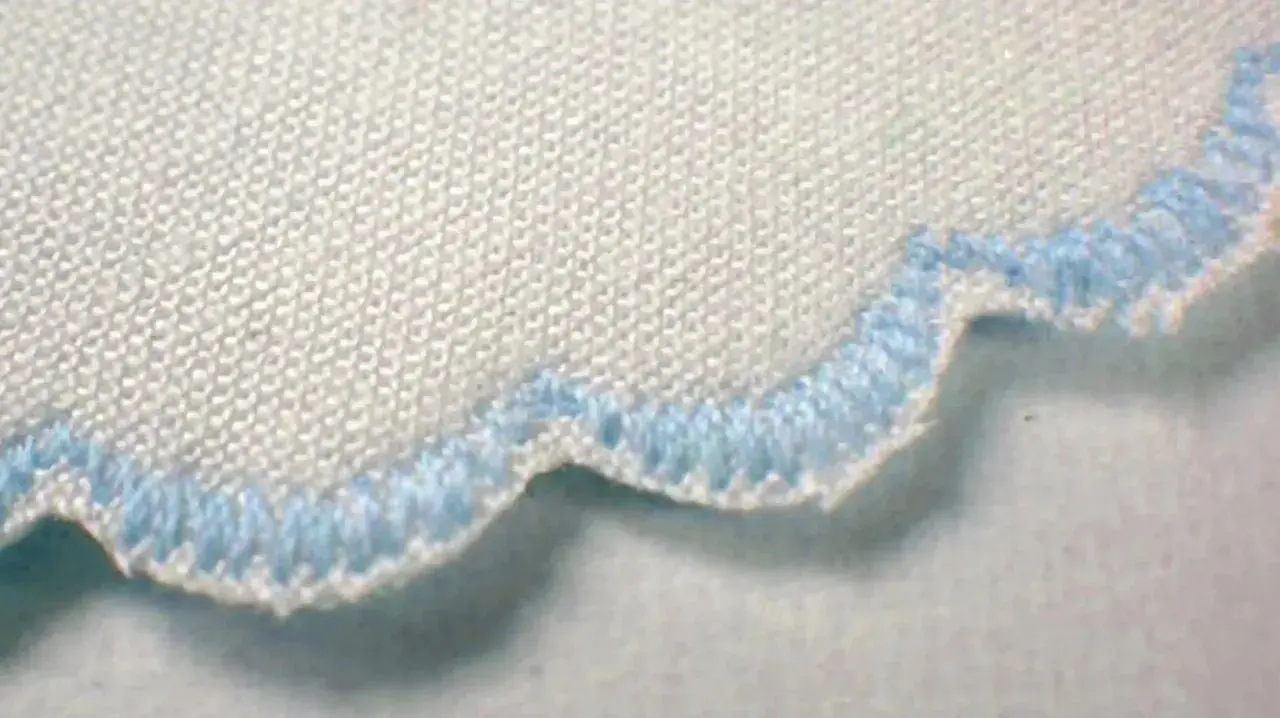
The finished edge on a length of woven fabric is usually called the selvedge in British English, or selvage in American English. It is the self-finished edge created during weaving, so it behaves differently from a cut edge that will fray.
In sewing, though, people sometimes use “finished edge” more loosely to mean a hem, a bound edge, or an overlocked seam. I’m separating those meanings here so you can use the right term, cut fabric more confidently, and avoid the small mistakes that lead to wavy seams, wasted fabric, or a poor drape.
The edge you are usually looking for is the selvedge
- Selvedge is the built-in finished edge on woven fabric.
- Raw edge is the cut edge, and most woven fabrics fray there.
- Hem, binding, and overlocking are sewn finishes applied after cutting.
- In the UK, selvedge is the standard spelling.
- The exact term depends on whether you mean the fabric itself or the garment edge.
The short answer is selvedge
If you mean the edge that comes already prepared on the fabric itself, the word you want is selvedge. It is the tightly woven border that runs along the length of woven cloth and is created as the weft thread turns back during the weaving process. Because of that construction, it usually does not fray in the way a cut edge does.
I use this term most often when I’m talking about bolts of woven fabric such as cotton, linen, denim, or viscose challis. You’ll usually find the selvedge on both long sides of the fabric width, sometimes with tiny holes, text, colour bands, or the mill’s name printed on it. In British sewing language, that spelling is the one I would choose first.
If you have seen selvage instead, that is simply the American spelling of the same thing. The meaning is unchanged, which is useful to know when you move between pattern instructions, books, and online tutorials. That difference becomes more useful once you compare it with the raw edge you actually cut.
How selvedge differs from a raw edge
The easiest way to think about it is this: the selvedge is the fabric’s built-in edge, while the raw edge is the edge you create with scissors or a rotary cutter. One is made during weaving; the other is made by you. They do not behave the same way, and treating them as if they do is where a lot of beginner confusion starts.
| Term | What it means | What it does | Typical use |
|---|---|---|---|
| Selvedge | The self-finished woven edge of the fabric | Usually resists fraying and can be slightly firmer | Reference point for grain and fabric width |
| Raw edge | A freshly cut edge | Often frays or unravels, especially on woven cloth | Needs a seam finish, hem, or binding |
| Finished garment edge | An edge sewn after cutting | Looks neat and helps prevent wear | Hems, cuffs, necklines, facings, and seam finishes |
That difference matters because the selvedge is not usually part of the usable pattern piece. In most dressmaking, I still trim it away before cutting, especially if I want the fabric to hang cleanly. The one exception is when a pattern or design intentionally uses the selvedge as a feature, which is more common in denim and some decorative projects. Once you know that distinction, it becomes much easier to talk about sewn finishes without mixing the terms together.
When a sewn edge is finished in other ways
Sometimes the right answer is not selvedge at all, because the edge you mean has been finished after cutting. In those cases, the term changes depending on the method.
- Hem - a folded and sewn edge, often used on skirts, trousers, sleeves, and hems at the bottom of garments.
- Binding - a strip of fabric that encloses the raw edge, often used on necklines, armholes, quilts, and curved edges.
- Overlocking - an edge finish made with an overlocker, which trims and secures the edge to reduce fraying.
- Facing - a shaped piece of fabric used to neaten the inside of an edge such as a neckline or armhole.
- Turned-under finish - a simple fold stitched in place, often used on light home-sewing projects.
I find this is where many sewing conversations blur. Someone says “finished edge,” but they may mean the hem on a skirt, the bound edge of a cushion cover, or the selvedge of the fabric before it was cut. If you are reading a pattern, the context usually tells you which one is intended. If the instruction says to finish a seam allowance, it is talking about the cut edge after sewing, not the selvedge at the side of the cloth.
In other words, selvedge is a fabric term, while hem, binding, and overlocking are construction terms. That distinction is small, but it saves a lot of confusion when you are shopping, cutting, or following a pattern.
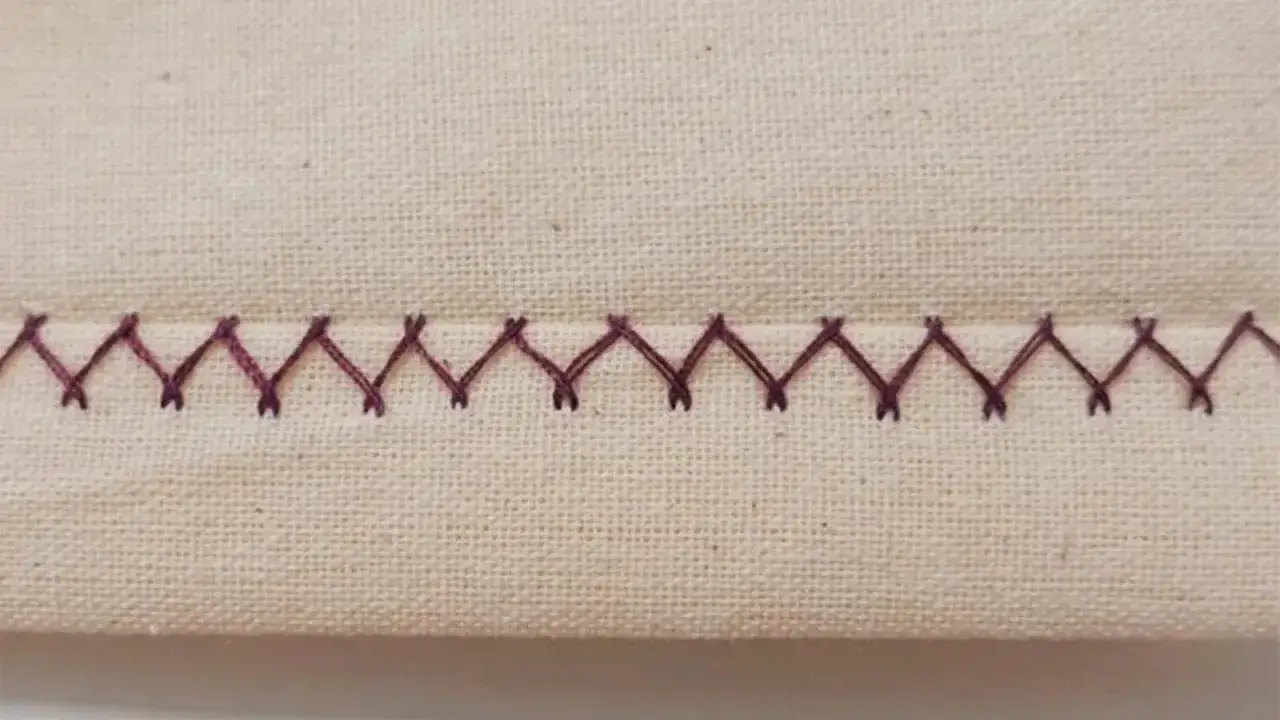
How to recognise the selvedge on fabric in the shop
The selvedge is usually easy to spot once you know what to look for. It runs along the length of the fabric, not across it, and it often has a slightly tighter weave than the rest of the cloth. On many bolts, you’ll see printing, symbols, or a colour stripe in that border area.
- Look for a firmer, denser edge that does not unravel easily.
- Check for printed text, dots, brand names, or colour coding along the border.
- Notice whether the edge has tiny perforations or pin holes from the weaving process.
- Compare it with a cut edge, which will usually feel looser and more prone to fraying.
- On border prints, do not confuse the decorative border with the selvedge itself.
Some fabrics make identification harder. Knits may curl instead of fray, fleece may barely fray at all, and some specialty textiles have very subtle selvedges. In those cases, I look at the weave structure and the fabric direction rather than relying only on the edge appearance. If a fabric is unusually textured or directional, the selvedge can help you work out how it was manufactured and which way the grain runs. That leads directly into why the edge matters when you cut.
Why the edge matters when you cut and sew
Understanding the selvedge is not just about vocabulary. It affects how you place pattern pieces, how the garment drapes, and how stable the final seam will be. If you cut too close to the selvedge, you may end up using the tighter woven border inside a seam where it can pull, distort, or change the way the fabric hangs.
For most dressmaking, I prefer to keep the selvedge outside the usable pattern area unless the pattern specifically tells me otherwise. A common seam allowance is 1.5 cm / 5/8 in, and that extra space gives you room to sew without forcing the stiff edge into the seam line. That matters most on woven fabrics, because they fray more readily than knits.
There is also a practical waste question. Selvedges are usually narrower and less flexible than the rest of the cloth, so they are rarely the best place to place a main garment piece. On the other hand, they can be useful in small accessories, sample work, or denim details where a visible factory edge is part of the design. I have seen selvedge used well in labels, pocket facings, and decorative trims, but only when the design deliberately calls for it.
Once you see the selvedge as part of the fabric’s structure rather than just its border, pattern cutting starts to make a lot more sense.
Common mistakes that create confusion
The term itself is simple; the mistakes usually happen when people apply it too broadly. These are the ones I see most often.
- Calling every edge a selvedge - only the self-finished woven border deserves that name.
- Using the selvedge as a seam line - the firmer weave can change how a seam lies and may make it feel bulky.
- Mixing up selvedge and hem - a hem is sewn onto a garment; a selvedge is part of the fabric itself.
- Ignoring fabric type - knits, fleece, and nonwoven materials do not behave like classic woven cloth.
- Assuming a decorative border is the selvedge - some prints have a border design that looks important but is not the technical edge.
The fix is usually straightforward: check the weave, read the pattern note, and decide whether the edge needs to be cut, kept, or sewn down. I also remind beginners that a fabric edge can be technically “finished” without being suitable for every purpose. A selvedge is finished in the manufacturing sense, but that does not automatically make it the right edge to build a garment around.
That is why I like to reduce the whole topic to one plain rule before I start cutting.
A simple rule I use to keep the terminology straight
My rule is this: if the edge is made by the loom, call it the selvedge; if I finish it with stitches, call it a hem, binding, or seam finish; if it has been cut and left exposed, call it a raw edge. That one distinction covers most sewing conversations without making the language more complicated than it needs to be.
So when someone asks about the finished edge on fabric, I usually answer with one word first and then add the context. The word is selvedge, but the sewing situation matters. Knowing when that edge is part of the cloth and when it is part of the garment will help you read patterns more accurately, buy fabric with more confidence, and make cleaner decisions at the cutting table.
If you remember only one thing, remember this: selvedge belongs to the fabric, not the seam. That small distinction is one of the easiest ways to sound fluent in sewing language and avoid the kinds of mistakes that are easiest to make at the beginning.