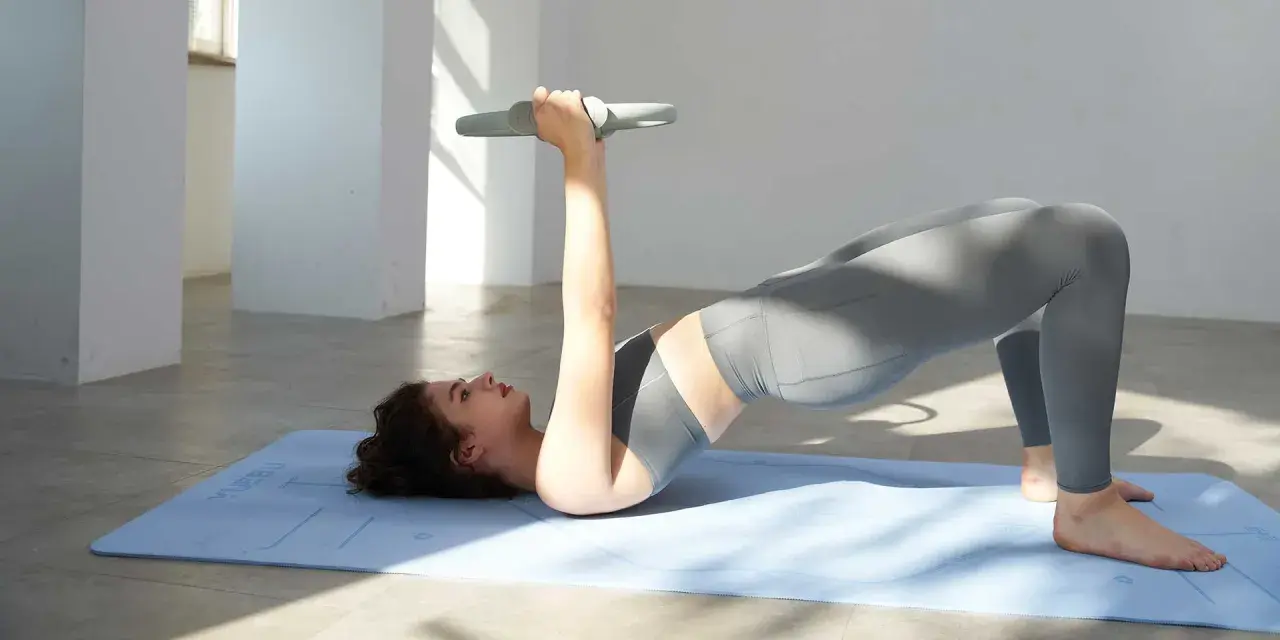
The quick take on choosing yoga fabric
- Best all-round choice: polyamide (nylon) and elastane in a mid-weight knit.
- Best for sweat management: polyester and elastane, especially for hotter sessions.
- Best for softness: cotton and elastane, if comfort matters more than performance.
- Most useful weight range: around 220-300 gsm for supportive everyday yoga pants.
- Most important test: strong recovery after stretching, not just initial stretch.
- Most overlooked detail: knit structure matters almost as much as fibre content.
Why the knit matters more than the label
I always start with one simple rule: fibre content tells you part of the story, but the knit tells you whether the trousers will actually work. A fabric can contain plenty of elastane and still disappoint if the knit is loose, flimsy, or prone to distortion.
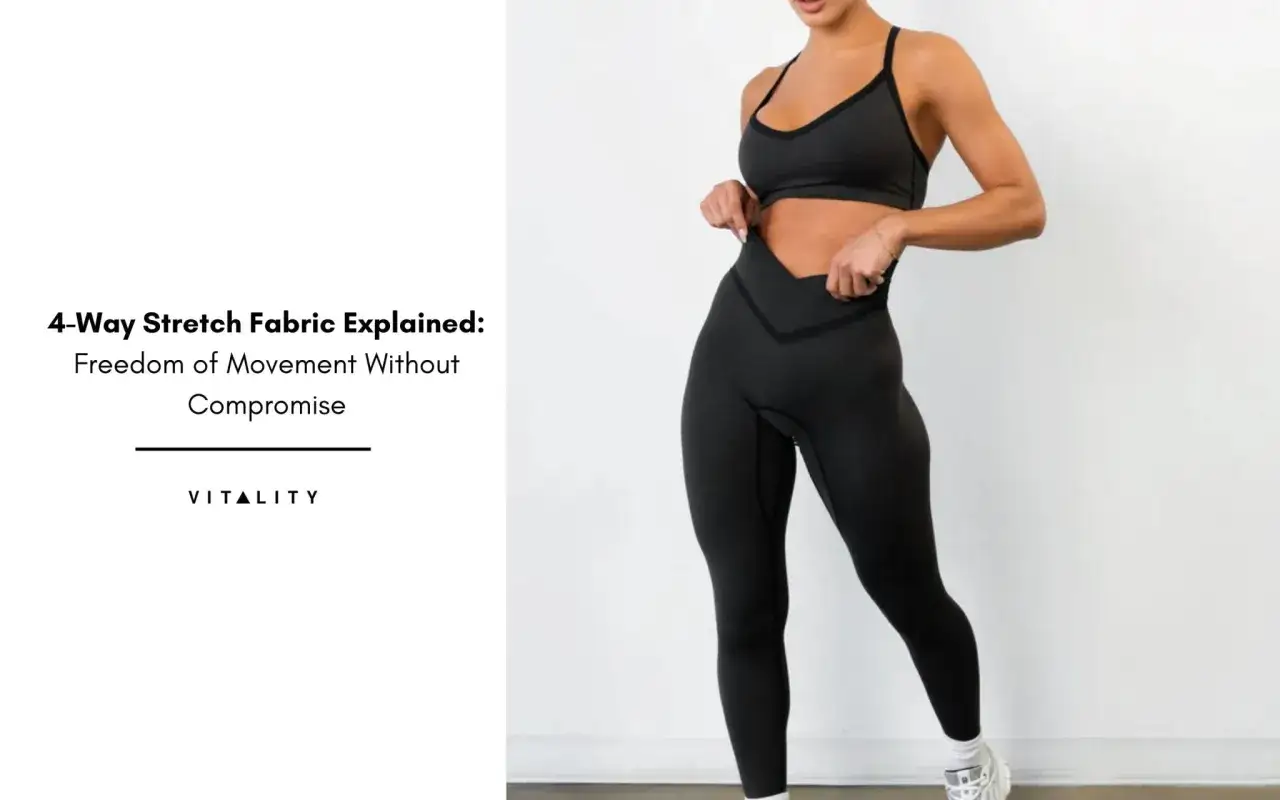
For yoga pants, I look for four-way stretch, which means the fabric stretches both lengthwise and widthwise. That matters because deep lunges, hip openers, and repeated kneeling all stress the fabric in different directions. If the recovery is poor, the knees bag out; if the knit is too open, the fabric can go shiny or sheer when stretched.
In practice, I also watch for the balance between softness and structure. A fabric that feels dreamy in the hand can still be the wrong choice if it has little bounce-back. That is why the discussion is never just “which fibre is best?”, but “which fibre, knit, and weight work together?”. Next, I’ll narrow that down to the blends I would shortlist first.
The fabrics I shortlist first
When I am comparing fabrics for yoga trousers, I usually come back to a small group of blends. In the UK, you will often see nylon labelled as polyamide, so I treat those as the same family for shopping purposes.
| Fabric blend | Why I would use it | Trade-offs |
|---|---|---|
| Polyamide (nylon) + elastane | Smooth, durable, abrasion-resistant, and usually the most premium-feeling option for yoga wear. | Can feel warmer than expected if the knit is dense or the fabric is heavily compressive. |
| Polyester + elastane | Strong moisture management, quick drying, and often a good choice for sweaty classes or frequent washing. | Can feel slightly less soft than polyamide, depending on the finish. |
| Cotton + elastane | Soft, familiar, and comfortable for low-impact wear or lounging-style yoga pants. | Slower to dry and usually less technical under heavy sweating. |
| Bamboo viscose + elastane | Very soft with a fluid drape, which some people love for relaxed yoga styles. | Can lose shape more easily if the knit quality is weak. |
| Merino blend + elastane | Useful in cooler weather because it regulates temperature well and feels comfortable against the skin. | Less common, more expensive, and not my first pick for a classic gym-style legging. |
How I choose by class type and climate
The “best” fabric changes once you factor in how the pants will be worn. A pair for hot yoga is not the same brief as a pair for gentle flow sessions, Pilates, or all-day travel.
- Hot yoga: I would lean towards a lighter polyester-elastane or a lighter polyamide-elastane knit, usually around 180-220 gsm. The goal is breathability and quick drying, not maximum compression.
- Everyday studio classes: A mid-weight polyamide-elastane knit around 220-280 gsm is the safest all-round choice. It gives coverage without feeling heavy.
- Pilates and barre: I like a slightly more structured knit here, because controlled movement and a clean silhouette benefit from more support.
- Lounging and gentle yoga: Cotton-elastane or bamboo-viscose blends can be comfortable if sweat control is not the main concern.
- Cooler UK weather: A slightly denser knit often makes more sense than an ultra-light one. Thin leggings can feel underbuilt when the room is cool, even if they look fine on a hanger.
I find that many people overvalue softness and undervalue recovery. A fabric can feel lovely for five minutes and still be the wrong choice if it heats up too much, bags at the knee, or becomes translucent in a deep stretch. The climate and the class tell you which compromise is acceptable, which leads naturally to the real quality checks.
What to check before you buy or cut the fabric
There are three checks I would not skip: opacity, recovery, and surface durability. They tell you far more than marketing language on a product page.
- Opacity test: Stretch the fabric across your hand or over a light source. If it goes obviously sheer at moderate stretch, it is unlikely to give reassuring coverage in a squat or forward fold.
- Recovery test: Pull the fabric and let it relax. Good activewear should bounce back quickly instead of staying rippled or slack.
- Surface test: Rub the fabric lightly and look for early pilling or snagging. Yoga pants live close to mats, benches, straps, and zips, so the surface needs to hold up.
- Weight test: As a practical range, I usually think in the 220-300 gsm zone for supportive yoga pants. Lighter weights can work, but they are more likely to feel thin or reveal more than expected.
- Finish test: If the fabric relies only on a soft coating to feel performance-ready, I am cautious. Once that finish washes out, the fabric can behave very differently.
One point is worth stressing: higher GSM alone does not guarantee better leggings. A dense but poorly engineered knit can still be stiff or hot. A slightly lighter fabric with a tight, stable knit can outperform it in comfort and coverage. That is why I look at weight and structure together, not in isolation.
If you are sewing your own pair, construction decides a lot
A good fabric can still be let down by poor construction. I see this often with homemade leggings: the material was fine, but the seams, waistband, or pattern choice created the problem.
For sewing, I would use a pattern designed for high-stretch knits, not a casual trouser pattern adapted at the last minute. The cut should respect the fabric’s stretch direction, and the waistband needs enough stability to stay up without cutting in. A gusset is also worth considering because it reduces seam stress and improves movement through the crotch area.
Needles and thread matter more than many beginners expect. A stretch or ballpoint needle helps avoid skipped stitches, and polyester thread is usually the safer choice because it tolerates movement better than cotton thread. For seams, a narrow zigzag or proper stretch stitch is usually more forgiving than a rigid straight stitch.
I also pre-wash activewear fabric before cutting. It is a small step, but it helps remove shrinkage surprises and gives a more honest read on hand feel. If the fabric curls badly at the edges, frays oddly, or loses shape after washing, I take that as a warning sign rather than a nuisance to ignore. The fabric may still be usable, but only if the rest of the construction is very deliberate.
The rule I trust when choosing fabric without overthinking it
If I had to name the best fabric for yoga pants for most makers, I would choose a mid-weight polyamide-elastane knit with solid recovery, a dense enough structure to stay opaque, and enough stretch to move naturally. That combination is the least likely to disappoint across different body shapes, poses, and wear patterns.
If the goal is a cooler, sweatier session, I would move towards polyester-elastane. If the goal is softness and casual comfort, I would accept the trade-off of cotton-elastane or a bamboo blend, but I would not pretend those are the most technical options. The right choice depends on what you are willing to compromise on: dryness, softness, compression, or price.
My simplest check is this: stretch the fabric, watch the recovery, and ask whether it still looks reassuring under tension. If the answer is yes, you are probably close to the right choice. If not, the fabric may look good on the roll but still be the wrong foundation for a pair of yoga pants that needs to move properly.