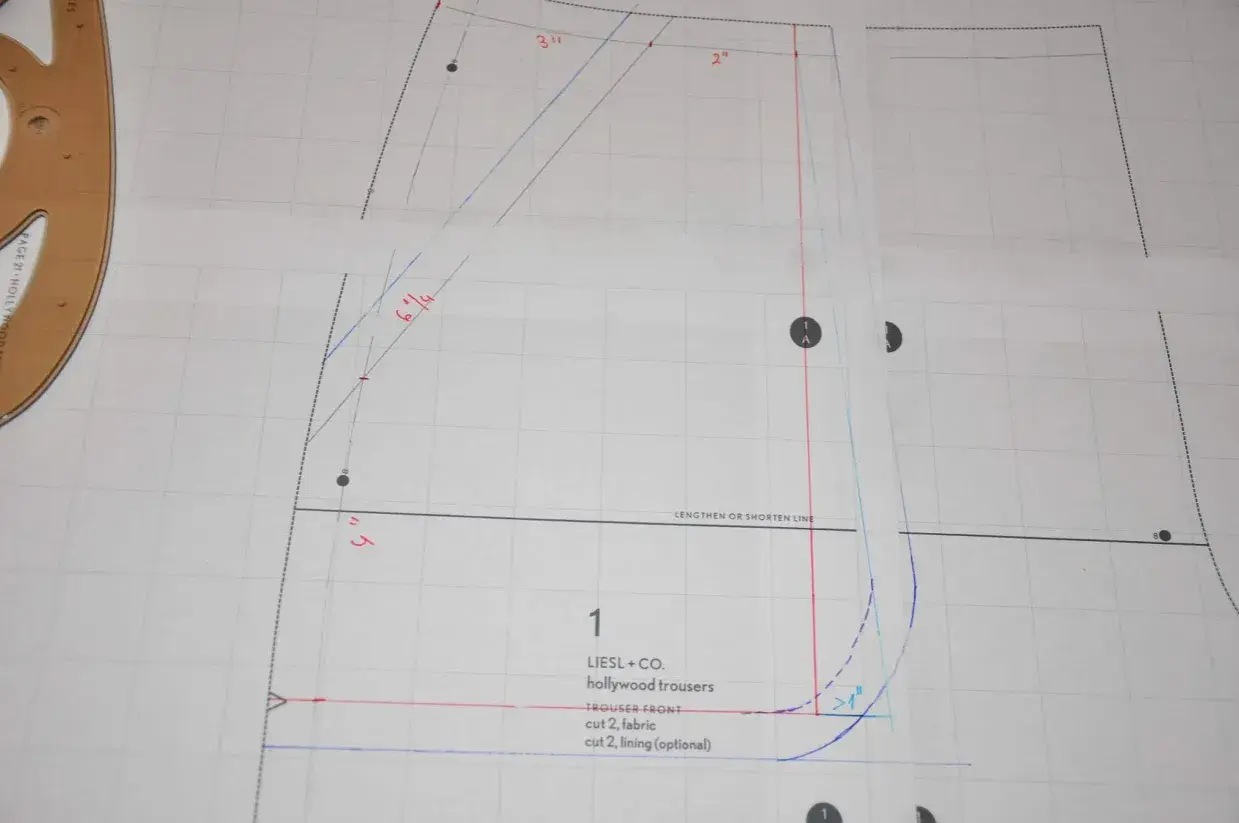
The types of pockets on pants are not just decorative extras; they change how trousers sit, how useful they feel, and how formal the whole garment reads. In practice, pocket choice affects bulk at the hip, the line of the front opening, and even how comfortably you can sit or reach into the pocket. In this guide, I break down the main pocket styles, how they are built, where they work best, and what I would check before cutting a pattern.
What to know before choosing a pocket style for trousers
- Slash and inseam pockets keep the front of trousers cleaner than bulky external pockets.
- Patch pockets are easy to sew and practical, but they add visible weight to the garment.
- Welt and jetted pockets look sharper and more tailored, which is why they suit smarter trousers.
- Jeans usually combine several pocket types, including the coin pocket and back patch pockets.
- Fit matters as much as style; a pocket that looks good on paper can distort a fitted hip if it is too deep or too bulky.
What the main pocket styles look like on trousers and jeans
When I look at trouser pockets, I sort them by how they are attached and how much of the pocket is visible from the outside. That simple distinction explains most of the visual difference between casual jeans, clean chinos, and tailored dress trousers. The table below covers the pocket styles you are most likely to meet in everyday sewing and garment design.
| Pocket style | What it looks like | Where you usually see it | Why it works | Main trade-off |
|---|---|---|---|---|
| Slash pocket | A pocket opening cut on an angle from the waist or hip into the front panel | Chinos, casual trousers, many knit pants | Easy to use, familiar, and visually balanced | Can gape or pull open if the hip is very fitted |
| Inseam or side-seam pocket | A hidden pocket built into the side seam | Relaxed trousers, lounge pants, skirts, some wide-leg styles | Creates a clean front and keeps the pocket nearly invisible | Can add bulk at the hip if the garment is close-fitting |
| Patch pocket | A separate pocket sewn onto the outside of the garment | Jeans, workwear, utility trousers | Simple to construct and useful for a casual look | Adds visible bulk and can flatten the silhouette |
| Welt pocket | A narrow, bound opening with a pocket bag behind the fabric | Tailored trousers, smart casual trousers, jackets | Looks neat and refined | Needs accuracy and stable fabric to look good |
| Jetted pocket | A very tidy opening framed by narrow strips or jets | Dress trousers and formal tailoring | Gives the cleanest, most polished finish | Less forgiving than a patch or slash pocket |
| Cargo pocket | A roomy external pocket, often with a flap or pleat | Cargo trousers, utility trousers, workwear | High capacity and easy access | Adds width and makes the leg look bulkier |
| Coin or watch pocket | A small extra pocket tucked inside the front of jeans | Classic five-pocket jeans | Useful for coins, a ticket, or keys, and keeps the heritage denim look | Very limited storage |
| Back patch or back welt pocket | A rear pocket that is either sewn on or neatly set into the fabric | Jeans, chinos, tailored trousers | Balances the back view and changes how formal the garment feels | Placement affects how wide or lifted the seat looks |
The important point is that pocket type and pocket arrangement are not the same thing. A pair of jeans may use patch pockets, a coin pocket, and back pockets together, while a pair of dress trousers may rely on front slash pockets and discreet welted backs. Once you see that structure clearly, it becomes easier to judge whether a design is meant to look sturdy, sporty, refined, or quietly practical.
How the pocket construction changes fit and comfort
Construction matters just as much as the pocket name. A pocket that is sewn on the outside behaves differently from one that is hidden in a seam, because the load is carried by different parts of the garment. That is why I look at pockets as part of the trousers’ architecture, not as afterthoughts.
- Patch pockets are the easiest to sew because they sit on top of the fabric, but they also show every wrinkle and every bit of bulk beneath them.
- Slash and inseam pockets keep the exterior cleaner, though the pocket bag must be shaped and supported well or it will pull on the hip.
- Welt and jetted pockets are tailored details, so the opening needs accurate marking, stable fabric, and careful pressing.
- Cargo pockets need space to expand, which means pleats, flaps, or boxy shaping; that useful volume is also what makes them visually heavy.
- Reinforcement is not optional on high-stress pockets. Bar tacks, stay tape, interfacing, and strong pocketing fabric all help the pocket survive repeated use.
I also pay attention to the fabric inside the pocket. Pocketing cloth should feel smoother and lighter than the outer fabric, so keys, hands, and phones slide in without dragging the whole front of the trouser down. On denim, the classic topstitching and bar tacks are not just decoration; they are part of what keeps the pocket mouth from giving out first.
Which pocket styles suit jeans, chinos and tailored trousers
Not every pocket works on every pair of trousers, and that is where a lot of badly balanced designs start. A pocket can look perfectly fine on a pattern sketch and still feel wrong on the body if it fights the silhouette. I usually choose the pocket style by asking what the garment is supposed to do first, and how polished it needs to look second.
| Garment type | Best pocket choice | Why I would choose it | What to avoid |
|---|---|---|---|
| Classic jeans | Five-pocket layout with front openings, coin pocket, and back patch pockets | It is durable, familiar, and part of the denim language | Overly delicate pocketing or ultra-thin topstitching |
| Chinos | Slash front pockets with welt or neat back pockets | Keeps the shape clean while still giving everyday usability | Bulky cargo pockets unless the style is intentionally utility-led |
| Tailored trousers | Front slash pockets and jetted or welted back pockets | Creates a smoother line and reads more formal | Large patch pockets that break the sharp silhouette |
| Wide-leg or relaxed trousers | Inseam pockets or soft slash pockets | The extra ease in the leg can hide pocket volume better | Overly stiff pocket bags that make the hip area stand away from the body |
| Workwear and cargo trousers | Patch and cargo pockets | Storage and access matter more than minimalism | Very small decorative pockets that do not earn their keep |
A useful rule of thumb is this: the closer the fit through the hip, the quieter the pocket should be. Side-seam pockets shine when the trousers have a bit of ease, but on a very fitted shape they can distort the line. That is why I keep the pocket volume under control when I want the leg and hip to read smoothly.
Design details that make pockets work better in real wear
Good pockets are judged in motion, not on a flat pattern sheet. I think there are five details that matter more than the pocket label itself.
- Opening size should match the hand and the item you actually carry. A standard inseam pocket opening often starts at roughly 16 cm, which is a sensible benchmark if you are checking whether a pocket is too tight to be useful.
- Depth needs to be generous enough that a phone or keyring does not sit at the opening and pull the pocket down. If the item is meant to stay secure, the pocket bag should extend well below the stress point.
- Placement changes both comfort and silhouette. Moving a front pocket opening slightly forward can make it easier to use, while pushing it back can flatten the front visually.
- Reinforcement protects the pocket mouth, especially on denim and work trousers. I like bar tacks at the ends of the opening and interfacing at the top edge when the fabric is soft or loosely woven.
- Fabric choice affects how the pocket hangs. A pocket bag made from tighter-woven cotton or pocketing cloth usually behaves better than one made from the same heavy shell fabric.
The mistakes I see most often are predictable: pockets that are too shallow, pocket bags that twist inside the garment, and decorative flaps hiding an opening that is too small to be practical. If a pocket only works when the trousers are lying flat, it is not really finished. It is only dressed up.
How I would alter a pocket in a sewing pattern
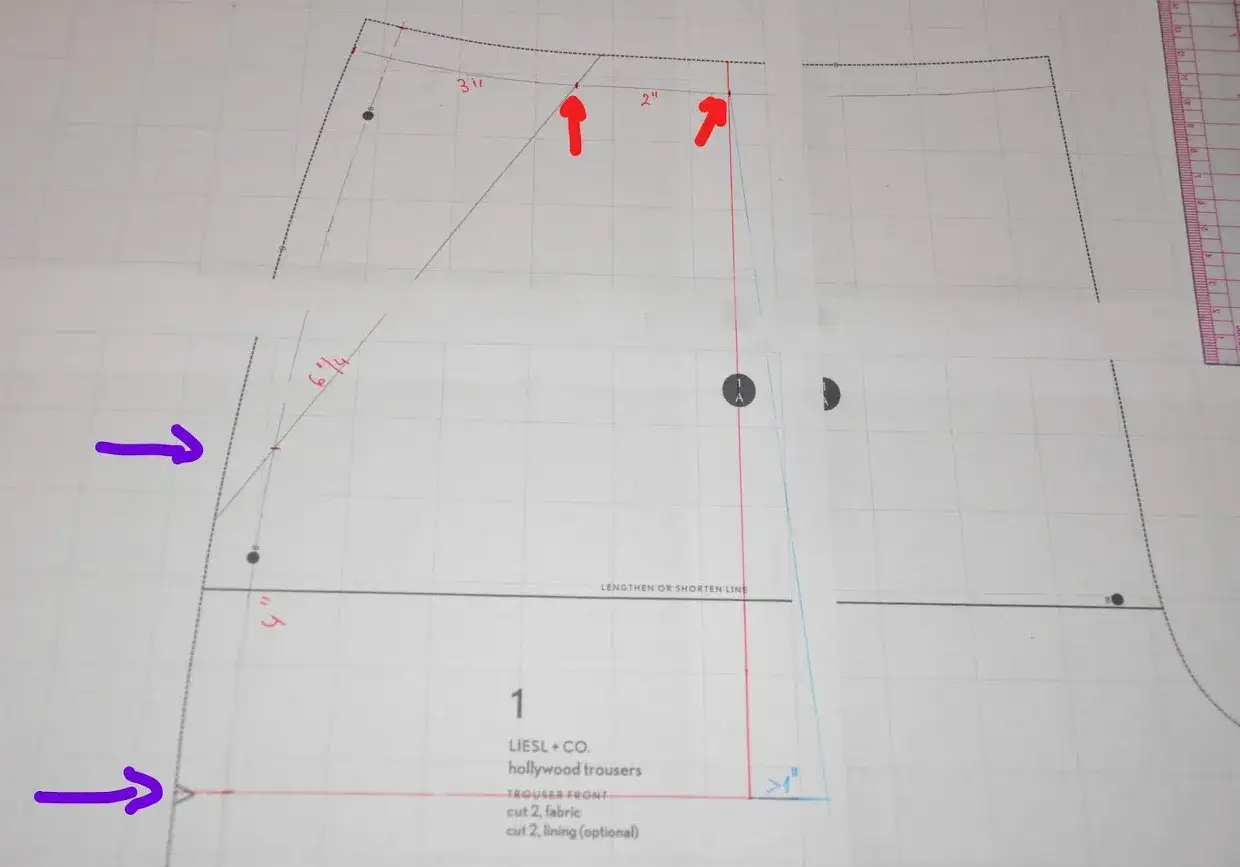
When I am adjusting trousers for sewing, I start with use rather than aesthetics. I want to know what the pocket has to hold, how often it will be used, and whether the garment needs to stay sleek or can afford extra bulk. That keeps me from adding a beautiful pocket that becomes annoying the first time I sit down.
- Decide what the pocket must carry, such as a hand, phone, tissue, or keys.
- Mark the pocket opening on the body or on a toile, not just on paper.
- Test the angle of the opening so the hand can enter naturally without twisting the hip seam.
- Check the pocket bag depth by sitting, bending, and walking, because that is where shallow pockets fail fastest.
- Stabilise the opening with interfacing or stay tape if the cloth is soft, stretchy, or loosely woven.
- Reinforce the stress points with topstitching or bar tacks, especially on denim and workwear.
If I am making a pair of jeans, I usually keep the coin pocket only when I want the classic five-pocket feel. If I am after a cleaner front, I would rather remove the extra detail than keep a pocket that does nothing useful. For sewing projects, that kind of restraint usually makes the garment look more deliberate, not less.
The pocket choices that make trousers feel finished rather than generic
The best pocket layout is the one that suits the job of the trouser and respects the shape of the fabric. Smart trousers usually need quieter pockets, casual trousers can carry more visible construction, and jeans can afford stronger topstitching and extra layers because that is part of the appeal. Once you match the pocket to the silhouette, the whole garment feels more coherent.
For me, the real design test is simple: does the pocket improve wear without fighting the line of the trousers? If the answer is yes, the pocket has earned its place. If not, I would simplify it, reshape it, or move it until it does the work properly.