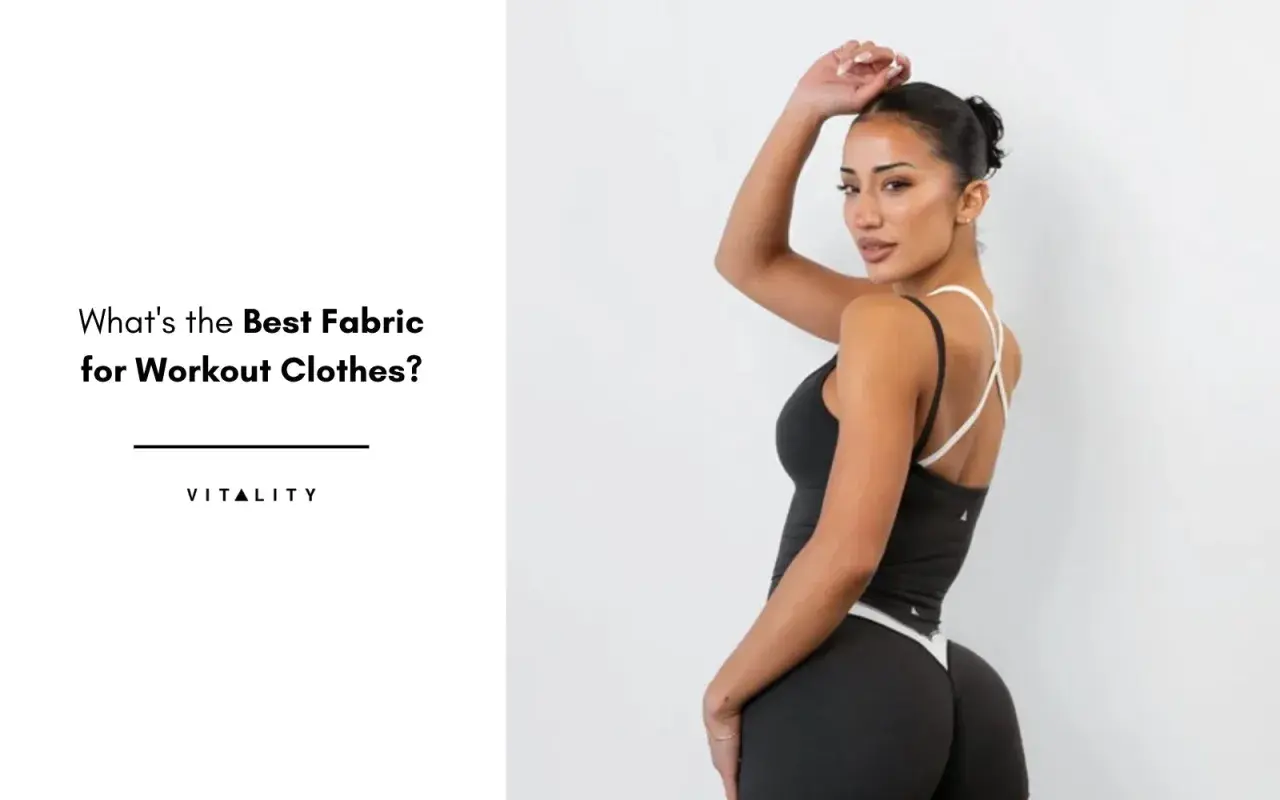
The choice of sports clothing material can decide whether a training top feels cool and clean or clammy and tired after twenty minutes. I usually look at three things first: how fast the fabric moves sweat, how well it recovers after stretch, and whether it suits changeable British weather. This guide breaks down the main fibres, the construction details that matter, and the practical trade-offs I would actually weigh before buying or sewing activewear.
What matters most when choosing performance fabric
- Polyester and nylon are the workhorses for sweat-heavy workouts because they dry quickly and handle abrasion well.
- Elastane usually works best as a blend at roughly 5-20%, where it adds stretch without collapsing the fabric.
- Merino wool earns its place in cooler or changeable weather because it manages temperature and odour better than cotton.
- Cotton is comfortable at rest but becomes a liability when sweat and chill are both in play.
- Knit structure, fabric weight, seams, and finishes can change performance as much as the fibre itself.
- For UK training, quick drying and layering usually matter more than softness on the hanger.
What makes a good sports fabric
I rarely judge a training garment by hand feel alone. What matters is whether the cloth can move sweat away, dry quickly, stretch with the body, and recover its shape after repeated use. If it also resists abrasion, avoids chafing, and keeps its comfort when the weather turns damp or windy, it becomes a genuinely useful piece of kit rather than just a nice-looking top.
That is why I think in layers: fibre, construction, and finish. The fibre tells you the raw potential; the knit or weave controls airflow, stretch, and opacity; the finish can improve moisture management or odour control, but it should be treated as a bonus, not the whole promise. Cotton still has a place, but once sweat and chill meet, it usually stays wet too long for serious training.
So the real question is not simply what the fabric is made from, but which material system gives you the right balance for the session in front of you. That takes us to the fibres that dominate modern activewear.

The synthetic fibres that do most of the heavy lifting
REI Expert Advice notes that most activewear is built around polyester or nylon because these fibres wick moisture and dry quickly while standing up to abrasion. In practice, that is still the baseline for training gear that has to survive repeat wear, washing, and movement. The biggest differences show up in feel, stretch, and where the fabric sits on the body.
| Fibre | What it does well | Watch-outs | Best use |
|---|---|---|---|
| Polyester | Dries fast, is durable, and is usually the most affordable performance option | Can hold odour more than merino and may feel less soft in simpler knits | Running tops, gym tees, shorts, base layers |
| Nylon | Smoother hand feel, strong abrasion resistance, good drape, excellent for close-fitting pieces | Often costs a little more than polyester and can feel warmer in denser constructions | Leggings, sports bras, cycling layers, high-wear panels |
| Elastane | Provides stretch and shape recovery | Rarely works well alone; too much can make fabric feel clingy or less breathable | Blends, usually around 5-20%, for fit and movement |
| Polypropylene | Very low moisture absorption and strong next-to-skin drying performance | Less common, less soft, and not always the most comfortable in every climate | Technical base layers and cold-weather systems |
I like synthetic blends because they solve the sweat problem better than any single natural fibre. A polyester-elastane tee around 85/15, or a nylon-elastane legging with a little more stretch, usually gives better movement and recovery than a pure fibre fabric. Recycled polyester is worth considering too, but I never treat recycled content as a shortcut for performance; it is simply a sourcing choice that may improve the sustainability profile without changing how the garment behaves on the body.
Patagonia points out that moisture-wicking finishes can also carry an environmental cost, which is exactly why I only value them when they solve a real performance problem. If a garment already dries fast because of its fibre and knit, an extra finish is not automatically a win. That distinction matters, because the next step is understanding when a natural fibre actually does the better job.
When natural fibres earn their place
Natural fibres are not obsolete; they are just better at different jobs. I reach for them when comfort, temperature regulation, or odour resistance matters more than outright drying speed. For the right use case, they can outperform a purely synthetic garment in a very practical way.
Merino wool for temperature swings
Merino wool is the natural fibre I trust most for active layering. It helps regulate temperature, feels comfortable next to the skin, and handles odour better than most synthetics, which makes it especially useful for travel, hill walking, commuting, and cooler sessions where you may warm up and cool down several times. The trade-off is cost and slower drying, so I would not pick it for a hard interval session if I needed the top dry again quickly.
Read Also: Double Gauze Fabric - Your Ultimate Sewing & Care Guide
Cotton and viscose blends for lighter use
Cotton still makes sense for low-intensity gym work, stretching, and casual warm-weather wear where sweat is limited. It feels familiar and soft, but it absorbs moisture and can become heavy and cold once you start pushing the pace. Viscose or bamboo-style blends sit somewhere in the middle, yet I treat them cautiously for serious sportswear because wet strength, recovery, and durability vary a lot by construction.
My rule is simple: if the session is short, indoor, and not especially sweaty, a comfortable natural blend can be perfectly fine. If the pace rises, the air cools, or the weather changes halfway through, merino usually earns its keep. From there, the fabric build itself becomes just as important as the fibre content.
Why construction changes performance as much as fibre
Two tops can both be 100% polyester and feel completely different. That is usually down to knit structure, fabric weight, and seam construction. GSM, or grams per square metre, is the fabric weight; higher GSM usually means more body and warmth, although the knit can still feel airy if the structure is open enough.
- Jersey knit feels familiar and soft, so it works well for general training tops.
- Interlock is denser and more stable, which is useful when you want a little more opacity or structure in leggings and tees.
- Mesh improves ventilation where heat builds up, especially under the arms, across the back, or behind the knees.
- Warp-knit and compression fabrics hold shape well and support close-fitting pieces without sagging.
- Woven shells are better for wind resistance, shorts, or outer layers where stretch is useful but not the main requirement.
I also pay attention to seams. Flatlock seams reduce bulk and chafing, which is why they show up so often in good sportswear. Bonded seams can look cleaner and feel lighter, but they depend more on precise manufacturing and are not automatically better. Small details like mesh inserts, laser-cut ventilation, and brushed interiors can genuinely improve comfort, but only when they match the activity instead of adding features for their own sake.
Once you start reading construction rather than just fibre content, the choice becomes much easier. The best way to prove that is to match the fabric to the way the garment will actually be used.
How I would match fabric to the sport and the weather
In the UK, I think about changeable weather first. A fabric that feels great in a warm studio can become annoying on a wet commute or a breezy run home. For that reason, I prefer materials that dry quickly, layer cleanly, and do not become heavy the moment conditions turn.
| Activity | Fabric direction | Why it works | What I would avoid |
|---|---|---|---|
| Running and HIIT | Polyester or nylon with a little elastane | Fast drying, good recovery, and enough stretch for repeated motion | Cotton-heavy jersey that stays damp |
| Yoga and Pilates | Smooth nylon-elastane or a stable interlock knit | Comfort, stretch, and coverage through deep movement | Stiff woven fabrics that resist the body |
| Cycling and commuting | Polyester or nylon blends with mesh zones or wind-resistant panels | Balances sweat, airflow, and a bit of weather protection | Thick cotton that traps moisture |
| Hiking and hill walking | Merino blend or synthetic base layer under a woven outer | Handles temperature changes and layer transitions well | Heavy pure cotton next to the skin |
| Cold-weather training | Brushed synthetic or merino base layer, then a light shell | Warmth without trapping too much sweat | Bulky fleece as the only next-to-skin layer |
If I am choosing for outdoor training, I also think about wind and sun exposure. A tightly knit polyester or nylon fabric usually performs better than cotton in bright or breezy conditions, and a UPF-rated garment is worth considering if the exposure is real rather than occasional. The main lesson is that the best fabric for a yoga class is not automatically the best fabric for a wet Tuesday run.
That leads naturally to the part many buyers skim past: the label. The words on the tag often tell you more about a garment than the marketing name does.
How to read labels without getting misled
Labels can be helpful, but only if you read them with some scepticism. Fibre percentages matter more than brand language. A top that is 92% polyester and 8% elastane will behave differently from one that is 100% polyester, even if both are described as breathable or quick-drying. The difference shows up in stretch, recovery, and how closely the fabric hugs the body.
I also look for the claims that are easy to overread. Moisture-wicking tells you that the fabric should move sweat away from the skin, but it does not guarantee comfort if the knit is too dense or the fit is wrong. Anti-odour treatments can be useful, yet they are not a substitute for a fabric that actually dries quickly. If a brand uses recycled content, that may be a positive sign, but it does not automatically mean the garment is more durable, softer, or better ventilated.
One detail I never ignore is whether the fabric relies on a finish or on the fibre itself. Finishes can be effective, but they may wear down over time, especially if the garment is washed hot or dried aggressively. That is why I prefer fabrics whose core performance is built into the construction rather than added only at the end of the process.
Once you know how to read the label, the final step is protecting the garment you buy so it keeps doing its job for longer.
How to care for performance fabrics so they keep performing
Activewear does not usually fail in one dramatic moment. It slowly gets softer, fuzzier, less springy, and less responsive to sweat. The good news is that sensible care delays most of that wear.
- Wash synthetics at a cooler setting, and avoid unnecessary heat.
- Skip fabric softener, because it can leave a film that interferes with wicking.
- Turn garments inside out to reduce surface abrasion and pilling.
- Close zips and fasten hooks before washing to protect the fabric surface.
- Air dry when possible, but give the garment room to dry properly in damp UK weather.
- Use a gentle wash bag for bras, leggings, or lightweight synthetics if they rub against other items in the machine.
I would rather see a performance top dried indoors with airflow than rushed through high heat. Elastane dislikes unnecessary heat, and synthetics can lose their shape faster if they are repeatedly abused in the dryer. For merino, gentler washing is even more important, because over-washing and aggressive spinning shorten its useful life. The aim is not perfection; it is keeping the fabric close to the state that made it useful in the first place.
Once you protect the garment properly, you do not need a huge wardrobe to cover most training conditions. A small, disciplined shortlist usually works better than a cupboard full of almost-right pieces.
The simplest shortlist I would build for a reliable sports wardrobe
- One polyester or nylon training tee for sweaty sessions and repeat washing.
- One nylon-elastane legging or short for stretch, recovery, and close fit.
- One merino base layer for cool mornings, travel, and unpredictable weather.
- One lightweight woven shell for wind and drizzle, especially outdoors.
That four-piece approach covers most gym, run, commute, and weekend training scenarios without overbuying. If I had to reduce the whole guide to one rule, it would be this: choose the fibre for sweat, the construction for movement, and the finish for the conditions you actually face. When those three line up, sportswear stops being generic clothing and starts behaving like proper equipment.