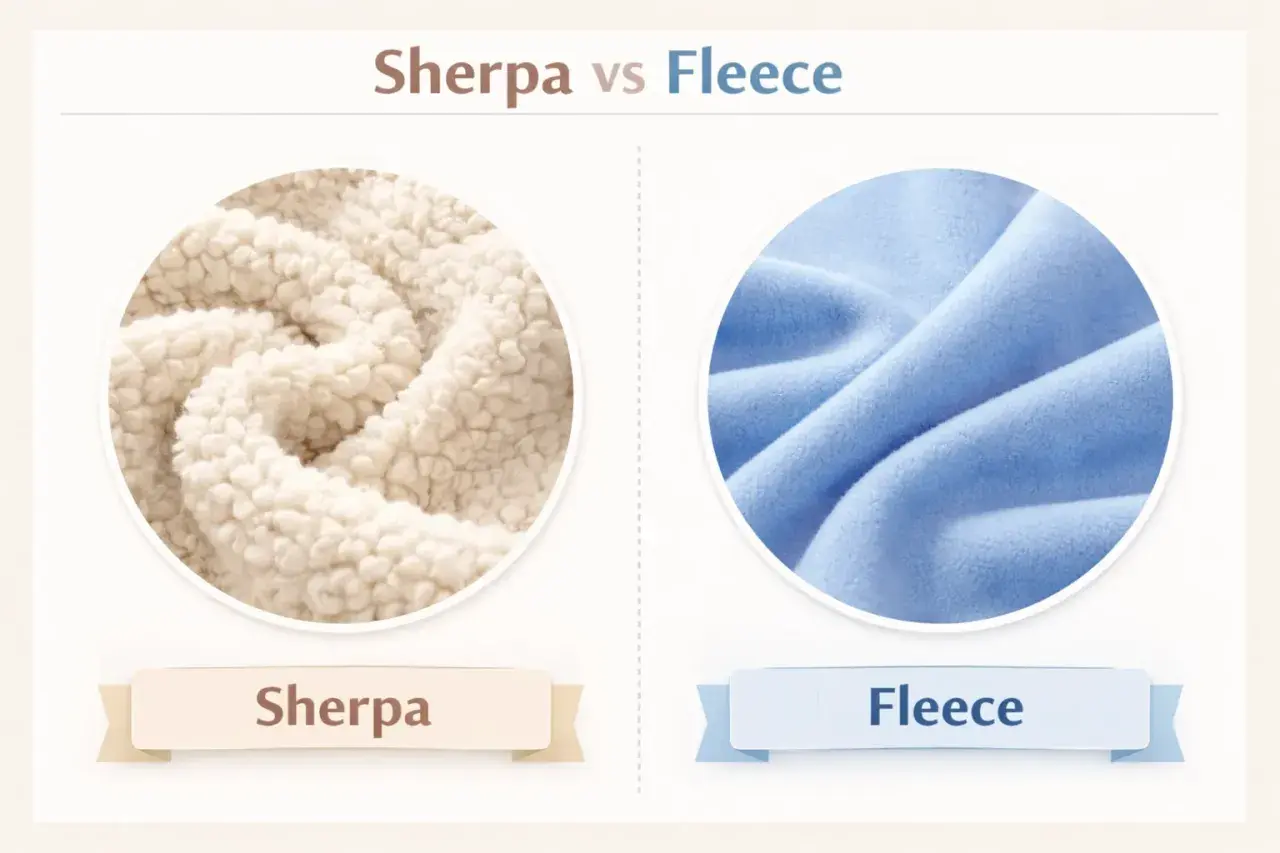
Sherpa fleece sits right at the point where cosy texture and material confusion meet. It looks like sheepskin, but most modern versions are made from synthetic or plant-based fibres rather than animal ones. So, is sherpa fleece vegan? Usually yes, but only when the pile, backing, trims, and finishes are all free from animal-derived materials.
The fast answer for shoppers is simple
- Most sherpa fleece sold today is faux shearling, not real sheep fleece.
- Polyester, recycled polyester, acrylic, and many cotton sherpas are usually vegan.
- Wool, cashmere, mohair, alpaca, angora, and shearling are not vegan.
- In the UK, the composition line matters more than the product name.
- Vegan sherpa can still shed microfibres, so animal-free does not automatically mean low-impact.
- If you are sewing with it, check the backing and trims as well as the pile.
The short answer is usually yes
Modern sherpa fleece is usually vegan because it is designed as a faux shearling, not a real animal fleece. In practice, that means the fluffy side is often polyester or acrylic, and sometimes cotton, while the smooth back is another synthetic knit or woven base.
I still treat the name as a clue, not proof. A fabric or garment can be called sherpa and still contain wool, cashmere, or another animal fibre if the manufacturer has chosen a blend. That is why the next step is to look at what sherpa actually is, not just what it looks like.
What sherpa fleece actually is
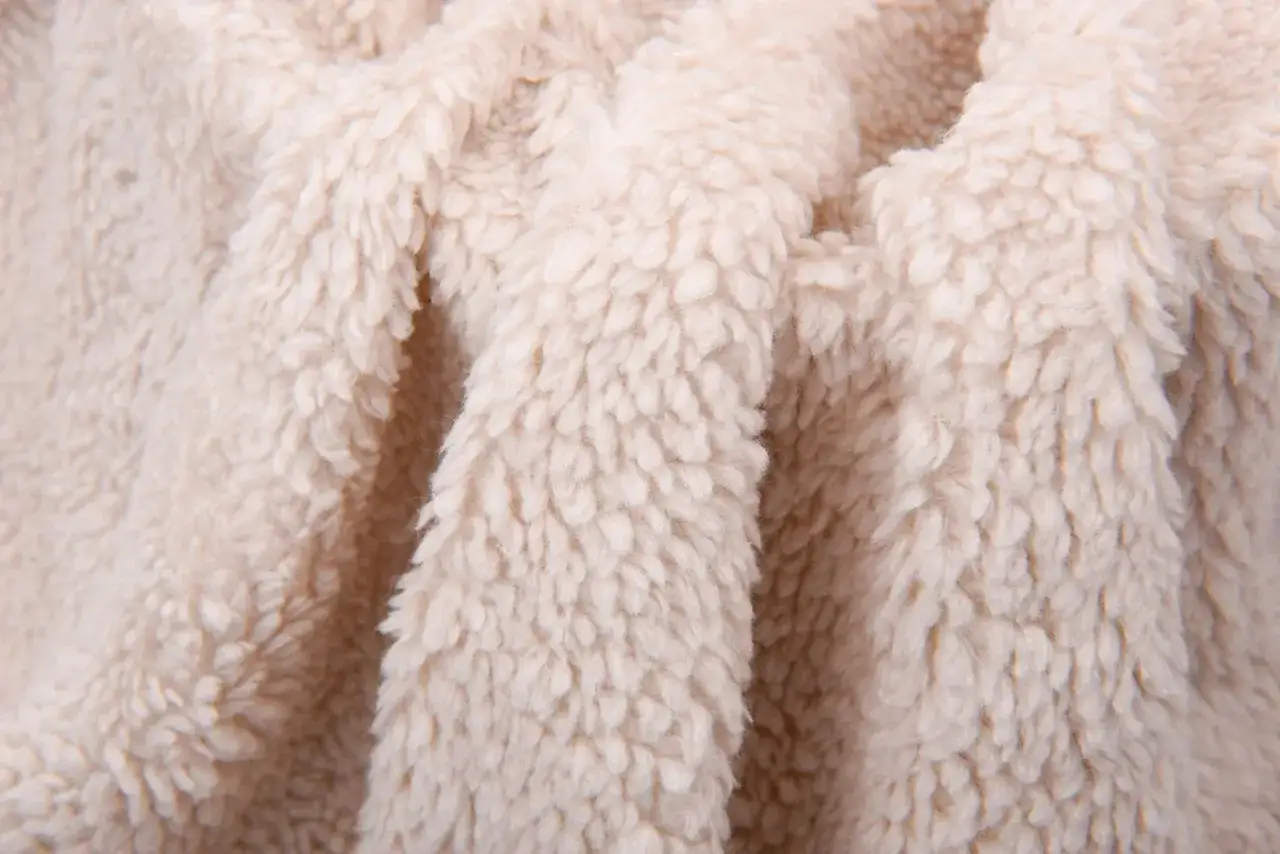
Sherpa, sometimes called teddy fabric or mock shearling, is a plush pile fabric with a nubby, raised surface that imitates the warmth and look of sheepskin. Real shearling is sheep hide with the wool still attached, while sherpa only copies the texture, so the name tells you about the look rather than the source.
That structure matters for vegan shoppers because the name describes the appearance, not the fibre source. A sherpa that feels like wool can still be entirely animal-free, and a sherpa that sounds harmless can still hide a wool blend in the composition line. Once you know that, the label becomes much easier to read.
When sherpa fleece stops being vegan
The fabric stops being vegan as soon as any animal-derived fibre or component is part of the product. That can mean the pile itself is wool-based, or the sherpa is blended with animal fibres to change the hand feel, loft, or price.
| Label or composition | Usually vegan? | Why |
|---|---|---|
| 100% polyester sherpa | Yes | Synthetic fibre, no animal content |
| Recycled polyester sherpa | Yes | Still synthetic, just with recycled feedstock |
| Polyester and acrylic blend | Yes | Both fibres are synthetic |
| Cotton sherpa | Usually yes | Plant-based, but check trims, backing, and finishes |
| Wool sherpa or shearling | No | Contains sheep fibre or hide |
| Cashmere, mohair, alpaca, or angora blend | No | Contains animal fibre |
| “Sherpa” with no fibre content listed | Unknown | You cannot verify the material from the name alone |
Two extra details are easy to miss. First, a vegan pile can still sit on a non-vegan base if the backing, patch, or trim uses leather or suede. Second, some products say “faux sherpa” or “synthetic sherpa” but still need a quick composition check, especially when buying from marketplaces or cut-length fabric listings. That is why I always move from the product name to the fibre line before I trust anything.
How I check a UK label without guessing
In UK fabric and clothing listings, the fastest reliable clue is the fibre composition. If the description says 100% polyester, 100% acrylic, recycled polyester, or cotton, you are probably looking at an animal-free sherpa. If it lists wool, cashmere, mohair, alpaca, angora, shearling, or a vague wool blend, I would stop there.
- Check the composition line first, not the marketing name.
- Look at the backing, because sherpa is often attached to another base fabric.
- Scan the trims, including patches, bindings, toggles, and label tabs.
- Watch for mixed terms such as “wool blend”, “shearling look”, or “faux fur” without a fibre breakdown.
- If you are buying fabric by the metre, ask for the pile fibre, the backing fibre, and any bonded layer.
I also like to ask sellers for a swatch when the listing is vague. That is usually quicker than guessing from a glossy product photo, and it saves problems later when you realise the cosy fabric you ordered is not the one you thought it was. Once the label is clear, the next decision is whether you want the synthetic route or one of the few plant-based alternatives.
Vegan sherpa alternatives worth considering
If your priority is animal-free warmth, the most common option is still polyester sherpa. It gives the fullest pile, the most obvious fleece look, and the easiest sewing experience for jackets, linings, and soft accessories. Recycled polyester sherpa is the closest swap if you want the same look with less virgin plastic content.
Cotton sherpa is the more natural-feel alternative. It usually has a softer, less synthetic hand and can work nicely for lighter layers, baby items, or home projects where you want a calmer texture rather than a heavy faux-sheepskin effect. The trade-off is that it is often less lofty, so it may not trap heat as aggressively as polyester sherpa.
- Polyester sherpa for maximum fluff and availability.
- Recycled polyester sherpa for the closest match to traditional sherpa with less virgin plastic.
- Cotton sherpa for a softer, more natural feel and a lighter finish.
- Cotton-rich blends when you want an animal-free option but can accept less loft.
For me, the right choice depends on the project. A coat lining, a throw, and a tote trim do not need the same fabric behaviour, so the best vegan option is the one that suits the job instead of just sounding ethical on paper.
The trade-offs I would not ignore
Being vegan and being low-impact are not the same thing. Most sherpa fleece is synthetic, which means it is usually derived from fossil fuel feedstocks and can shed microfibres during wear and washing. The European Environment Agency reported that the European Commission estimates between 1.6 and 61.1 kilotonnes of microplastics from textiles were unintentionally released into the environment in the EU in 2019.
That does not make sherpa a bad fabric. It does mean I treat it like a practical material with real limits, durable enough for hard use, but not magically benign. If I want to reduce the footprint, I look for recycled content, a dense pile that will last, and care habits that cut shedding.
- Wash it less often and only when it actually needs it.
- Choose a gentler cycle and avoid overfilling the machine.
- Line dry where possible so the pile keeps its shape.
- Use a microfibre-catching bag or filter if you wash synthetic fleece often.
Once you separate animal-free from environmentally neutral, sherpa becomes easier to judge honestly. That honesty is what keeps the final buying decision useful instead of symbolic.
The quickest check I use before I buy sherpa
When I want a clean answer, I run through five checks in order: fibre content, backing, trims, finishing, and brand wording. If all five point to polyester, acrylic, cotton, or recycled synthetic fibres, I am comfortable calling it vegan. If any part points to wool, cashmere, mohair, alpaca, angora, shearling, leather, or suede, I move on.
- Prefer listings that state the exact fibre percentages.
- Assume “faux” means animal-free only after you verify the composition.
- Do not ignore small parts such as patches, buttons, and tabs.
- Ask for a swatch when you are ordering fabric for sewing.
- Choose the fabric that fits the project, not just the one with the softest marketing copy.
That is the rule I trust: name second, fibre first. If you keep that order, you can buy sherpa fleece with confidence and avoid animal-derived surprises at the cutting table or in your wardrobe.