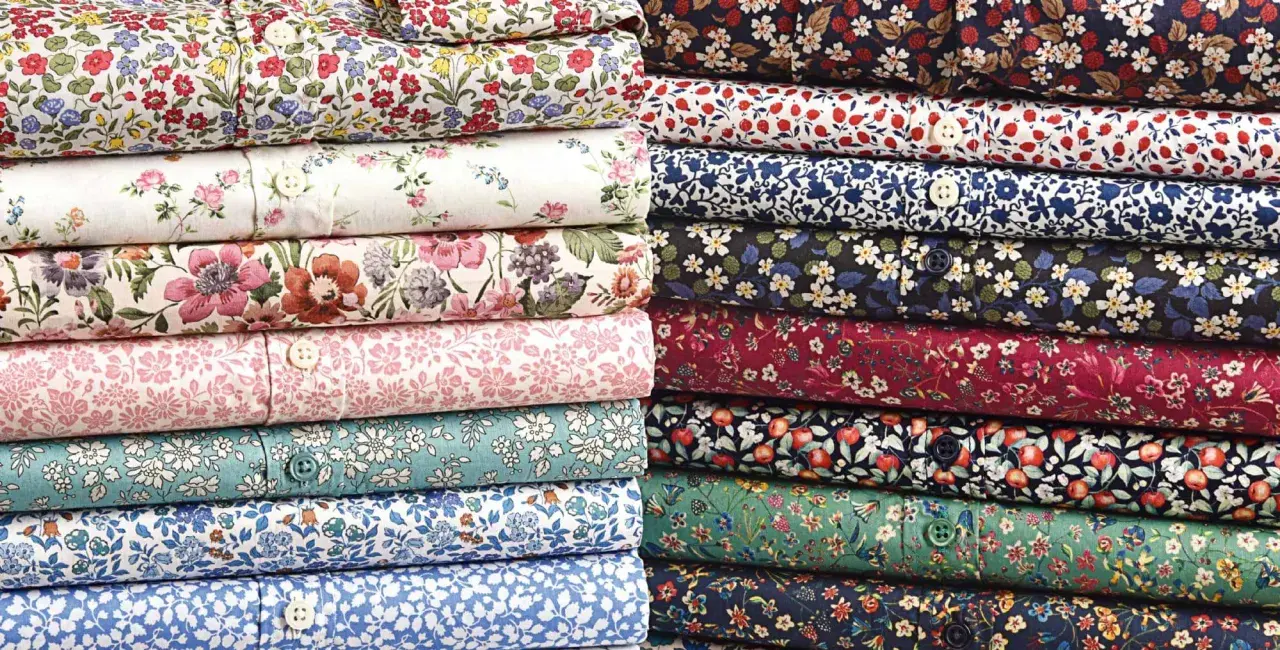
Liberty fabric occupies a rare space in sewing: it is instantly recognisable, but it also performs like a serious textile rather than a souvenir print. So, what is Liberty fabric? It is a British family of printed fabrics known for refined artwork, a soft hand, and a finish that feels far more polished than ordinary cotton. In this guide I explain where it came from, what makes the best-known base so distinctive, which Liberty bases suit different projects, and how to sew it without wasting expensive cloth.
The essentials at a glance
- Liberty fabric is a brand family of textiles, not one single cloth.
- The signature base is Tana Lawn cotton, prized for its fine feel, crisp print detail, and silk-like drape.
- The brand’s visual identity comes from a huge archive of 45,000+ designs, with roots stretching back to the 1800s.
- Most sewists use it for blouses, dresses, shirts, nightwear, linings, scarves, and light accessories.
- It rewards careful cutting, fine needles, and controlled pressing more than everyday cotton does.
- Not every Liberty print behaves the same way, so the base fabric matters as much as the design.
What Liberty fabric actually is
When I talk about Liberty fabric, I usually mean the brand’s printed textiles rather than a single weave. The name covers the famous Tana Lawn cotton, but it also extends to silk bases, lighter cottons, cotton-linen blends, and interiors fabrics that all carry Liberty’s print language. That matters because the print may belong to the same design family, but the cloth underneath can behave very differently at the sewing machine.
People often think first of florals, but the archive is broader than that. Liberty prints also include stripes, geometrics, and art-inspired motifs, so the brand’s identity is not built on one pattern type alone. Liberty is a design house first, a fabric label second, and that is why the base, the print scale, and the intended use all need to be considered together.
That leads directly to the history behind the brand, because Liberty’s archive and printing tradition are a big part of why these fabrics feel so specific.
How the print tradition began
Liberty’s textile story begins in London in 1875, when Arthur Liberty opened his Regent Street store and started printing fabrics shortly afterwards. By the 1890s, the brand had already become associated with avant-garde textile design, and that reputation still shapes the way people talk about Liberty today.
What gives the brand real depth is the archive. Liberty’s heritage materials describe a collection of well over 45,000 designs dating from the 1800s to the present day, with in-house designers redrawing, recolouring, and reworking historical motifs into new collections. I think that archive is the reason Liberty prints rarely feel generic: even when a pattern is new, it usually carries the structure of something older and more considered.
Modern production is part tradition, part precision. The fabrics are designed in London and printed in Liberty’s mill near Lake Como, using both traditional and digital methods. That blend helps explain why the prints look crisp without losing their softness of character. Next, the real question is what the cloth itself feels like in hand.
Why Tana Lawn feels so different from ordinary cotton
Tana Lawn is the fabric most people mean when they say Liberty. It is made from specially selected, ultra-fine long-staple cotton and is described by Liberty as fine, cool, durable, and silk-like. That combination sounds simple, but in the hand it is doing several things at once: it feels smooth rather than fuzzy, it drapes more elegantly than a basic dress cotton, and it carries colour and detail with unusual clarity.
I would not call it fragile. A good Liberty lawn is lightweight, but it is not flimsy in the cheap sense. The weave is tight enough to hold sharp print definition, which is why tiny florals, elaborate repeats, and delicate line work still look clean after printing. The name Tana refers to Lake Tana in East Africa, where the original silk-like cotton fibres that inspired the fabric were first identified.
If you are used to standard dress cotton, the biggest surprise is usually the balance of structure and drape. It has enough body to stay composed in a blouse, but enough fluidity to move beautifully in a gathered skirt or soft shirt dress. That balance is exactly why the next step is choosing the right Liberty base for the job.
The main Liberty bases and when I would choose each
Not every Liberty fabric behaves like Tana Lawn, and that is where people sometimes get tripped up. The brand now works across several bases, each with its own purpose. If you match the base to the project, the fabric feels luxurious; if you match it badly, even a beautiful print can look underwhelming.
| Base | What it feels like | Best for | Watch-outs |
|---|---|---|---|
| Tana Lawn cotton | Fine, smooth, cool, lightly drapey | Blouses, dresses, shirts, nightwear, linings, lightweight accessories | Can be slippery; needs careful cutting and pressing |
| Silk bases | Softer drape, more fluid, more luxurious | Eveningwear, special garments, elegant separates | More delicate to sew and usually less forgiving |
| Cotton-linen bases | Textured, firmer, more structured | Shirts, home sewing, cushions, light drapery | Less floaty than Tana Lawn, so the print reads differently |
| Interiors fabrics | Heavier, more durable, designed for home use | Curtains, cushions, occasional upholstery, decorative projects | Usually too substantial for the classic soft apparel look |
I find this comparison useful because it stops people from treating every Liberty print as the same thing. A floral on silk satin wants a very different pattern and finish from the same floral on cotton lawn. Once that clicks, project choice becomes much easier.
Best sewing projects and the ones I would avoid
Liberty’s best-known cotton shines in projects where you want movement without bulk. I reach for it for shirts, blouses, summer dresses, pyjamas, lightweight skirts, children’s clothes, scarves, and fine lining pieces. It is especially good when the print itself is part of the design, because the cloth surface is smooth enough that the artwork reads clearly.
There are also projects where I would be cautious. Heavy bags, hardwearing trousers, and anything that needs a lot of abrasion resistance usually make better sense in a sturdier fabric. You can still use Liberty for those ideas, but only if you are prepared to interface heavily, stabilise seams, and accept that the fabric’s charm is in finesse rather than brute strength.
For quilters and patchworkers, the rule is slightly different. Liberty lawn can be beautiful in quilts, but because it is finer than typical quilting cotton, it rewards accurate cutting and consistent seam allowances. Mixing it with bulky, coarse fabrics can create puckering unless you plan the construction carefully. That practical reality leads straight into the sewing details that matter most.
How I would sew and care for it
If I were sewing Liberty lawn for the first time, I would treat it like a premium fine cotton, not like an everyday print. A sharp needle in the 60/8 to 70/10 range is a sensible starting point, and I would test thread tension on a scrap before I touch the main fabric. For particularly slippery prints, a finer thread and a walking foot can improve control, especially on long seams or bias pieces.
Cutting is where I would slow down. Prewashing depends on the exact base and its care instructions, but the general rule is to follow the care label for that cloth rather than assuming all Liberty fabrics behave the same way. I also like to cut on a larger surface, keep the grain straight, and use pattern weights if the fabric wants to shift. If you need very clean seam finishes, French seams and narrow hems are often worth the extra time.
Pressing deserves the same respect. Use the heat level appropriate for the base, keep the iron moving, and avoid dragging the fabric while it is hot. In my experience, the finish of a Liberty project is often decided by the last 10 percent of the process: pressing, trimming, and edge finishing. Those steps are what separate a merely pretty garment from one that looks properly made.
What to check before you buy a Liberty print
The most useful buying habit is to read the base name before you fall in love with the print. A Liberty floral can be soft and floaty, crisp and structured, or room-focused and substantial, depending on the cloth underneath. If you know the project first, you can choose the base with much more confidence.
I also pay attention to print scale, fabric width, and extra meterage. Large repeat prints often need more cloth than a plain fabric because you may want the motif to land neatly across a bodice, sleeve, or pocket. As a rule of thumb, I would rather buy a little extra than discover halfway through cutting that a key motif has been lost to seam placement.
If you are new to the brand, start with a project that lets the fabric do the talking: a blouse, a simple dress, a lined skirt, or a set of cushions. That is the quickest way to understand why Liberty has lasted so long in sewing culture, and why its best fabrics still feel relevant rather than merely historic.