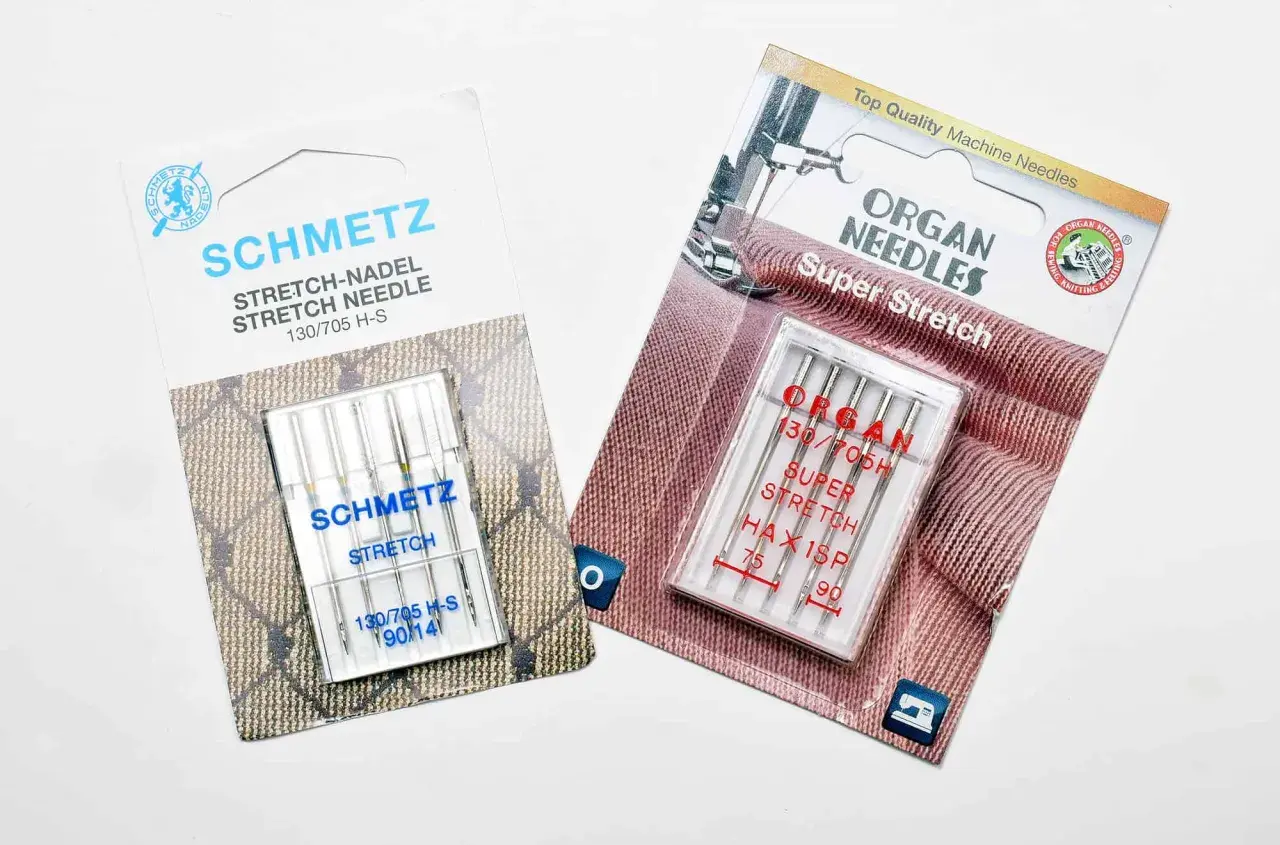
A clean seam on knit fabric starts with the right needle, and the difference is bigger than many sewists expect. In practice, the right sewing machine needle for knits reduces skipped stitches, protects the fibres, and gives a flatter finish on everything from T-shirt jersey to activewear. I’ll walk through the needle types that actually matter, how to match the size to the fabric weight, and what to change on the machine when a seam starts misbehaving.
The few choices that make knit sewing behave
- Jersey or ball point needles are my default for most knitwear.
- Stretch needles are the better option for elastane-heavy fabrics, swimwear, and activewear.
- For most everyday knits, I start with 70/10 or 80/12 and only move up if the fabric is dense.
- If stitches skip, I change the needle first before touching tension or stitch length.
- For hems, a twin needle gives a cleaner finish than a straight stitch on most garments.
What makes knit fabric different at the needle
Knit fabric is built from loops, not from the tight crosshatch structure you get in woven cloth. That matters because a sharp point can split fibres instead of slipping between them, which is how you end up with tiny holes, pulled threads, or a seam that looks fine until the first stretch.
I think about the needle as a loop-preserving tool: it should open a path for the thread without damaging the structure of the knit. On stable jersey, that usually means a rounded point. On very elastic fabrics, the needle also needs to help the machine catch the thread cleanly even when the fabric moves and rebounds.
That leads straight to the real choice: jersey, stretch, or, in a pinch, a universal needle.
Jersey, stretch, or universal needles
In UK shops, the labels can vary, but the logic is simple. A jersey or ball point needle has a medium-rounded tip that pushes knit loops aside rather than cutting through them. A stretch needle looks similar at a glance, but it is built for higher-elasticity fabrics and is usually my pick when the cloth contains elastane or when ordinary jersey needles keep skipping.
I only treat a universal needle as a fallback. It can work on firm, stable knits, but it is not the tool I reach for first because the sharper point is more likely to pierce fibres, especially on softer jersey.
| Needle type | Best for | Typical sizes | My take |
|---|---|---|---|
| Jersey / ball point | Cotton jersey, interlock, rib knit, French terry | 70/10, 80/12, 90/14, sometimes 100/16 | The best all-rounder for everyday knitwear |
| Stretch | Swimwear, leggings, athletic knits, any fabric with elastane | 75/11, 90/14 | Use it when recovery and stitch security matter |
| Universal | Stable ponte, test seams, emergency backup | 70/10 to 90/14 | Works sometimes, but it is not my first choice |
| Twin stretch | Hems on highly elastic knits | 2.5/75, 4.0/75 | Best when the hem must stretch without popping |
Once the type is right, size is what keeps the needle from feeling either brutal or too flimsy.
How I match needle size to fabric weight
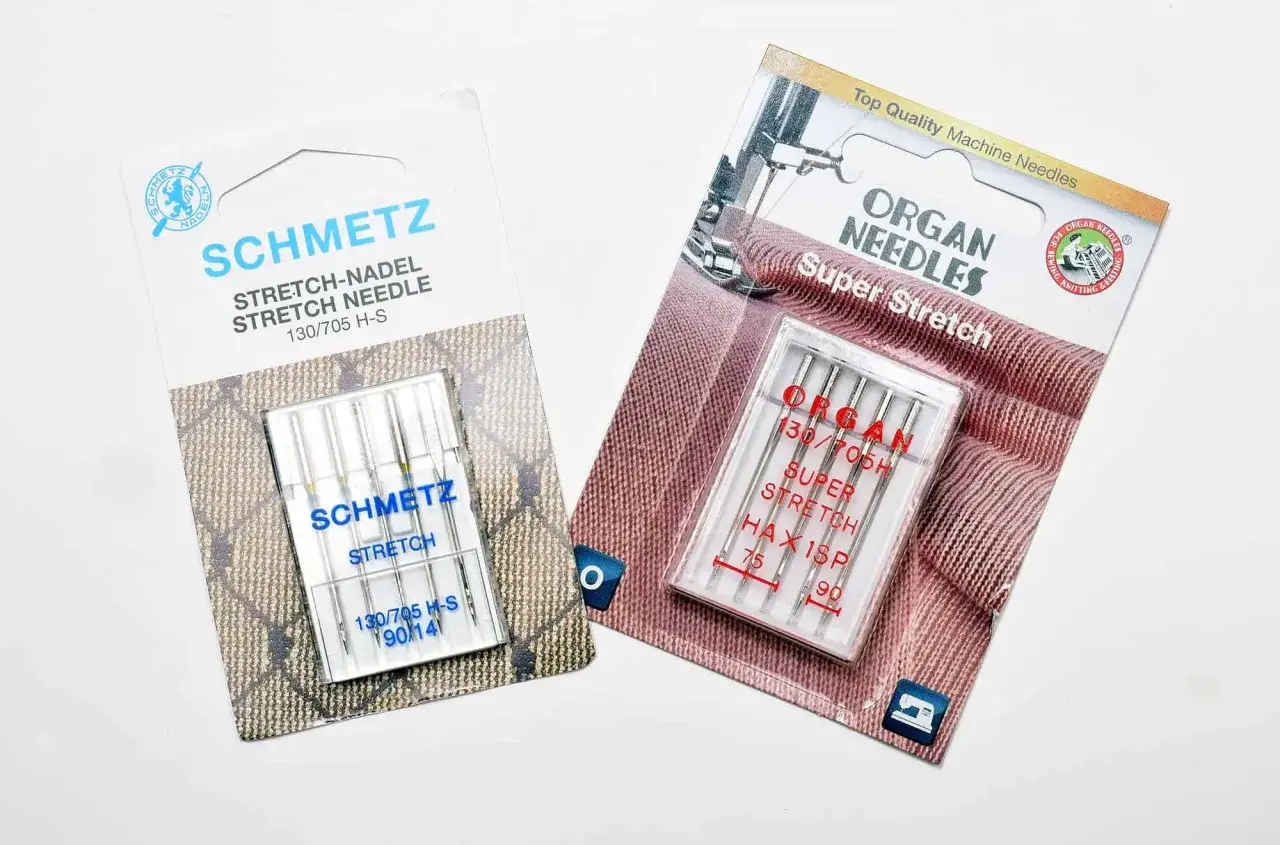
The number on the packet tells you the diameter of the needle. Smaller numbers mean a finer needle, and finer needles are kinder to delicate knits. I usually start as lightly as the fabric will allow, because a needle that is too large leaves visible holes, while one that is too fine can flex, miss stitches, or wear out quickly.
For most home sewing, these starting points are practical rather than rigid. They cover the fabrics I see most often on the worktable, from light jersey to thicker sweatshirting.
| Fabric | Starting size | Why it works |
|---|---|---|
| Fine viscose or lightweight jersey | 70/10 | Fine enough to avoid obvious pinholes and distortion |
| Everyday cotton jersey or interlock | 80/12 | A balanced choice for most T-shirt weight fabrics |
| Rib knit or French terry | 80/12 or 90/14 | Enough strength for more body without using a sharp point |
| Ponte, sweatshirting, thicker layers | 90/14 or 100/16 | More strength for dense seams and multiple layers |
If I am unsure, I test 80/12 first and only move up if the seam shows skipped stitches or the needle feels too light for the fabric. That small test saves more projects than any clever setting tweak, and it makes the warning signs much easier to read.
The signs the needle is wrong
When the needle is off, the machine usually tells you quickly. Skipped stitches are the obvious clue, but I also watch for small runs near the seam, a harsh sound as the needle passes through, or hems that tunnel instead of lying flat.
| What I see | What it usually means | What I try first |
|---|---|---|
| Skipped stitches | Needle is dull, wrong type, or too small for the fabric | Replace it with a fresh jersey or stretch needle |
| Visible holes or runs | Needle point is too sharp or the size is too large | Move to a rounded-point needle or drop one size |
| Puckering or tunnelling | Needle is too large, stitch is too tight, or the fabric is being pushed | Test a finer needle and ease the settings slightly |
| Thread fraying or breaking | Dull needle eye, burrs, or too much heat and friction | Change the needle and slow the stitch speed |
The main trap is to blame tension too early. I almost always start with the needle, because a fresh one solves more knit problems than most people expect. If that does not fix it, then I move on to the stitch and feed settings.
Settings that let the needle do its job
A good needle still needs the machine to cooperate. On seams that must stretch, I prefer a stretch stitch or a narrow zigzag rather than a straight stitch, because the seam has to move with the fabric instead of fighting it. For ordinary jersey seams, I usually test a length around 2.5 mm and adjust from there if the fabric looks crowded or too loose.
- Do not pull the fabric as you sew. Let the feed dogs move it.
- Use polyester thread when you want a little give in the seam.
- Reduce presser foot pressure if your machine allows it, especially on soft or slippery knits.
- Test on offcuts before committing to a hem, because different knits can behave very differently even when they look similar.
- Slow the machine down if the fabric is thick or the needle starts deflecting.
Those settings are not a replacement for the right needle, but they make the difference between a seam that survives wear and one that looks good only on the table. The exceptions are worth knowing next, because hems and thick knits need slightly different thinking.
The exceptions that change the answer
Hems are where I reach for a twin needle. It gives that clean two-line finish on the right side and a bit of stretch underneath, which is why it works so well on T-shirts and casual dresses. On highly elastic fabrics, I use a stretch twin needle rather than a standard twin, because the seam needs more recovery and less risk of skipped stitches.
For thick knits such as sweatshirting or dense ponte, size matters almost as much as the needle family. A 90/14 often behaves better than an 80/12 simply because it has a little more strength through the layers, but I still keep the point rounded. A sharp needle may look more precise, yet on knits it can create the exact damage you were trying to avoid.
There is one exception I treat with caution: very stable knits can sometimes sew cleanly with a universal needle. If I use that shortcut, it is only after a test seam proves the stitch is clean, the fabric is not being marked, and the seam still looks good after stretching. That is a workaround, not the default.
Once the special cases are covered, the practical answer is simpler than it first appears: keep a small needle range handy, and let the fabric decide which one earns its place.
The kit I keep ready for most knit projects
If I wanted to cover most knit sewing with the fewest purchases, I would keep four things in the drawer:
- Jersey 70/10 for fine and lightweight knits.
- Jersey 80/12 for everyday jersey and interlock.
- Stretch 75/11 for elastane-heavy fabrics and activewear.
- Stretch twin needles for hems on garments that need to recover well.
Singer recommends changing a needle after 6 to 8 hours of sewing, and on knits I rarely wait that long if the seam starts sounding rough. A fresh needle is cheap insurance, especially on fabrics that show every tiny mistake. If I had to choose just one starting point for a general knit project, I would pick an 80/12 jersey needle, then keep a stretch needle close by for anything with more rebound or a fussy seam.