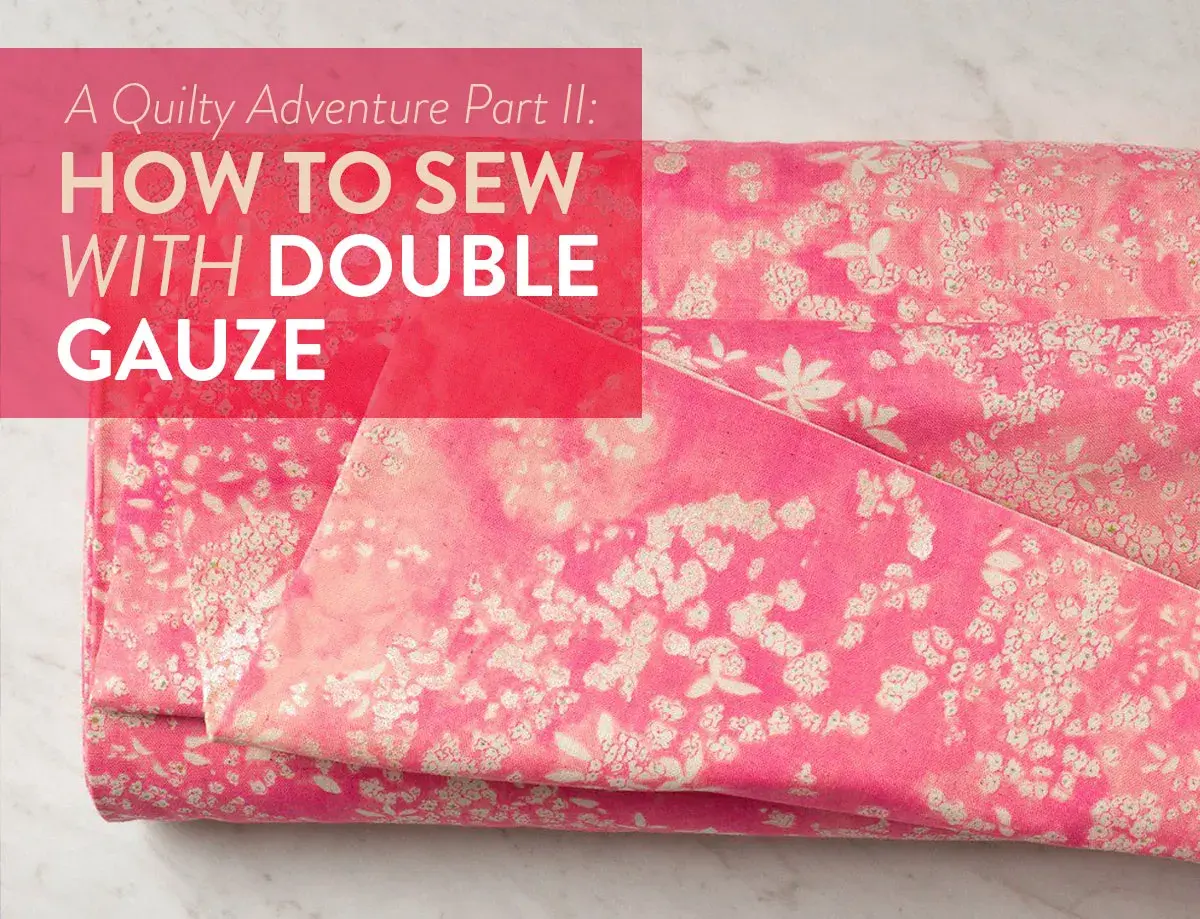
Double gauze cotton sits in a very useful middle ground: soft enough for baby skin, airy enough for warm weather, and textured enough to look considered without needing much styling. What many sewists call double gaze de coton is better known in English as double gauze cotton, and it deserves a closer look because it behaves differently from smooth woven cottons. In this guide, I break down what it is, where it works best, how I sew it cleanly, and what to check before buying it in the UK.
A quick guide to choosing and sewing this crinkled cotton
- It is usually made from two fine layers of cotton gauze lightly tacked together, which gives it softness, breathability, and a natural crinkle.
- It works especially well for baby clothes, swaddles, relaxed summer garments, scarves, and lightweight home sewing.
- Prewashing matters because cotton gauze can shrink noticeably on the first wash.
- A fine needle, low-to-moderate stitch length, and a light hand at the iron make the biggest difference when sewing it.
- In UK shops, expect many plain options to sit roughly in the £8-£15 per metre range, with printed or premium versions often higher.
- If you need crisp structure rather than softness, another cotton will usually serve you better.
What makes double gauze cotton feel so soft and airy
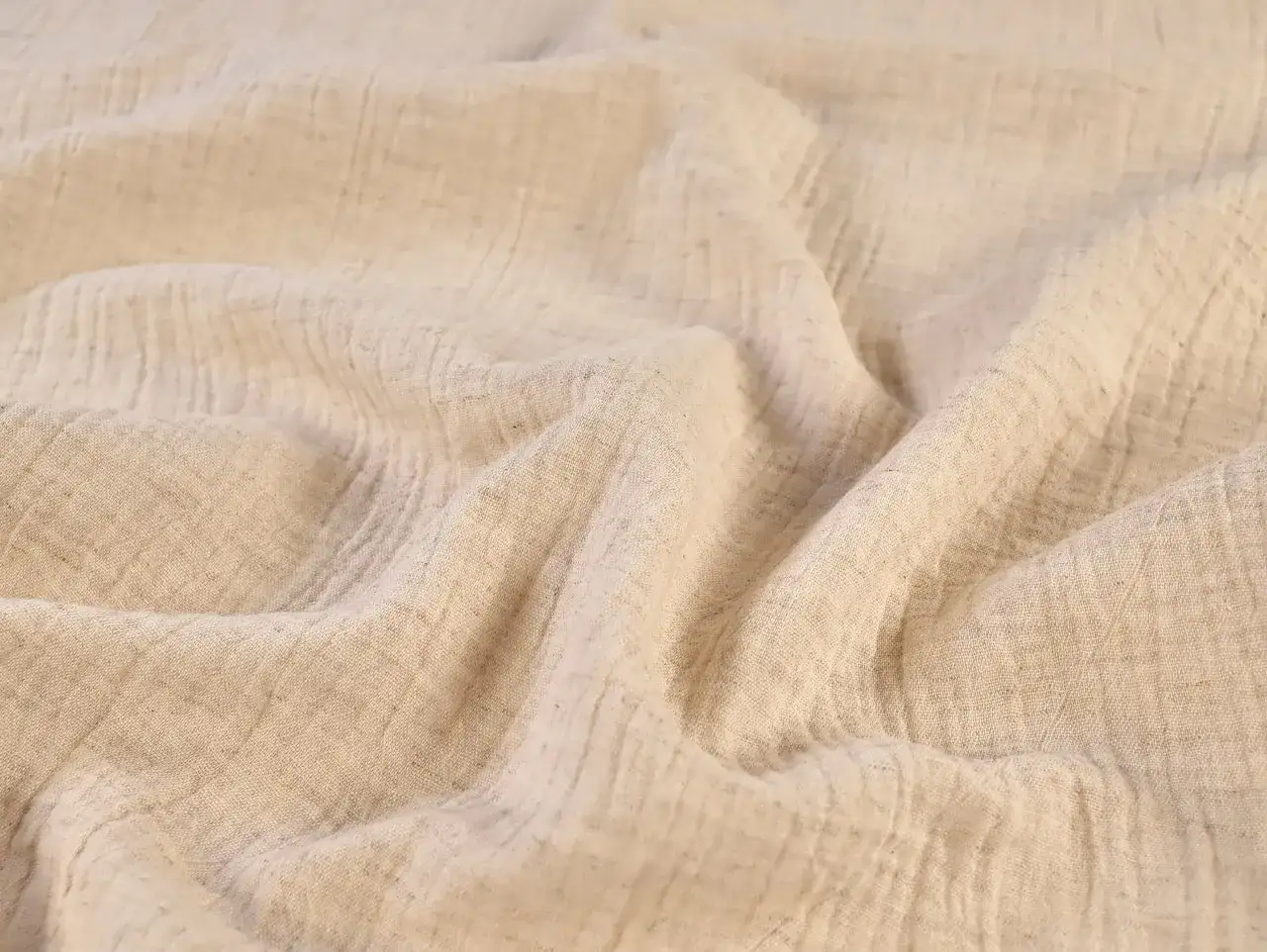
Its appeal comes from structure, not just finish. The fabric is usually made from two very lightweight cotton layers that are lightly connected, so it feels more substantial than single gauze but still stays breathable and forgiving on the body. The surface crinkles naturally, which gives it that relaxed, cloud-like look people either love immediately or only appreciate after they handle it in person.
I think the important thing to understand is that the crinkle is not a flaw to iron away completely. It is part of why the fabric drapes the way it does, and it also helps the cloth feel less clingy against the skin. That is one reason it is so popular for baby makes and summer pieces, where comfort matters more than precision or sharp edges. Once you understand the structure, it becomes much easier to decide where it belongs in your sewing queue.
Where it works best and where I would skip it
This fabric is at its best when the pattern benefits from softness, movement, and a gentle hand. I reach for it when I want a garment or accessory to feel easy rather than engineered. It is especially strong in projects where a little texture makes the piece look better, not busier.
| Best use | Why it works | What to watch |
|---|---|---|
| Baby clothes and swaddles | Soft against skin, breathable, and lightweight enough for layering | Check opacity and avoid bulky trims that can irritate delicate skin |
| Relaxed summer tops and dresses | Lets the garment move and sit away from the body | Choose looser cuts, because the fabric does not like rigid shaping |
| Scarves, wraps, and shawls | Has enough body to feel finished without becoming heavy | Very light colours may need lining if you want more coverage |
| Loungewear and pyjamas | Comfort is the selling point here, and gauze delivers that immediately | Avoid patterns that rely on a perfectly crisp silhouette |
| Quilts, blankets, and nursery accessories | Creates a soft, tactile finish that suits informal home sewing | Take shrinkage into account before cutting large pieces |
Where I would skip it is in anything that needs crisp structure: tailored jackets, sharp collars, stiff cuffs, or shirts that depend on a clean, pressed edge. It can also be frustrating on projects with a lot of topstitching or heavy hardware, because the cloth is not built to support that kind of stress. If you are unsure, ask one simple question before cutting: do I want this garment to stand away from the body, or do I want it to follow the body softly? That answer usually tells you whether this cotton is the right choice, and it leads naturally into how to sew it without losing control of the fabric.
How to sew it without distorting the fabric
I treat double gauze as a fabric that rewards preparation and punishes rushed handling. The sewing itself is not difficult, but the cloth can shift, stretch, and fray if you handle it like a normal shirting cotton. A calm setup makes the biggest difference.
- Prewash and dry it first. I wash it the way I expect to care for the finished item, because cotton gauze can shrink enough to throw off your pattern if you skip this step.
- Press with steam, not force. A steamy iron helps flatten the worst creases before cutting, but I avoid pressing so hard that the texture disappears completely.
- Use a fine needle. A 70/10 or 80/12 universal or microtex needle is usually a good starting point for clean stitching without unnecessary holes.
- Keep the stitch length moderate. Around 2.5 mm is a sensible default. Too-short stitches can make the seam look dense and harsh on such a soft cloth.
- Cut carefully. Pattern weights and a rotary cutter help reduce drag, especially on larger pieces. If the cloth is slippery or loosely woven, single-layer cutting is worth the extra time.
- Finish seams with intention. French seams work beautifully on many lightweight garments, but they can become bulky on curves. A narrow overlock or bound seam is often cleaner when you want less bulk.
- Minimise pin damage. I prefer fine pins or clips in the seam allowance only, because unnecessary holes show more easily on this weave.
One detail people underestimate is interfacing. If a pattern asks for support at a collar, placket, or facing, I choose the softest version that still does the job and I test it on a scrap first. Heavy interfacing flattens the character of the cloth and makes the garment feel oddly stiff. Once the sewing setup is right, the next decision is choosing a version that matches the job you want it to do.
What to check before you buy it in the UK
When I buy this fabric in the UK, I look beyond the pretty print. The useful details are usually weight, width, finish, and whether the shop has already washed or treated the cloth in any way. A lot of retail listings also sell it by the half metre or quarter metre, so comparing like with like matters more than people think.
| Spec | What I look for | Why it matters |
|---|---|---|
| Weight | About 125-150 g/m² for an all-rounder | Lighter cloth feels airier, but very light versions can become semi-sheer |
| Width | Commonly around 130-140 cm | Affects pattern layout and how much fabric you need to order |
| Finish | Plain, printed, yarn-dyed, or embroidered | Prints and embroidery can change drape and slightly increase bulk |
| Certification | Oeko-Tex Standard 100 or similar for baby sewing | Not mandatory, but a sensible quality filter for skin-contact projects |
| Price | Roughly £8-£15 per metre for many UK retail listings | Helps you judge whether a fabric is budget, mid-range, or premium |
| Prewashing note | Assume it is not preshrunk unless the shop says otherwise | Prevents finished garments from coming out smaller than expected |
For baby projects, I treat certification and softness as equally important. For adult garments, I care more about opacity, drape, and whether the print suits a relaxed silhouette. If a listing shows only a beautiful close-up but no weight or width, I tend to move on. That extra information is what stops a fabric from being a pleasant surprise in theory and an awkward compromise on the cutting table, which is why a comparison with other cottons is so useful.
How it compares with other summer cottons
People often lump this fabric in with other lightweight cottons, but the differences are practical, not just technical. If you are choosing between options, the right answer depends on how much structure, opacity, and surface texture you want. I find that comparing it with a few familiar cottons clarifies the decision quickly.
| Fabric | Feel | Structure | Best for | Main trade-off |
|---|---|---|---|---|
| Double gauze cotton | Soft, airy, slightly crinkled | Relaxed, lightly structured | Baby items, summer garments, wraps | Can fray and distort if handled roughly |
| Single gauze or muslin | Even lighter and more open | Very soft, often more transparent | Swaddles, linings, ultra-light accessories | Usually needs more care with opacity and finishing |
| Cotton lawn | Smooth and refined | Lighter but more polished | Blouses, dresses, shirts | Less texture and less casual softness |
| Cotton poplin | Crisp and clean | More structured | Shirts, children’s clothes, sharper silhouettes | Not as forgiving or relaxed |
| Jersey knit | Soft with stretch | Flexible rather than woven | T-shirts, leggings, fitted comfort wear | Very different handling and shape behaviour |
If I want shape, I usually move toward lawn or poplin. If I want comfort and a slightly rumpled, effortless finish, this is the one I choose. The point is not that one fabric is better in absolute terms; it is that each one solves a different problem, and this one solves the softness-and-breathability problem particularly well. That distinction matters right up to the last decision: how you wash, store, and finish the piece so it still looks intentional after the first few uses.
The details that make it feel polished rather than fussy
The difference between a lovely result and a disappointing one usually comes down to a few small choices. I prewash, press gently, and avoid trying to force the cloth into a crisp shape it never wanted in the first place. If the garment is light-coloured or the weave is especially open, I also check opacity against the light before I commit to the final pattern layout.
For care, I would keep the routine simple: wash cool or at 30°C, use a gentle cycle, reduce harsh spinning, and dry in a way that preserves the drape you want. A brief low tumble can make the fabric feel softer, but air drying is the safer option if you want to keep shrinkage predictable. When you iron it later, use steam where needed and stop before the texture disappears completely. That texture is the whole point.
If there is one practical rule I would leave with, it is this: choose this cotton when softness, breathability, and a relaxed look matter more than crisp structure. It is excellent for baby sewing, warm-weather garments, and casual accessories, but it is not the answer for every woven project. Used in the right place, it is one of the most forgiving and satisfying fabrics to work with.