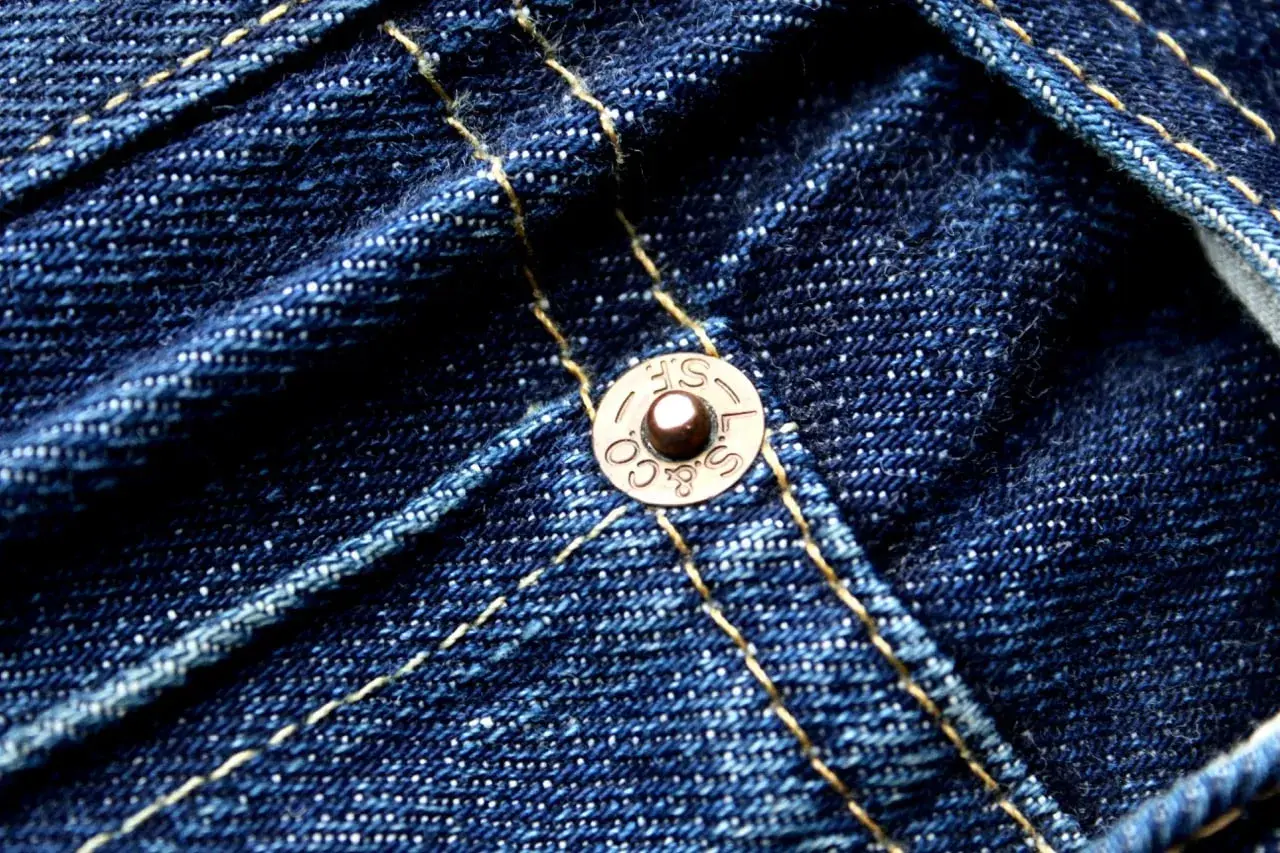
The small rivets on jeans do one unglamorous job very well: they stop denim from splitting where the fabric takes the most strain. In this article I look at what they actually reinforce, how to tell whether they are well placed, when stitching is the better choice, and how to deal with a loose or damaged fastener without ruining the garment. If you make, alter, or buy jeans with durability in mind, the details matter more than the label.
What matters most before you buy, wear, or repair riveted denim
- Rivets are there to protect pocket corners, fly bases, and other high-stress points.
- Good placement is practical, not decorative: the metal should support the seam without digging into the body.
- Bar tacks and reinforced stitching often do the same job more comfortably on modern stretch denim.
- A loose rivet usually means the hole has enlarged, so a simple re-crimp is not always enough.
- Hidden or flat rivets are worth choosing when scratch risk, comfort, or furniture damage matters.
- For repairs, matching the original stem length and fabric weight is more important than chasing the exact finish.
Why rivets on jeans still matter at stress points
Jean rivets began as a structural fix, not a style detail. Levi Strauss & Co. traces the breakthrough back to Jacob Davis and the 1873 patent for riveted work trousers, where metal was added to the places most likely to tear first. That logic still holds: the fabric at pocket corners, the base of the fly, and other load-bearing points fails because it is repeatedly pulled, sat on, twisted, or loaded with keys and phones.
I tend to think of rivets as tiny insurance policies for denim. They do not make weak fabric strong in every direction, but they do spread force across a small area and keep a tear from opening quickly. That is why they became part of classic workwear and why you still see them on many heritage-style jeans today. Once you understand that purpose, the next question is not whether rivets look right, but whether they are placed where they can actually do their job.
Where a rivet belongs and how to judge the layout
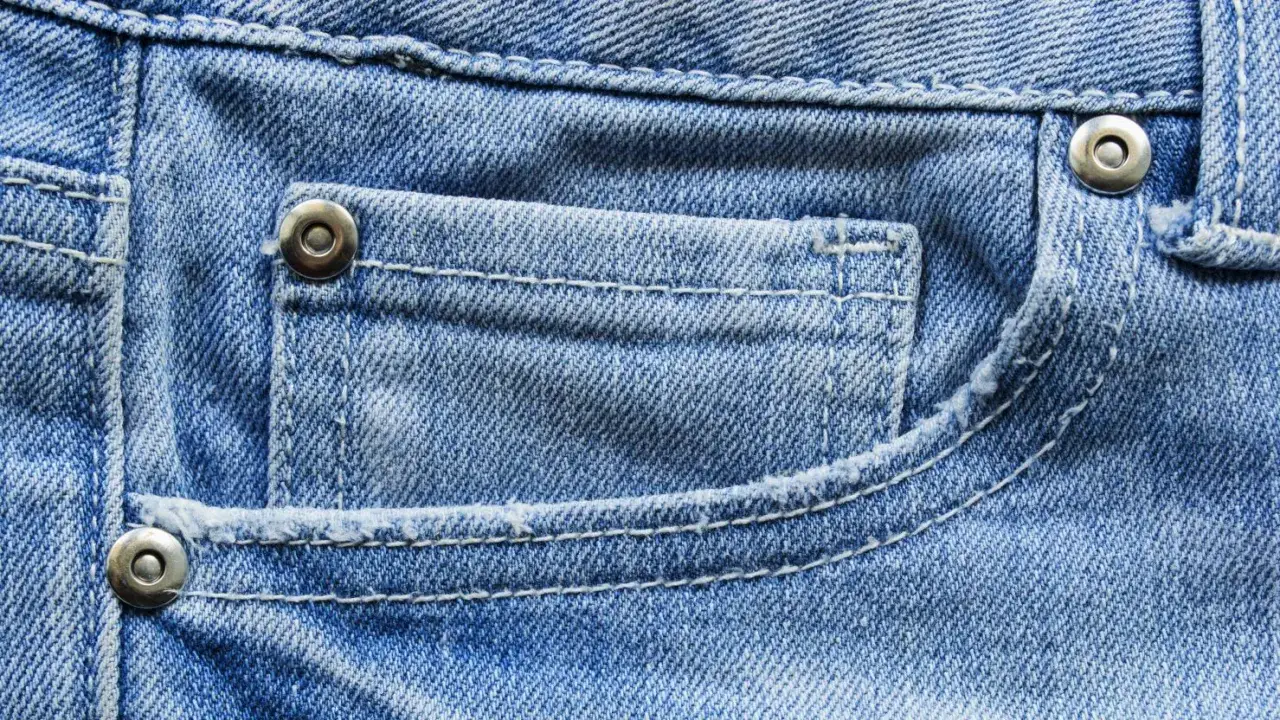
Good placement is about stress mapping. A rivet should sit where pulling forces concentrate, but not so close to an edge that it distorts the weave or so awkwardly that it becomes uncomfortable in wear. On a well-made pair, the hardware is almost invisible in use because it quietly supports the construction instead of announcing itself.
| Location | Why it gets stressed | What good placement looks like |
|---|---|---|
| Back pocket corners | Hands pulling in and out, sitting, and fabric tension at the edge of the pocket bag | The rivet sits flat, without puckering the denim or collapsing the seam line |
| Coin pocket corners | Small area, sharp angles, repeated use | Reinforcement is compact and does not snag lining or stitch threads |
| Fly base or front opening | Frequent opening and closing, plus strain when sitting or bending | The hardware supports the edge without interfering with the closure |
| Crotch or inseam intersections | High movement and abrasion | Usually handled better by stitching or a bar tack than by visible metal |
If a rivet is placed too aggressively, the garment may feel stiff, scratchy, or oddly shaped after a few wears. If it is too far from the stress point, it looks like decoration pretending to be engineering. The sweet spot is simple: the metal should support the construction without taking over the comfort of the jean. That balance becomes clearer when you compare rivets with the other reinforcement methods used today.
Rivets versus bar tacks and stitching
Not every pair of jeans needs the same reinforcement. On heavier rigid denim, a metal rivet can be exactly right. On stretch denim, or on jeans meant for long everyday wear in a city setting, a flatter method often makes more sense because the fabric needs to move more freely.
| Method | Best for | Strength | Limits |
|---|---|---|---|
| Metal rivet | Heavy wear, heritage denim, pocket corners | Very strong at point loads | Can scratch, feel bulky, or fail if the hole enlarges |
| Bar tack | Stretch denim, hidden reinforcement, cleaner interiors | Excellent for stopping seam opening | Less obvious visually and slightly less old-school in appearance |
| Double topstitching | Long seams and panels that need broad support | Good for distributing force over a longer line | Not as focused on tiny high-stress points |
| Patch plus reinforcement | Worn fabric, repairs, and altered jeans | Restores structure where the cloth has weakened | Adds bulk inside the garment |
A bar tack is just a dense zigzag stitch laid across a stress point, and in practice it can be the smarter choice when comfort matters more than visible hardware. On stretch denim especially, I often prefer stitching because a rigid metal part can outlast the surrounding fabric in ways that create new problems instead of solving them. That is why repair work matters: once a rivet starts to loosen, you need to know whether to reset it, reinforce the area, or replace the detail altogether.
How to replace a loose rivet without damaging the denim
When a rivet lifts, spins, or falls off, the issue is usually not the metal cap itself but the hole and the surrounding fibres. If the denim is still sound, a proper reset can work. If the fabric has thinned out or frayed, the fix needs more support than brute force.
- Inspect both sides of the garment and check whether the hole is round, stretched, or torn.
- Match the replacement rivet to the original stem length and cap size as closely as possible.
- Place the jeans on a firm surface or an anvil so the setting pressure is clean and even.
- If the hole is still healthy, set the new rivet without widening it further.
- If the denim is weak, add a small internal patch or choose a bar tack instead of forcing more hardware into tired fabric.
- Test the result by tugging gently from both sides and checking that the cap sits flush.
The biggest mistake I see is people trying to save a torn area with more pressure than the cloth can handle. A loose rivet is often a hole problem, not a metal problem. If the stem is too long, the hardware will wobble; if it is too short, it will never clinch properly. For that reason, a repair kit is only useful when it matches the denim weight and the original construction. That same logic also helps when you decide whether a pair should keep its rivets at all.
When rivets are worth keeping and when to leave them out
There are good reasons to keep visible metal, and good reasons to avoid it. Traditional workwear, rigid selvedge denim, and heritage-inspired jeans usually benefit from classic rivets because the fabric can take the load and the hardware reinforces the intended stress points. But once the denim gets softer, thinner, or more elastic, the trade-off changes.
For comfort-driven jeans, children’s clothing, or pairs worn around delicate furniture and upholstery, hidden rivets or stitch-based reinforcement can be the better choice. Flat finishes also reduce the risk of scratching skin or catching on bags and seats. In practical terms, I would treat rivets as the right answer when durability and authenticity matter most, and as optional when the garment’s fit, comfort, or setting makes hardware more of a nuisance than a benefit.
That distinction becomes especially important in modern denim, where fashion fits and stretch fibres often matter as much as strength. If the garment is going to move a lot with the body, the reinforcement should move with it too.
The checks I would make before I trust a pair for everyday wear
Before I buy or alter jeans, I look at the inside as carefully as the outside. A rivet can be shiny and still be badly finished, and a clean-looking pocket can still fail if the backing is poor. The best pairs are the ones where the reinforcement feels integrated rather than added on.
- Feel the inside of the pocket bags and seam intersections for sharp edges or raised hardware.
- Check whether the rivet sits flush or has already started to lift around the hole.
- Look for puckering, which usually means the metal is pulling the cloth too tightly.
- Compare the reinforcement method with the fabric weight; heavy denim can take more hardware than lightweight stretch fabric.
- Prefer construction that can be repaired cleanly later, not just construction that looks tough on day one.
If the hardware is doing its job, you should notice the denim more than the rivet. That is the standard I use: the fastener should disappear into the construction until the fabric really needs it, and then it should be the reason the jeans keep going instead of tearing out at the first hard wear.