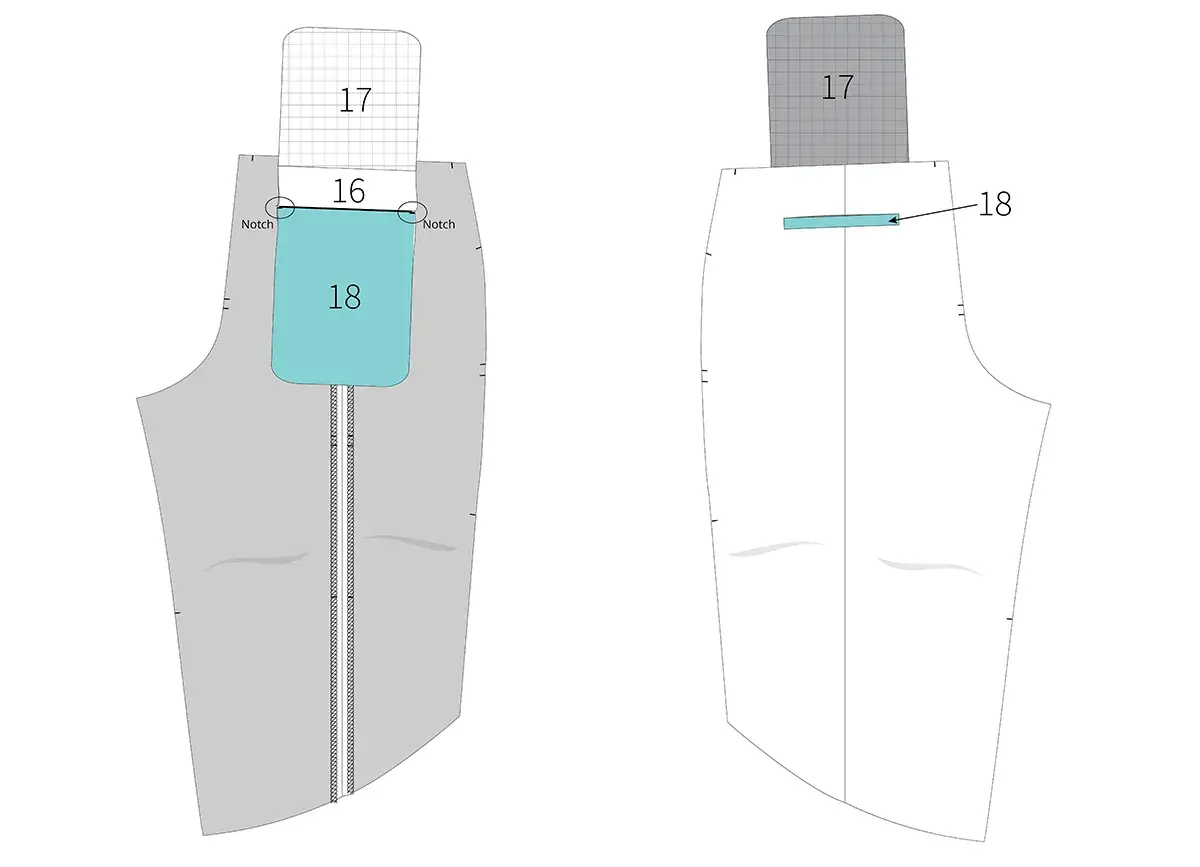
A back welt pocket is one of those details that changes how trousers read at a glance: cleaner, sharper, and more tailored than a patch pocket, but also less forgiving to sew well. In this article I explain what it is, when it suits trousers and jeans, how I would build it, and which placement choices keep the finish balanced rather than awkward. The goal is practical, because the pocket only works when the construction, proportion, and fabric all agree with one another.
The details that matter before you cut cloth
- A welted back pocket reads cleaner and flatter than a patch pocket.
- It suits tailored trousers, smarter denim, and any garment that should feel structured.
- Most sewing problems come from weak marking, poor stabilisation, or sloppy pressing.
- On darted trousers, the pocket should work with the seat shaping, not fight it.
- Patch pockets still make more sense for classic jeans when you want a relaxed look and easy wear.
What a welt pocket on the back actually does
In sewing terms, this is the slim inset pocket commonly used on the back of tailored trousers. Some workrooms call it a jetted pocket, which is a useful clue to the finish: the opening is framed by narrow lips instead of sitting as a patch on top of the cloth. I reach for it when I want the back of a garment to stay smooth and quietly refined.
The style is doing two jobs at once. Visually, it trims bulk and keeps the back panel flatter; functionally, it gives the wearer a place for a card holder, keys, or a slim wallet without turning the seat into a baggy mess. On a dense wool trouser, that restraint looks elegant. On denim, it can be a smart hybrid detail, but it changes the mood from casual to considered very quickly. That balance is what makes the next choice, placement and garment type, so important.
Where it makes sense on trousers and jeans
I would not use the same back pocket on every garment. On classic dress trousers, the welted finish is a natural fit because the rest of the design already expects clean lines. On jeans, I usually only choose it when the brief is intentionally smarter than average, because a patch pocket is more in tune with denim’s visual language and hard-wearing character.
| Garment type | Best pocket choice | Why it works | What to watch |
|---|---|---|---|
| Tailored trousers | Single welt or jetted pocket | Keeps the seat line calm and the finish clean | Needs precise marking and controlled pressing |
| Smart jeans | Welt or flapped welt | Bridges casual fabric with a sharper silhouette | Can look too delicate on very heavy denim |
| Classic jeans | Patch pocket | Durable, familiar, and easy to sew | Reads more casual and adds visible bulk |
| Wide-leg fashion trousers | Either, depending on the brief | Can stay subtle or become a design feature | Size and placement must suit the proportions |
The main point is simple: the pocket style should match the cloth, not fight it. Once the pocket style matches the garment, the next challenge is making the opening clean.
How I sew the opening so it stays crisp
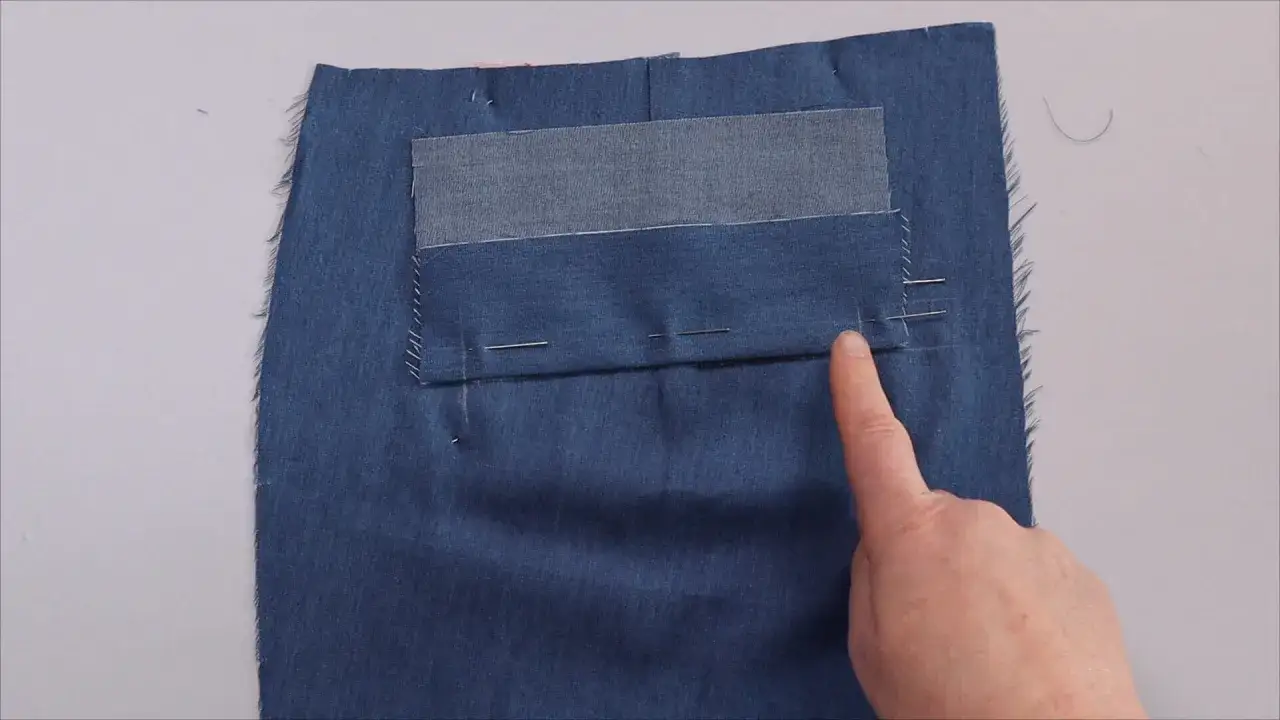
I keep the method disciplined because the pocket only looks good when the marking is exact. My sequence is to sew and press the back darts first, fuse a stabilising interfacing, the layer that keeps the fabric from stretching, over the pocket zone, mark the rectangle, and then sew the slit with a short stitch length of around 1.5 to 2 mm for control.
- Finish the back shaping first, then mark the pocket after the dart is set.
- Fuse the area generously, usually extending 2 to 3 cm beyond the opening so the fabric does not ripple.
- Cut the slit carefully, stopping exactly at the stitch points and clipping into the corners without crossing the stitching.
- Turn the welt to the inside, press from both sides, and stitch the reinforcing triangles before closing the pocket bag.
- Close the bag, secure the top edge, and check that the opening lies flat when the trousers are hung.
The part people underestimate is pressing. If the fold lines are not set square and flat, the pocket can look twisted even when the stitching is technically correct. I would rather press three extra times than try to rescue a lopsided opening after the pocket bag is closed. Once the opening is crisp, the next question is whether it sits in the right place on the body.
Placement decides whether it looks tailored or awkward
The pocket should follow the seat, not fight it. On darted trousers, many patternmakers place the opening at or near the tip of the longest back dart, and a useful rule of thumb for standard men's trousers is to keep that dart to about 3.5 inches, or roughly 9 cm, so the pocket does not sink too low.
As a rough working range, I find a finished opening around 10 to 13 cm works well on most adult trousers. Shorter can look neat but become almost decorative; longer gives more usable space, but if you push it too far the pocket starts to dominate the seat.
When I am adjusting placement, I look at the rise, the curve of the seat, and what the wearer will actually carry. A high-rise trouser usually needs the opening slightly higher. Low-rise jeans can look better with the pocket lifted just enough to avoid pulling the back view downward. If the wearer only needs cards or keys, I keep the opening modest. If a wallet has to fit, I give it more room without letting the opening take over the panel.
One simple rule helps more than exact measurements: the pocket should align with the trouser’s shaping lines. If it cuts across them blindly, even expensive cloth can look off-balance. Once placement is right, the next problem to avoid is the finish looking careless.
The mistakes that make the pocket look unbalanced
Most bad back pockets fail for the same reasons, and nearly all of them are preventable.
- Skipping stabilisation lets the opening stretch and ripple, especially on softer cloth.
- Cutting too far into the corners weakens the slit and makes the pocket mouth distort.
- Placing it before the fit is final can leave the pocket too low once the seat and darts are corrected.
- Making the pocket bag too shallow causes bulging or makes the pocket function badly.
- Ignoring grain on checks or stripes makes the opening look crooked even when the sewing is neat.
My fix is usually boring but effective: stabilise properly, test on scrap, and stop treating the pocket as an afterthought. The cleaner the marking and pressing, the less the sewing has to compensate later. Once those mistakes are out of the way, the last decision is which back-pocket style really suits the garment.
Choosing the right back pocket style for the garment
When I am deciding between pocket styles, I ask what the garment needs to say before I think about technique. Some trousers want restraint, others want ease, and jeans usually want a pocket that feels honest to the fabric.
| Style | What it looks like | Best use | My take |
|---|---|---|---|
| Single welt or jetted pocket | Flat, narrow, tailored | Dress trousers, smart denim, formal-inspired styles | Best when you want the back to stay clean and understated. |
| Double welt pocket | More framed and symmetrical | Formal trousers, tuxedo-inspired pieces, sharp tailoring | Elegant, but it needs very accurate construction to avoid looking stiff. |
| Patch pocket | Visible, sewn-on, casual | Classic jeans, utility trousers, relaxed everyday wear | The easiest choice and still the right one when durability and a casual read matter more than neatness. |
| Flapped welt pocket | Structured with a cover flap | Fashion trousers, statement tailoring | Useful when you want detail, but it can overwhelm a small back panel. |
For denim, I usually default to a patch pocket unless the garment is meant to look deliberately refined. For tailoring, I lean the other way: the cleaner pocket usually wins because it respects the cloth and keeps the seat line calm. After that, the only thing left is a final check before cutting the real fabric.
What I would check before cutting the final fabric
Before I cut the real cloth, I make one muslin or at least one scrap test of the opening, because a 2 or 3 mm shift in marking is enough to show up on the finished seat. I also check that the pocket bag is stable enough for the garment weight, that the opening sits level when the trousers are on a body, and that the bag clears the seat without making a ridge.
If the fabric is soft, I am more aggressive with interfacing. If it is dense denim, I keep the construction firmer and avoid unnecessary bulk inside the bag. That balance is what makes the pocket feel intentional: not decorative for the sake of it, but shaped to suit the cloth, the cut, and the person wearing it.