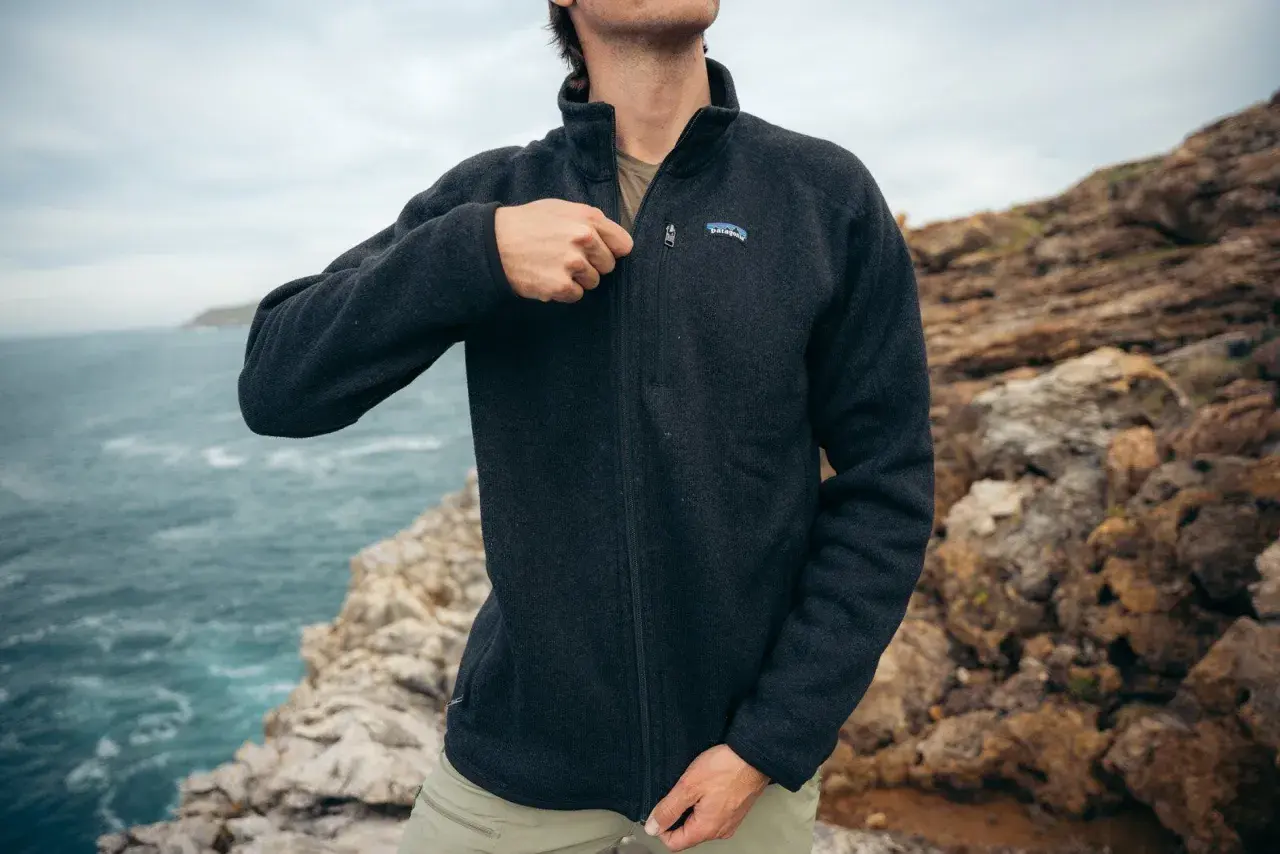
Sweater fleece sits in the gap between a smart knit and a practical cold-weather layer. The short answer to what is sweater fleece is that it is a sweater-knit fabric with a fleece back: soft, warm, and usually made for layering rather than heavy-duty outerwear. In this guide, I break down how it feels, how it differs from similar fabrics, where it works best, and how to choose a better-quality version.
Key facts to know before you buy or sew with sweater fleece
- It usually has a knitted, sweater-like face and a brushed or fleece-backed reverse side.
- Most versions are mid-weight, often around 220 to 320 gsm, though the exact weight varies a lot.
- It is warm, soft, and comfortable, but it is not the same as a windproof shell or a waterproof fabric.
- Compared with classic polar fleece, it looks more refined and less sporty.
- It is a strong choice for casual jackets, gilets, cardigans, and cosy layering pieces.
- Good care matters: low heat, gentle washing, and minimal friction help reduce pilling.
What makes this fabric useful is not just warmth, but the balance it strikes between appearance and performance. I think that is why it shows up so often in modern outerwear and sewing patterns: it gives you the comfort people expect from fleece without looking like gym kit.
What sweater fleece actually is
Sweater fleece is not a single standard fabric so much as a family of fabrics built to imitate the look of a knitted jumper while keeping the cosy, insulating feel of fleece. The face side usually has a sweater-knit or lightly textured appearance, while the inside is brushed, fleeced, or otherwise raised to trap warmth.
In practice, I most often see it made from polyester or recycled polyester, sometimes with a little elastane for recovery. That blend matters because it helps the fabric keep its shape and dry faster than many natural knits. Some versions are smoother and more structured; others are loftier and softer. That variation is normal, which is why the marketing name can be useful but not enough on its own.
If I were describing it in one line for a sewist, I would call it a mid-weight fleece with a knit face and a polished casual look. That distinction becomes important when you start comparing it with other fabrics that seem similar at first glance, because the differences show up in drape, warmth, and durability.
Why the fabric feels warm without looking bulky
The reason sweater fleece works so well is construction. The brushed back creates tiny air pockets that hold heat close to the body, while the knit face gives the fabric a cleaner, more structured appearance than fluffy polar fleece. That means you get warmth, but usually without the marshmallow effect that comes with thicker pile fabrics.
Weight is one of the first things I check. Many sweater fleece fabrics sit in the mid-weight range, roughly 220 to 320 gsm, although some run lighter and some much heavier. A lighter version can work as an indoor layer or a travel piece, while a heavier one behaves more like a proper jacket fabric.
There are limits, though. Sweater fleece is usually not windproof or waterproof on its own, and it is not the best choice if you need hard weather protection. It can also pill over time, especially under backpack straps, at the elbows, or anywhere the fabric rubs frequently. That does not make it a poor fabric; it just means you should choose it for the right job.
Once you understand that balance of warmth, breathability, and softness, it becomes much easier to compare it with other common fabrics.
How it compares with other familiar fabrics
People often confuse sweater fleece with polar fleece, sweatshirt fleece, or even a knitted jumper fabric. I find a simple comparison is the fastest way to see where it fits.
| Fabric | Surface and feel | Warmth | Best for | Main trade-off |
|---|---|---|---|---|
| Sweater fleece | Sweater-like face, soft brushed back, neat but cosy | Medium to high | Casual jackets, cardigans, gilets, layering pieces | Can pill and is not weatherproof |
| Polar fleece | Fluffy, sportier, usually fuzzy on one or both sides | Medium to high | Outdoor layers, hoodies, activewear | Looks less refined |
| French terry | Smoother face with looped back | Low to medium | Trans-seasonal sweatshirts, relaxed tops, loungewear | Less insulating |
| Wool jumper knit | Traditional knitted construction, often more drape and character | Medium to high | Classic knitwear, smarter layers, colder climates | Usually needs more careful care |
If I am choosing between them, I ask a simple question: do I want the look of knitwear or the performance of fleece? Sweater fleece is the compromise that often answers both, which is why it has become such a popular fabric in modern wardrobes. From here, the real question is where it performs best in actual garments.
Where it works best in sewing and everyday wear
Sweater fleece shines in pieces that need warmth, softness, and a cleaner silhouette than classic fleece can offer. I would reach for it in casual jackets, zip-throughs, gilets, oversized cardigans, lounge layers, and relaxed outer layers for school runs, travel, and weekend wear.
It is especially useful when a garment needs to look more finished than a sports fleece but does not need the drape of a fine knit. That makes it a good match for:
- Unstructured jackets and shirt-jackets
- Full-zip or quarter-zip layers
- Loose cardigans and longline toppers
- Comfortable kidswear and outer layers
- Cosy office-casual pieces in cooler weather
Read Also: Flannel vs. Plaid - What's the Real Difference?
If you are sewing with it
I would treat sweater fleece as a stable knit rather than a woven fabric. Use a stretch or ballpoint needle, handle seams with a little care, and test your stitch choice on a scrap first. A walking foot can help if the fabric is thick, and a stretch stitch or narrow zigzag usually gives better seam flex than a straight stitch.
One more practical point: keep pattern choice realistic. Heavy shaping, crisp tailoring, and sharp lapels are usually fighting the fabric. Sweater fleece does better with relaxed, clean lines and designs that allow its softness to do the work. That leads naturally into the part most buyers skip until it is too late, which is how to judge quality before you commit.
How to choose a better fabric before you buy
When I am evaluating sweater fleece, I do not rely on the name alone. I check the fibre content, the weight, the feel of the inside, and how the fabric springs back after being stretched. If you are buying online, that means reading the product details closely instead of assuming all sweater fleece behaves the same way.
These are the details I pay attention to:
- Fibre content - Polyester and recycled polyester are common; a little elastane can improve recovery.
- Weight - Mid-weight fabrics usually give the best balance of warmth and drape.
- Recovery - Stretch the fabric gently and see whether it returns to shape without bagging.
- Surface finish - A tighter knit face usually looks more polished and pills less quickly.
- Back side - A soft brushed back is what gives the fabric its insulating feel.
- Intended use - A fabric sold for jackets will usually behave differently from one intended for loungewear.
If you are shopping in person, I would also rub the fabric lightly between my fingers. A good one should feel substantial but not stiff, soft but not flimsy. If it feels thin, overly fuzzy, or weak at the edges, I would not expect it to hold up well in a garment that gets regular wear. Once you have the right cloth, good care becomes the difference between a piece that lasts and one that looks tired too soon.
How to care for it so it keeps its shape
For most sweater fleece, gentle care is enough. I would wash it at 30°C or below with a mild detergent, avoid harsh softeners, and dry it on a low setting only if the care label allows it. Line drying is often the safest option, especially if you want to preserve the loft and reduce the risk of heat damage.
A few habits make a real difference over time:
- Turn the garment inside out before washing.
- Use a low spin if your machine allows it.
- Avoid overcrowding the drum, which increases friction.
- Remove pills gently with a fabric comb if they start to appear.
- Skip high heat, which can flatten the brushed surface and stress elastane blends.
I would also avoid treating sweater fleece like a technical shell. It does not need aggressive washing, and it does not benefit from rough handling. The cleaner you keep the surface and the lower the friction, the longer it tends to look good. That is really the heart of it: this fabric rewards sensible use, not overcomplication.
The practical takeaway for choosing it well
Sweater fleece is worth considering when you want warmth, softness, and a neater look than standard fleece gives you. It is not the answer if you need rain protection, serious wind blocking, or the crisp structure of tailored cloth, but it is excellent for everyday layers that need to feel easy and look a little more refined.
If I were choosing one piece to buy or sew, I would look for a mid-weight version with a clean knit face, good recovery, and a brushed back that feels substantial rather than fluffy. That combination usually gives the best balance of comfort, wearability, and longevity. In other words, the best sweater fleece is the one that works hard quietly, without pretending to be something else.
For sewing, I would keep the silhouette relaxed and let the fabric stay what it is: a practical, cosy hybrid that bridges knitwear and fleece better than most fabrics in the wardrobe.