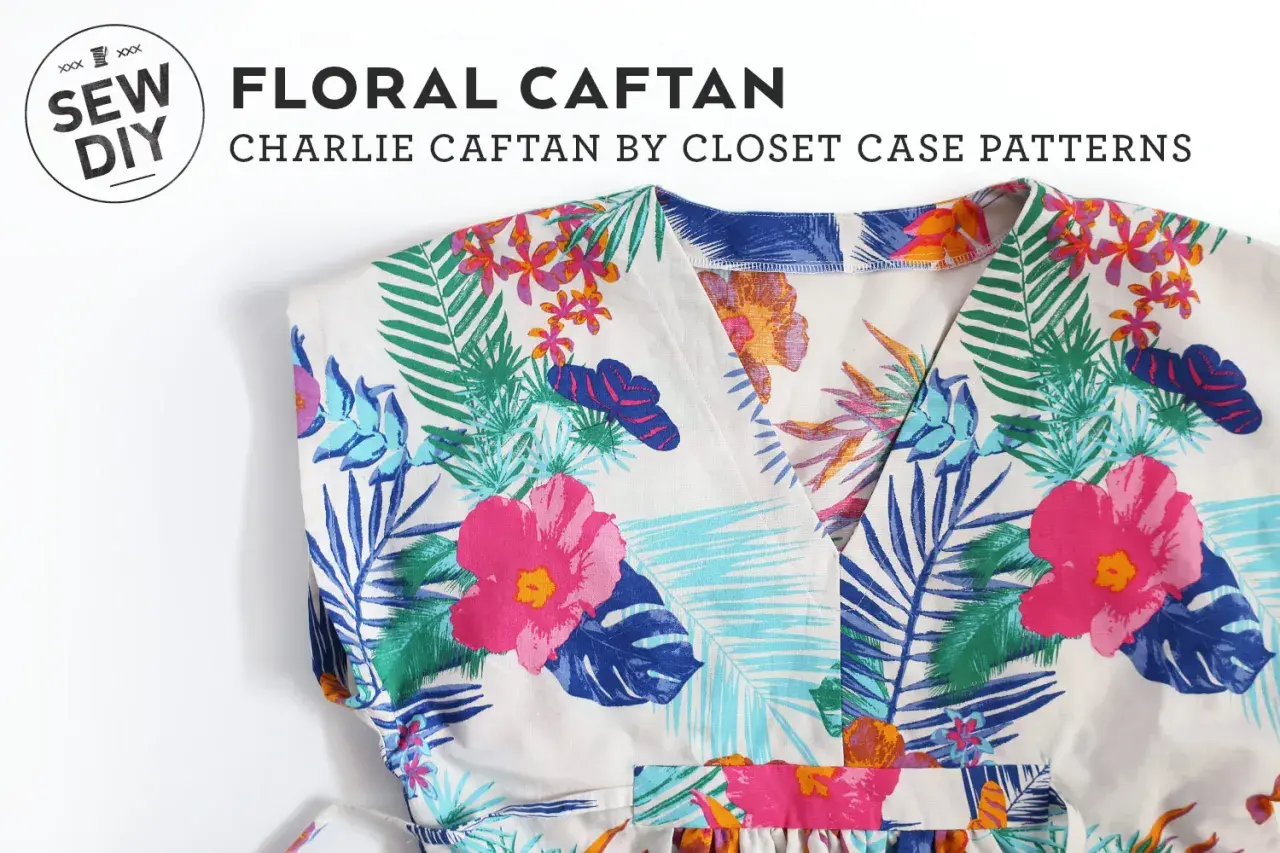
A free caftan pattern is a smart starting point for a relaxed dress or cover-up, but the finished garment depends on more than the download itself. I’m focusing here on the decisions that matter most: which file format is easiest to use, which fabrics drape well, how to sew the garment cleanly, and when a free design is enough for the job. If you want a caftan that feels intentional rather than improvised, those are the details that count.
The quickest things to check before cutting
- File format matters. In the UK, A4 tiled PDFs are common, while A0 files are faster if you can use a copy shop.
- Fabric changes everything. Viscose, rayon, linen, cotton lawn, and crepe all give a different drape and mood.
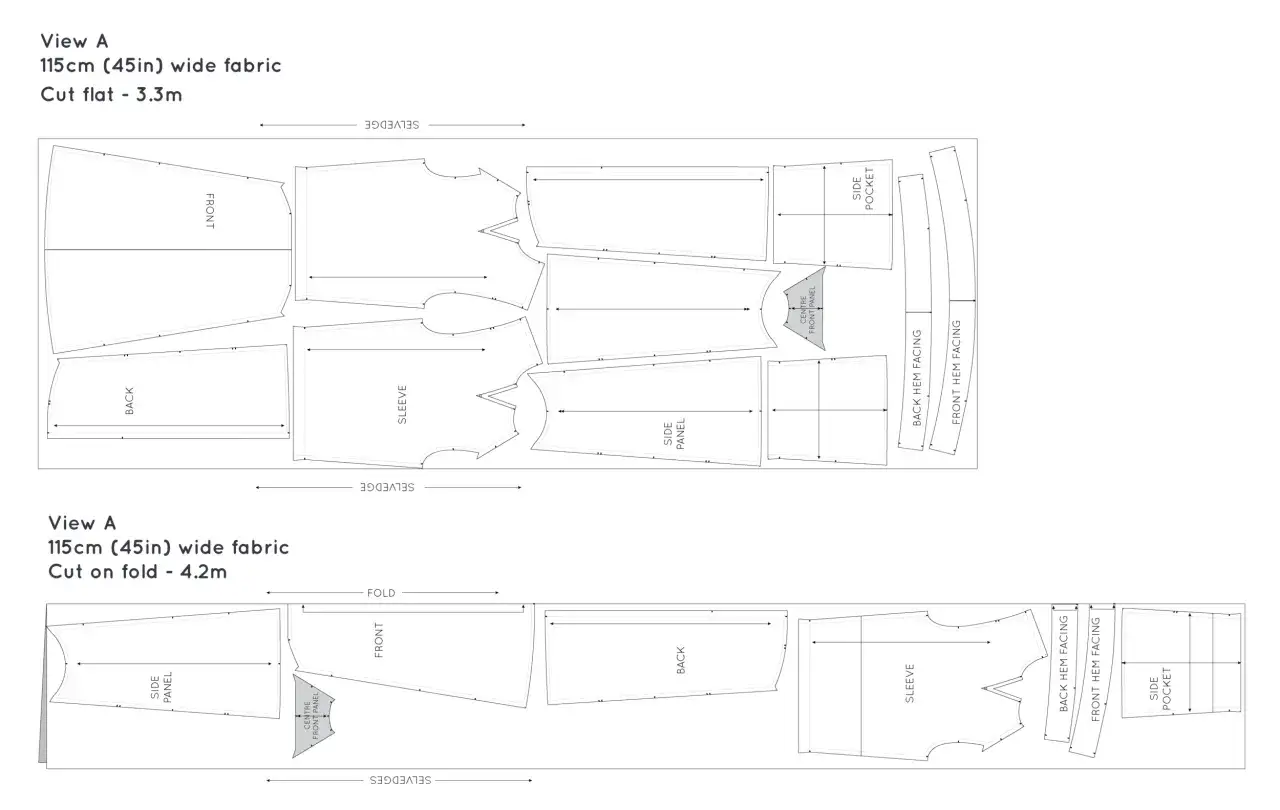
- Most caftans need generous cloth. A short version often needs about 2.5-3 m, while a maxi usually asks for 3.5-4 m or more.
- Neckline finishing is not optional. Bias binding, a facing, or staystitching keeps the opening from stretching out.
- Fit tweaks are small but effective. Neckline depth, side slits, and belt placement change the whole look.
- Free is often enough. If you want a loose silhouette without bust shaping, a free download can be the most efficient choice.
What a free caftan pattern usually gives you
In practice, free downloads come in a few different forms, and the format tells me almost as much as the actual garment shape. For UK home sewing, I usually look first for an A4 tiled PDF or an A0 file, because that decides whether the pattern will be a straightforward print-and-tape job or a faster copy-shop run. A good free file should also tell you the seam allowance, neckline finish, and whether the caftan is drafted for woven or knit fabric.
| Format | Best for | What to check |
|---|---|---|
| Layered PDF | Skipping sizes you do not need and keeping the printout cleaner | Whether the size layers are clearly marked and easy to hide |
| Tiled A4 PDF | Home printers and simple UK set-ups | Page count, overlap, and a test square before taping anything |
| A0 copy-shop file | Large patterns and faster assembly | Whether the file includes all sizes or just one range |
| No-pattern tutorial | Fast makes based on rectangles or body measurements | How much drafting is expected from you |
The best downloads are generous with instructions, not just generous with ease. If the pattern does not explain the neckline, hem, and grainline, I treat it as a starting point rather than a finished plan. Once I know what the file offers, fabric choice becomes the next filter.
How to choose fabric that suits the silhouette
For a caftan, I care more about drape than almost anything else. By drape, I mean the way the cloth falls and moves on the body instead of standing away from it. A fabric can be beautiful on the bolt and still be wrong for a caftan if it is too stiff, too heavy, or too clingy for the intended shape.
| Fabric | How it behaves | Why I like it for caftans |
|---|---|---|
| Viscose or rayon challis | Soft, fluid, and lightly slinky | It gives the classic easy caftan drape without too much weight |
| Linen | Breathable with a bit more structure | Ideal if you want a sharper resort look and a cooler summer feel |
| Cotton lawn or voile | Light, stable, and tidy | Good for a cleaner silhouette and easier handling at the sewing machine |
| Viscose-linen blend | Balances movement with texture | A strong middle ground when pure viscose feels too slippery |
| Crepe | Slightly springy with elegant movement | Useful if you want the garment to feel a touch dressier |
| Silk satin | Very fluid and unforgiving | Beautiful, but I only recommend it if the sewer is comfortable with slippery fabric |
As a rough buying guide, I usually plan on 2.5-3 m for a shorter caftan, 3.5-4 m for a maxi, and extra length if I want long sleeves or a border print to line up properly. Wider fabric can reduce the total a little, but narrow bolts push the figure up quickly. After fabric, the sewing order becomes much easier.
How to sew it without overcomplicating the process
- Print and check scale first. If the pattern is tiled, I always print the test square before taping pages together. A wrong scaling setting can waste more time than any sewing mistake.
- Prewash, dry, and press the fabric. Rayon and linen especially can shrink or shift. Prewashing is boring, but it saves the hem later.
- Respect the grainline. The grainline is the direction of the threads in the cloth, and keeping it straight stops the garment from twisting as it hangs.
- Sew the main seams before finishing edges. Shoulder seams and side seams come first, using the seam allowance stated by the pattern. If the file does not give one, I check the instructions before inventing my own.
- Stabilise the neckline. A staystitch is a line of stitching just inside the seam line that stops curved edges from stretching out. Then finish the opening with bias binding, a facing, or another method the fabric can handle cleanly.
- Hem last. Narrow hems work well on light, drapey cloth; deeper hems are better when the fabric needs a bit of weight to hang properly.
If the fabric is slippery, I reach for a microtex needle and a slightly longer stitch length, usually around 2.5-3 mm, because both reduce puckering and drag. That is a small change, but it makes the machine behave much better on viscose and lawn. Once the garment is assembled, the small fit decisions become more visible.
The small fit changes that make it look intentional
The beauty of a caftan is its ease, but ease does not mean ignoring the shape. I usually make only a few changes, because too many adjustments can kill the relaxed character that makes the garment work in the first place. The trick is to change the parts that affect comfort and movement without tightening the whole design.
- Neckline depth changes the mood immediately. A deeper opening feels more beach-ready, while a shallower one is easier to wear every day.
- Side slit height changes movement. Higher slits help when the fabric is narrow or the hem is long; lower slits add coverage.
- Belt placement changes the silhouette. A self-tie or narrow belt gives shape without making the garment feel structured.
- Pockets add usefulness, but they can distort thin fabric if they are not supported well. I anchor them carefully or skip them on very light cloth.
- Body width should stay generous. If I narrow it too much, the caftan stops behaving like a caftan and starts acting like an oversized dress.
When I want a more polished result, I make one controlled change rather than five. A slightly refined neckline or a smarter hemline does far more than extra decoration. Those decisions matter because the failure points are predictable, and that is what I look at next.
Common mistakes that are easy to avoid
The most common problems are not dramatic sewing errors. They are small decisions made before the first seam, and they tend to show up later as a sagging neckline, a heavy hem, or a garment that feels dull instead of fluid.
| Mistake | What usually happens | Better approach |
|---|---|---|
| Choosing fabric that is too heavy | The garment loses movement and can feel bulky at the side seams | Use a lighter woven with enough drape for the shape |
| Skipping neckline stabilisation | The opening stretches out and stops sitting neatly | Staystitch as soon as the neckline is cut |
| Printing without a scale check | The pattern pieces are the wrong size and the fit drifts | Test the printer settings before committing to all the pages |
| Using too much hem weight | The front drops, twists, or hangs unevenly | Keep hems narrow on soft fabrics and let the cloth hang before trimming |
| Assuming every free pattern is fully graded | The bust, shoulders, or arm openings may not sit comfortably | Compare the finished measurements before cutting and make a toile if needed |
I especially watch for neckline stretching and hem distortion, because those two issues are responsible for most disappointing caftans I have seen. A quick toile, meaning a test garment in cheap fabric, can also save time if your measurements sit between sizes. If the free download still feels too limited after that, I compare it with a paid pattern.
When a free download is enough and when I would pay
I do not think every caftan needs a paid pattern. In fact, a loose silhouette is one of the few garment types where a free download can be the smartest choice, provided the shape matches the brief. I pay for a pattern when fit precision, multiple views, or detailed instruction matters more than speed.
| Situation | Free download works well | A paid pattern is better |
|---|---|---|
| Relaxed beach cover-up or lounge dress | Yes, if the shape is simple and the fabric is forgiving | Usually unnecessary unless you want a very specific look |
| Multiple cup sizes or bust shaping | Only if you can adjust the fit yourself | Better, because the drafting will usually be more precise |
| Fast first make | Often ideal for a straightforward project | Only if the instructions are weak or incomplete |
| Special occasion or polished occasionwear | Possible, but you may need more fitting work | Better if you want cleaner engineering from the start |
| Learning to sew with minimal pressure | Excellent starting point | Useful later, once you want more design variation |
My rule is simple: if the garment is meant to hang loose and the free file is clear, I use the free file. If the design depends on fit, structure, or a more exact silhouette, I move up a level. Either way, the finishing stage is where the garment either settles beautifully or starts to look homemade.
The finishing checks I never skip on a caftan
- Let the garment hang before the final hem. Drapey fabrics such as viscose and linen often drop a little after sewing, so I give them time to settle before trimming.
- Press each seam as I go. Pressing is not the same as ironing at the end. It shapes the seam and keeps the surface clean.
- Check the neckline symmetry. A slightly uneven neckline is one of the fastest ways to make a caftan look rushed.
- Revisit the side slits. If they are too high, I lower them; if they are too low, I lose ease.
- Keep the second version in mind. Once the first caftan works, I change one thing only: a different length, a new fabric, or a deeper neckline.
A good free caftan download gives you a solid starting point, but the fabric, neckline, and finishing details decide whether it becomes a wardrobe staple. If I were starting one today, I would test the printer scale, choose a drapey fabric with enough width, and finish the neckline before I worry about embellishment. That sequence almost always produces the most wearable result.