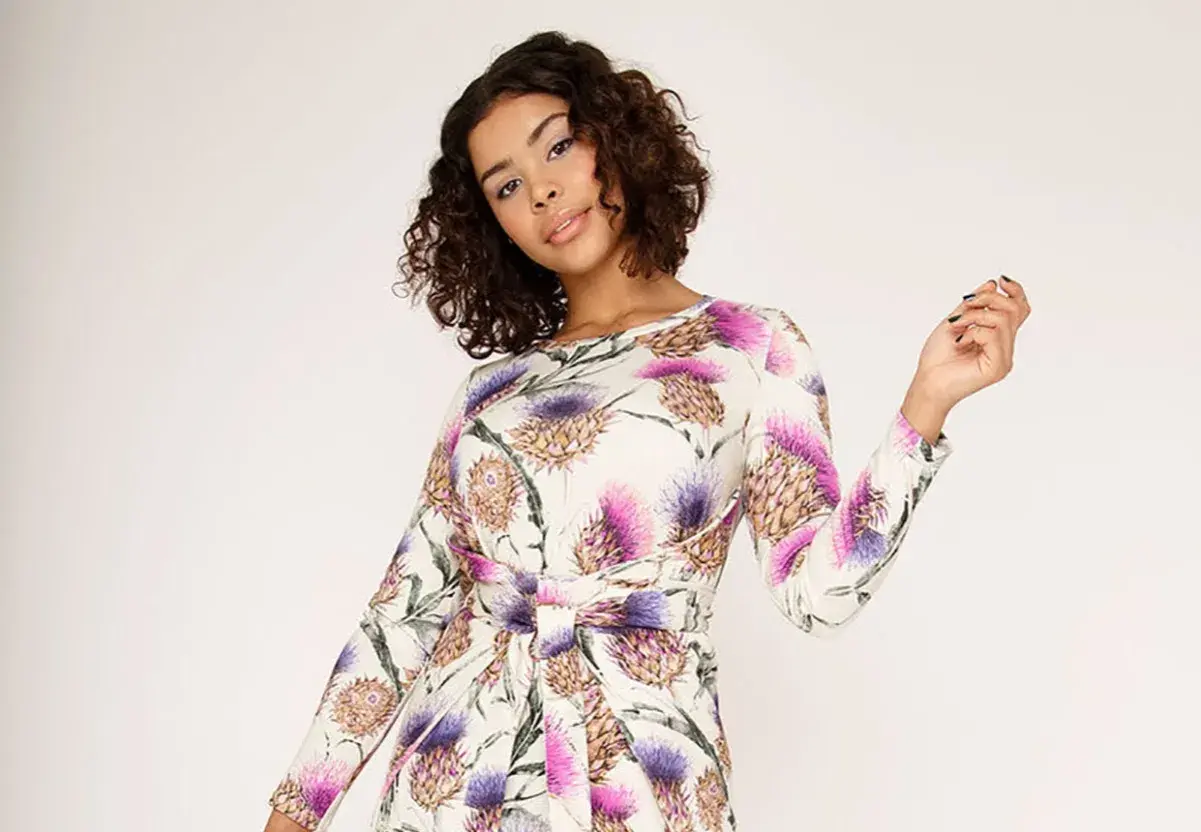
A well-chosen maternity make should move with the body, stay comfortable through several months of change, and still feel like something you would wear after the baby arrives. Free patterns can absolutely do that, but only if the silhouette and fabric are doing real work, not just relying on extra width. In this guide I focus on the shapes that hold up, the tweaks that matter, and the common mistakes that waste cloth.
What to look for before you cut fabric
- Room in the right places matters more than simply sizing up the whole garment.
- Wrap fronts, empire waists, tiers, and relaxed knits are the most reliable free options.
- Fabric choice can make an average pattern comfortable or make a good pattern frustrating.
- UK-friendly PDFs with A4 pages, clear layers, and metric measurements save time.
- Post-pregnancy wearability is worth thinking about before you commit to a style.
What makes a maternity pattern worth sewing
I judge a pattern on three things: where it carries its volume, how it behaves at the bust and shoulders, and whether it can survive changing measurements without looking accidental. The best maternity patterns do not simply get bigger at the waist; they give the body room where it actually needs it and keep the rest of the garment stable. That is why a loose skirt can work brilliantly, while an untailored box shape often feels shapeless after the second wear.
- Room at the bust and ribs matters as much as bump space, because the upper torso often changes earlier than people expect.
- Adjustability is useful: ties, wrap fronts, elastic waists, and gathers buy you a wider fit window.
- Post-pregnancy wearability matters if you do not want the garment to feel temporary after one season.
- Simple construction usually wins for free patterns, because the fit is easier to diagnose and alter.
If a pattern already has one of those features, I am much more willing to invest time in it. That brings us to the silhouettes that tend to work best in practice.
The silhouettes that are worth your time
These are the shapes I would shortlist first when browsing free options. They are common for a reason: they can be comfortable, flattering, and realistic to sew without overengineering the fit.
| Silhouette | Why it works | What to watch out for |
|---|---|---|
| Empire-waist dress | Leaves room under the bust, so the fabric skims the bump instead of sitting on it. | The bodice still needs a good bust fit, especially if you want to wear it beyond pregnancy. |
| Wrap top or dress | Adjustable through several stages and easy to loosen without changing the whole garment. | Works best in fabric with drape; slippery cloth can make the wrap feel fussy. |
| Tiered dress | Built-in ease, forgiving over the belly, and usually beginner-friendly. | Heavy fabric can create bulk, so keep the cloth light to medium weight. |
| Relaxed T-shirt dress | Fast to sew, comfortable for layering, and very practical for everyday wear. | Needs good recovery in the fabric or it can stretch out at the bust and hem. |
| Elastic-waist skirt or trousers | Useful if you need separates and want something that feels more polished than leggings. | The rise and waistband need careful checking; this is less forgiving than a dress. |
If I had to start with one silhouette, I would choose a wrap or empire-line design. They are forgiving, and they also tend to work after pregnancy if you like the shape. Tiered dresses are the next safest bet, especially in warmer weather. Trousers and skirts are more useful than people think, but they need a little more fitting discipline around the rise and waistband, so I save them for when I know exactly what gap in the wardrobe I want to fill.
Fabric choice matters more than the pattern name
Free patterns can look brilliant on screen and still fail in the wrong cloth. I would rather sew a plain shape in the right fabric than force a clever pattern into something stiff or clingy. For maternity wear, I want drape, recovery, and enough body to skim rather than fight the bump.
- For knits, jersey, cotton elastane, and soft French terry are the most forgiving. I like a little elastane or otherwise strong recovery so the garment bounces back after wear.
- For wovens, viscose, rayon, Tencel, lawn, and double gauze usually behave better than crisp cotton poplin or heavy denim.
- For fitted pieces, avoid fabrics that stretch only one way or lose shape quickly, because they can bag out at the bust and hem after a few wears.
As a rough cutting guide, I usually expect about 1.5-2 metres for a relaxed top, 2.5-3.5 metres for a dress, and 2-3 metres for a skirt or simple trousers, depending on size, sleeve length, and whether the print has a direction. If you are matching stripes or a large pattern repeat, add extra room rather than trusting a minimalist estimate.
For a UK wardrobe, I also think in layers. A breathable jersey top, a drapey midi dress, and a cardigan-friendly skirt do more work across the season than one very specific statement piece. Once the fabric is right, alterations become much easier to judge.
How to adapt an ordinary pattern into maternity wear
Most free patterns do not need a complete redraft. They usually need one or two intelligent changes: move the waistline, preserve enough room in the upper body, and keep the hem from swinging up at the front. I always trace the original first, because once you start hacking, it is easy to overshoot and lose the base pattern.
- Fit the shoulders and bust first. If the bodice is tight before any bump adjustments, size up or choose another base. A maternity make should not solve shoulder problems by accident.
- Raise the waist into an empire line when you want a dress or top that skims the belly instead of clamping onto it. This is one of the simplest and most reliable changes.
- Add front length, not blanket width. A little extra length in the front bodice or front skirt often works better than sizing up the whole garment. It keeps the back from looking boxy.
- Replace fixed waistbands with elastic or ties. This is especially helpful for skirts and trousers, where the rise changes as the body changes.
- Check the closure placement. Zips, buttons, and waist seams that sit right on the growing area can become annoying quickly, so I move them out of the way whenever I can.
I would not force a hack if the garment already needs major armhole, shoulder, and bodice changes at the same time. At that point, choosing a better base pattern is faster and usually gives a cleaner result. The goal is not to rescue every pattern; it is to sew the right one.
Mistakes that waste fabric and patience
The errors I see most often are practical, not dramatic. They come from trying to make the pattern do something it was never designed to do.
- Sizing up everywhere instead of adjusting the silhouette. More width can create a huge back and a gaping neckline.
- Ignoring the bust and ribcage. The bump is obvious, but the upper torso changes first for many sewists.
- Choosing stiff fabric for a soft shape. A wrap dress in rigid cloth usually fights the body instead of following it.
- Making the hem too short. Pregnancy changes how a dress hangs, especially at the front.
- Forgetting the afterlife of the garment. If you want to wear it later, avoid over-specific shaping that only works for one stage.
My rule is simple: if I can solve a fitting issue with fabric choice, a small style change, or a length adjustment, I do that before touching the pattern into something unrecognisable. That keeps the sewing more predictable and the final piece more wearable.
What I would sew first for a small maternity wardrobe
If I were building a small handmade pregnancy wardrobe from free patterns, I would start with three pieces. First, a jersey or viscose wrap dress because it covers a lot of occasions. Second, a relaxed top with enough length to layer over trousers or leggings. Third, either a skirt with a soft waistband or a simple pair of trousers if I needed something that felt a bit more polished.
- One adjustable dress gives you the most mileage for the least fitting stress.
- One good top is the piece you will probably wear most often.
- One bottom half keeps the wardrobe from becoming a pile of dresses only.
That combination covers everyday errands, work, and the days when comfort matters more than style but you still want to look put together. If the same garment can carry you into postpartum life, that is even better. I always prefer pieces that feel like real clothes first and maternity clothes second.
The filter I use before printing another free pattern
Before I print a pattern, I ask three questions. Does it have enough room at the bust and ribs? Does the fabric suit the silhouette? Will I still want to wear it after pregnancy? If the answer is yes, I move ahead. If not, I keep looking, because the best free pattern is the one that costs me the least in time, fabric, and fitting frustration.
- Comfort should be built into the shape, not patched on later.
- Fabric and silhouette need to agree before cutting, otherwise the make will fight you.
- Longevity matters if you want the garment to keep earning its place in your wardrobe.
That is the standard I use for maternity sewing that feels worth the effort: practical, wearable, and quiet about the fact that it has been designed to adapt.